What "custom vape pen" actually means for a cannabis brand
There's a wide gap between slapping a sticker on a generic cartridge and actually building a custom vape product. Both get described as "custom," but they're completely different from a branding standpoint. Before you talk to any supplier, it helps to know which end of that spectrum you're working on.
At the lighter end, customization means printing your logo on an existing product. The hardware is off-the-shelf, the cartridge is standard, and the only thing that's yours is the artwork. This is where most small dispensaries and brands start, and there's nothing wrong with it. You can get a recognizable product in customers' hands without engineering anything from scratch.
At the deeper end, you're specifying the battery capacity, the heating element type, the airflow, the finish, the shape, and the packaging. The product is genuinely yours. This requires more capital, longer lead times, and a manufacturer willing to work at that level. It's the route that cannabis brands serious about product differentiation eventually take.
For most of this guide, we'll talk about branded custom vape pens in the practical middle range, because that's where the most useful decisions get made.
510 thread vs disposable vs pod: choosing the right format
The format of your vape product shapes everything downstream, including your customization options, your pricing, and your customer's experience.
510 thread batteries paired with prefilled cartridges are still the dominant format in the legal cannabis market. The "510" refers to the threading standard that makes cartridges interchangeable across different batteries. Customers who already own a 510 battery can use your cartridge without buying new hardware. For a brand selling cartridges, this is useful because the friction to try your product is lower. If you're also selling branded batteries to go with them, you get both the consumable and the device revenue. There's a full breakdown of how 510 batteries work and what differentiates them in the 510 thread battery guide.
Disposable vape pens are a single unit where the battery and cartridge are integrated and non-refillable. The customer uses it until it's empty and throws it away. From a branding standpoint, disposables give you more control over the physical design because there's no need to match a universal thread standard. The entire device is your product. The tradeoff is waste, and increasingly that matters to consumers. Some markets are seeing regulatory movement on disposables, so check your local rules before committing to a large order.
Pod systems use proprietary connections between the battery and the pod. Brands like PAX and JUUL made this format mainstream. For cannabis brands, pod systems offer the most brand lock-in since customers need your pod to use with your device. The investment to develop a proprietary system is significant, so this is territory for established brands with real capital to deploy.
Branding methods and what you can actually customize
The physical branding options depend heavily on the material of the device.
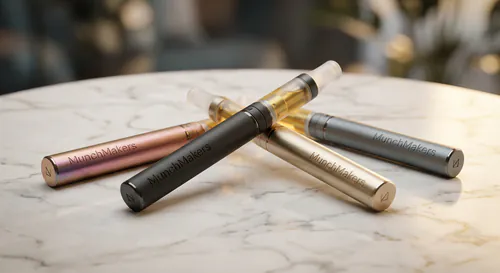
Laser engraving works best on metal-bodied devices. The result is permanent, precise, and reads as premium. A simple logo or wordmark engraved into a brushed aluminum vape pen looks better than most printed alternatives. The limitation, as with grinders, is single-color output. Designs that depend on color variation need to be rethought as pure shape and line work.
Pad printing is the most common method for plastic-bodied disposables and 510 batteries. It's cost-effective, handles color reasonably well, and can wrap around curved surfaces. Fine details can lose some crispness, so bold logos and clean wordmarks perform better than intricate illustrations.
Full-color wraps use a thin film that adheres to the device. You get the most design flexibility here, including gradients, photographs, and complex patterns. Durability is the concern. A wrap on a device that lives in someone's pocket will show wear faster than an engraved device. For event giveaways or limited-edition runs where the product doesn't need to last years, wraps are a good option.
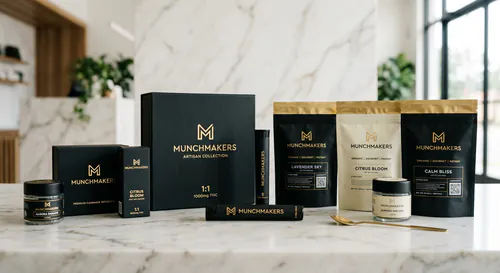
Packaging is where a lot of brands underinvest. The device itself might be a modest piece of hardware, but a well-designed box, tube, or sleeve completely changes the perceived value. Custom packaging is often the difference between a product that looks like it came from a serious brand and one that looks like a white label job with a logo on it.
Battery specs worth understanding before you order
If you're branding a 510 battery or building a disposable product, a few specs matter more than the rest.
Capacity is measured in milliamp hours (mAh). A 280mAh battery will get through a small cartridge before needing a charge. A 650mAh battery can usually outlast two or three cartridges. For a branded product you're selling or giving away, the battery should not be the thing that fails first. A dead vape pen in a customer's hand is a bad brand experience. We'd suggest nothing under 350mAh for branded 510 batteries sold as retail products.
Voltage output affects how the oil vaporizes. Most 510 cartridges are designed to run between 3.3V and 4.0V. Batteries with adjustable voltage let the user tune their experience. Fixed-voltage batteries simplify things but offer less control. Variable voltage is a feature worth having on a product you're positioning as premium.
Draw activation vs button activation is a user experience question. Draw-activated devices fire when the user inhales. Button-activated devices require pressing before inhaling. Draw activation feels more intuitive to new users. Button activation gives experienced users more control and tends to be more reliable in pockets since it won't accidentally fire. For a brand targeting broader audiences, draw activation is usually the friendlier choice.
Charging connection matters more than people think. Micro-USB is still common on cheap hardware but creates friction when a user doesn't have the right cable. USB-C is now the right call for any branded product meant to imply quality. Magnetic charging connectors are used on some premium devices and are genuinely nice, though they add cost.
Compliance and the real constraints on vape branding
The cannabis vape market is heavily regulated, and the rules vary considerably by state. This is not an area to wing it.
In most US legal markets, vape products need child-resistant packaging. The primary packaging the device ships in must meet ASTM F3125 standards or the state-specific equivalent. Your product design needs to account for this before you finalize packaging specs, not after.
Labeling requirements for cannabis vapes typically include THC content, batch number, a universal symbol indicating cannabis, warning language, and the licensed producer's information. The exact requirements differ by state, and the panel size on a small vape package can make meeting all those requirements a layout challenge. Work with a graphic designer who knows cannabis compliance, not just brand design.
Health warnings on nicotine vapes are governed by the FDA under the Tobacco Control Act. If your custom vape product includes nicotine, the regulatory environment is significantly more restrictive and will require working with a compliance attorney. Cannabis brands operating in licensed state markets are primarily dealing with state cannabis regulators, but that landscape is also changing quickly as more states legalize and the federal picture shifts.
Color and imagery restrictions are in place in many states. Packaging that could appeal to minors is prohibited, which in practice means avoiding cartoon characters, bright candy-like color schemes, and anything that mimics food or beverage packaging. This sounds obvious until you're working with a designer who pushes for something playful and you have to explain why that doesn't work legally.
MOQs and what to realistically expect
Minimum order quantities for custom vape products are higher than most people expect on their first inquiry.
For branded 510 batteries with laser engraving or pad printing, MOQs typically start at 100 to 200 units. At that scale, per-unit costs are higher, but it's an accessible entry point for a new brand or a dispensary testing a branded accessory line. Above 500 units, pricing drops meaningfully.
For custom disposable vape pens with full-custom hardware and packaging, you're usually looking at 1,000 units minimum, and more often 2,500 to 5,000 to make the tooling and production setup economical. The cost per unit at those quantities can be reasonable, but the upfront capital commitment is real.
Lead times run 4 to 8 weeks for most custom orders, longer if the hardware requires new tooling. If you're planning a product launch around a specific date, start the conversation with your supplier at least 10 weeks out and get written confirmation of the production timeline before you announce anything publicly.
Choosing a supplier you can actually trust
The vape hardware industry has a significant amount of low-quality product flowing through it, and there are suppliers who will take your money and deliver hardware that doesn't perform. A few things worth checking before you commit:
Ask for lab reports. Any reputable manufacturer of cannabis vape hardware should be able to provide third-party testing showing that the materials in the cartridge, particularly the mouthpiece and the coil, don't leach harmful compounds when heated. Heavy metals testing is specifically important. This isn't paranoia; there were documented problems in the industry with low-quality cartridges, and you don't want your brand on a product with that history.
Request physical samples before finalizing any significant order. A digital rendering and the actual product can look different. The printing on a physical sample will tell you immediately whether the branding will look the way you expect.
Check certifications. Batteries and charging electronics sold in the US and EU have compliance requirements. CE certification for European markets, FCC compliance for the US. These aren't guarantees of quality, but their absence is a red flag.
Build in a quality check step. For orders above 500 units, it's worth paying for a third-party inspection before the shipment leaves the factory. The cost is modest compared to the cost of receiving a full order of defective product.
Where a branded vape pen fits in your broader product lineup
A custom vape pen doesn't exist in isolation. It's part of a brand experience, and the strongest cannabis brands think about it that way.
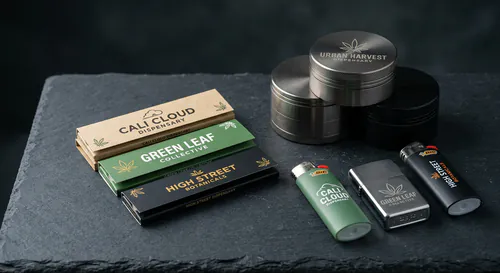
If you're a dispensary building a branded accessory line, a vape battery makes sense as part of a set that might also include a grinder, a storage solution, and a lighter. Each item is a touchpoint. Each item is an opportunity for your logo to be in a customer's environment. The cohesion across products is what makes it feel like a real brand rather than a collection of random merch.
If you're a cannabis brand primarily selling cartridges, a branded 510 battery is a natural companion product. It keeps your branding on the hardware between cart purchases, and it gives you something to include in a welcome kit or gift-with-purchase offer.
For event marketing, a custom vape pen or branded vape accessory is a high-perceived-value item that fits in a pocket and travels home with the person. It will be used, and your brand will be seen. That's the whole point. MunchMakers can help you think through a full branded lineup if you're planning a product launch or a trade show presence.