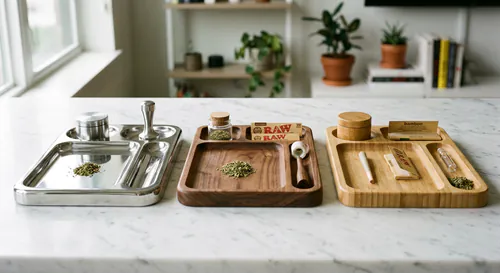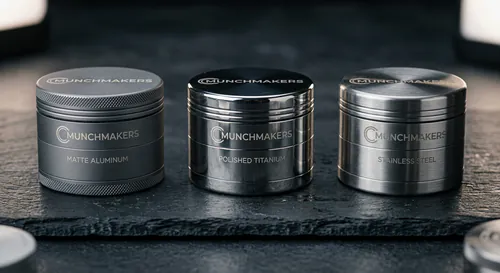
If you've ever watched freshly ground herb scatter across a couch cushion or disappear into carpet, you already know the problem. A rolling tray fixes that. It's one of the more unglamorous cannabis accessories out there, but once you have one you'll use it every single session. The question isn't really whether to get one — it's figuring out which size and style actually fits how you smoke.

What a Rolling Tray Actually Does
A rolling trays is a dedicated workspace. It keeps your rolling papers, grinder, filters, and whatever else you need in one place with raised edges so nothing slides off the table.
You can technically roll on a coffee table, a magazine, or a plate. People do it. But a flat surface with no edges means any bump or breeze scatters your stash, and suddenly you're on your hands and knees looking for ground herb on a dark floor. A tray eliminates that problem. The raised perimeter keeps everything contained, and a good shape means loose bits naturally slide back toward the center rather than piling up in corners.
Beyond containment, trays give your gear a home base. Your papers, lighters, and filters stop floating around the room and live somewhere specific. For material-specific options, see our guide on Bamboo Rolling Trays Wholesale: Eco-Friendly B2B Guide.

Rolling Tray Dimensions: What the Sizes Actually Mean
Size is the first decision and honestly the most important one. Get this wrong and you'll either feel cramped every session or end up with a tray that takes over your entire side table.
Small Trays (around 5" x 7")
Small trays fit in a backpack pocket and don't take up much real estate on a table. If you roll alone and keep it simple — papers, a little herb, done — a small tray covers it. They're also good for a nightstand setup where space is tight.
The trade-off is workspace. If you like having your grinder, papers, filter tips, lighter, and a stash jar all within reach at the same time, a 5" x 7" tray gets crowded fast. You'll spend half your time moving things around to make room. It's workable, but it's not comfortable. Small trays are best when portability is the actual priority, not just a nice-to-have.
Medium Trays (7" x 11" to 9" x 12")
This is the most common size for good reason. A medium tray gives you enough room to spread out your gear without dominating a coffee table. You can have your grinder on one side, papers and filters in the middle, and still have open space to actually roll. Most people who don't have a specific reason to go smaller or larger land here.
Medium trays are also the most available size. You'll find the widest selection of designs, materials, and price points in this range, which means you're not compromising on style just because you want something practical. They're portable enough to carry room to room, but they're not really backpack-friendly unless you have a big bag.
Large Trays (12" x 12" and up)
Large trays are for people who have dedicated space and want maximum room to work. If you smoke with friends regularly and people are sharing the workspace, a large tray makes that feel less chaotic. Everything has room. Nobody's knocking into each other's gear.
Some large trays have built-in compartments, slots for papers, or small drawers. That kind of storage integration makes more sense at this size because there's actually room for it without eating into your rolling surface. The downside is obvious: these don't travel and they take up meaningful space wherever they sit.
Large trays also tend to get treated as display pieces. The surface area gives designers more room to work with, so you see more elaborate art, deeper engravings, and more interesting shapes at this size. If you want a tray that looks good on a shelf when it's not in use, go large.
Custom Folded Rolling Tray - Folds flat for travel
Design Details That Actually Affect Usability
Once you've settled on size, pay attention to the physical design. These details sound minor until you're using the tray every day and one of them is annoying you constantly.
Curved vs. Square Corners
Sharp square corners create collection points for ground herb. Bits get lodged in there and you have to pick them out with a finger or a brush. Curved corners mean loose herb slides back toward the center naturally when you tip or tilt the tray slightly. After a month of daily use, you'll appreciate this more than you'd expect. Most metal trays have curved corners by default. Some wooden and acrylic trays go with sharper angles for aesthetics — if that's the case, factor in a bit more cleaning effort.
Edge Height
Higher edges are better containment but can occasionally get in the way when you're sliding something across the tray. Most trays hit a reasonable middle ground around half an inch to three-quarters of an inch. Too low and things slide off; too high and the edge catches your hand awkwardly when you're trying to gather herb. Look at the photos before buying and try to judge the actual lip height relative to the tray surface.
Compartments and Slots
Some trays add compartments for lighters, papers, or filter tips. This is genuinely useful if those items are always floating off the tray during a session. A dedicated slot for a lighter means it's always there when you reach for it. A slot for papers means the pack doesn't fall off the edge.
The catch is that compartments eat into rolling surface area. On a medium tray, a large compartment section can leave you with a cramped main area. On a large tray, it's less of an issue. Before buying a compartmentalized tray, think about whether you'd actually use those sections or whether you'd prefer the extra flat space.
Lids
Magnetic lids or hinged covers let you close everything up between sessions. This is useful if you need to move the tray quickly, if you have cats who like to investigate things, or if you're traveling and want to keep the contents contained. Some lids are solid and add meaningful weight and cost. Others are thin and mostly decorative.
If you leave your tray set up on the same table all the time, a lid isn't doing much for you. If the tray moves regularly or gets stored between sessions, a lid saves a lot of setup time.
Surface Texture
A completely smooth surface is easy to clean but can feel slippery when you're trying to roll. Some trays have a slightly textured surface or a matte finish that gives a little more grip. This is more relevant for rolling joints and blunts than for just organizing gear — if you roll directly on the tray surface, texture matters. If you use a mat or just organize on the tray rather than roll on it, surface texture is less important.
Materials: What You're Actually Getting
The material affects how the tray feels, how long it lasts, how easy it is to clean, and what it looks like. Here's an honest breakdown.
Metal
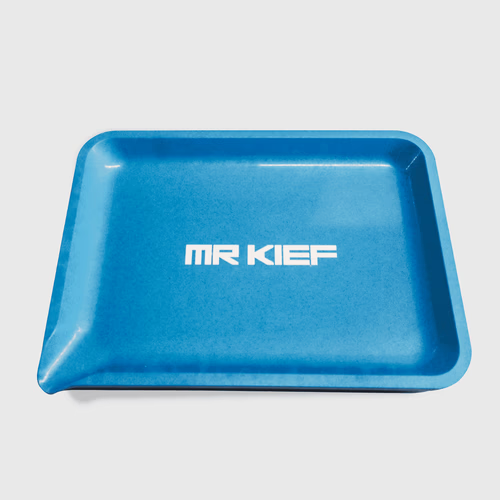
Metal trays are the default for most people. Tin and aluminum trays are cheap, lightweight, and clean up in seconds. They take abuse without cracking. The tin ones can dent if you drop something heavy on them, but they don't break. The surface holds printed graphics well, so most licensed artwork trays are metal.
The downside of basic metal is that it feels utilitarian. A thin tin tray flexes when you press on it and doesn't feel premium. If you want metal with more weight and rigidity, look at thicker aluminum or stainless steel options — those cost more but feel substantially better in the hand.
Wood
Wooden trays look good in a way that metal rarely does. Bamboo and hardwood trays have a warmth and weight that feels deliberate rather than just functional. Many wooden trays have carved or routed compartments integrated directly into the surface, which looks clean and holds up well over time.
Wood needs more care. Don't let water pool on it. Don't soak it to clean it. A damp cloth wipe-down is usually fine, but prolonged moisture will warp and stain wood. If you're rough with your gear or you want something you can just throw in a bag without worrying about it, wood probably isn't your material. If you want something that looks good on a shelf and you'll treat it reasonably well, wood is a solid choice.
Glass
Glass trays are visually clean and easy to wipe down — residue doesn't cling the way it does on some plastics. They look modern and can be quite thick and substantial. The obvious issue is that glass breaks. Drop a glass tray on a hard floor once and you're sweeping up shards. If you have a stable setup where the tray doesn't move much, glass can work. If it's going to get moved around or you have kids or pets in the space, it's probably the wrong call.
Silicone
Silicone trays are nearly indestructible and cleaning them is almost effortless — most are dishwasher-safe. They're lightweight and won't scratch anything they sit on. For travel or outdoor use, silicone is genuinely practical.
What silicone doesn't do is look particularly good. Most silicone trays look functional, not stylish. The surface can also attract dust and lint in a way that harder materials don't. For a dedicated home setup where aesthetics matter, silicone is usually not the first pick. For a travel kit or a backup tray, it's hard to beat.
Acrylic and Plastic
Acrylic trays come in a range of colors and can have interesting transparent or frosted looks. They're lightweight and affordable. The problem is scratch resistance — acrylic scratches easily and a scratched surface shows every mark. After a few months of regular use, an acrylic tray often looks noticeably worn. Harder acrylic formulations are better, but budget acrylic is genuinely fragile. For occasional use or if you want a specific color that isn't available in other materials, acrylic is fine. For daily use, you'll probably want something more durable.
Before You Buy: Practical Questions
A few things worth actually thinking through before spending money:
Where will it live? Measure the space before ordering a large tray. A tray that's too wide for your coffee table doesn't work no matter how good it looks in photos. Know your dimensions.
How much gear do you keep on it? If you want your filter tips, papers, grinder, stash jar, and lighter all on the same surface, that takes more room than you might think. Lay out your actual gear and measure the footprint before settling on a size.
Does it need to move? A tray that lives on one table permanently can be heavy, fragile, and unwieldy. A tray that moves between rooms or goes in a bag needs to be durable and reasonably compact. These are different products.
How rough is your environment? Kids, dogs, clumsy roommates, outdoor use — all of these are relevant. Glass and thin acrylic aren't great in chaotic environments. Metal and silicone hold up better.
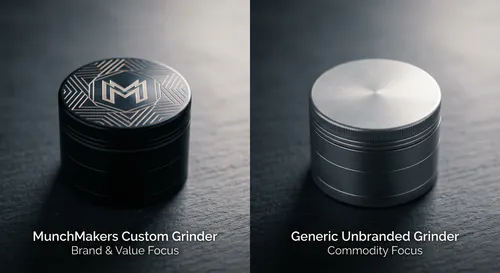
What are you actually willing to spend? A basic tin tray works fine and costs a few dollars. High-end wood or custom-engraved trays can run $40-100 or more. The expensive ones aren't necessarily better at the core job — they're better looking and better made. Decide what matters to you.
Getting More Out of Your Tray
A few things that genuinely improve daily use:
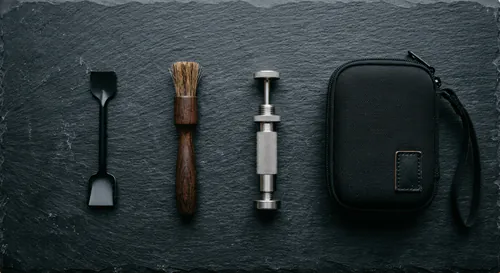
A small soft brush — even a clean cosmetic brush — is useful for sweeping loose herb back into a pile without scratching the surface. Keep one on the tray and you'll use it every session.
If you have a metal tray and want to protect the surface or make cleanup easier, a silicone mat cut to fit works well. The mat catches most of the mess and you just pull it out and rinse it. This also works for wooden trays where you don't want direct contact with resin.
If your tray has no compartments and you want lighter organization, small magnetic metal containers stick to the tray surface on metal trays and keep filters or papers separated without cluttering the main workspace. A magnetic ashtray can also snap right on if you want one nearby.
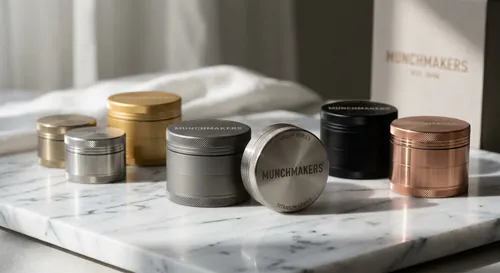
Matching your stash jar, grinder, and tray in the same material or color family isn't just aesthetic — it makes the whole setup feel more intentional and organized rather than a random collection of gear.
Common Sizing Mistakes
The most common mistake is going too small. People assume they don't need much space, buy a small tray, and spend every session with their grinder hanging off the edge and their papers on the floor next to the tray. If you're on the fence between small and medium, go medium.
The second common mistake is buying compartments you won't use. A tray with six dedicated slots sounds organized, but if you only use two of them, those other slots are just taking up space on the rolling surface. Think about what you actually keep on your tray right now — not what you imagine having in an ideal setup.
Cheap thin metal trays feel fine in photos and terrible in use. The flex when you pick them up, the edges don't feel finished, and they look worn after a few weeks. Spending $10-15 more for a tray with actual thickness makes a noticeable difference.
Ignoring cleaning requirements is also common with wood trays. Someone buys a nice bamboo tray, rinses it with water a few times, and ends up with warped wood and water stains. Know what your material needs before committing to it.
The Short Version
Rolling trays are straightforward products, but there's a real difference between one that works and one that works well for your specific setup.
On size: small if portability is genuinely important to you, medium as the default for most solo use, large if you have dedicated space or smoke with other people regularly.
On rolling tray dimensions specifically, the standard medium tray at 7" x 11" is a safe choice for most people. It's enough workspace to have your full kit laid out without the tray taking over the table. If you're stocking for wholesale, medium is what moves most consistently across the widest range of customers.
On material: metal for durability and easy maintenance, wood for looks and a more premium feel with the trade-off of more care needed, silicone for travel or rugged use, glass if you have a stable setup and want a clean aesthetic. Skip thin acrylic for anything you'll use daily.
On features: curved corners over square, raised edges for containment, compartments only if you'll actually use them. A lid is only worth it if the tray moves or gets stored regularly.
Get the size right first. Everything else is easier to get right once you're not fighting a cramped workspace every session.