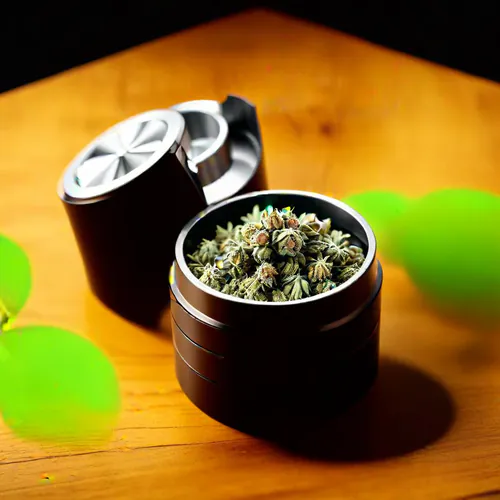
Weed Grinders with Kief Catchers: Why You Need One
If you smoke or vape weed, you need a grinder. Breaking up bud by hand is messy, wasteful, and gives you uneven pieces that burn hot and fast. A decent grinder chops everything up consistently so it burns evenly and you actually taste what you're smoking.
The real upgrade though is getting one with a kief-catching grinders catcher. That fine powder collecting at the bottom is trichomes — the resin glands that hold the bulk of the THC and terpenes. Most people lose it without realizing. With the right grinder, you collect it automatically and use it later. It's free potency you were already throwing away.
What Exactly is a Weed Grinder?
It's a small device with teeth that shreds your flower into smaller pieces. They come in a few configurations:
- 2-piece grinders — grind and go. Good for portability and simplicity, nothing extra.
- 3-piece grinders — add a storage chamber underneath so ground herb doesn't sit in the teeth section.
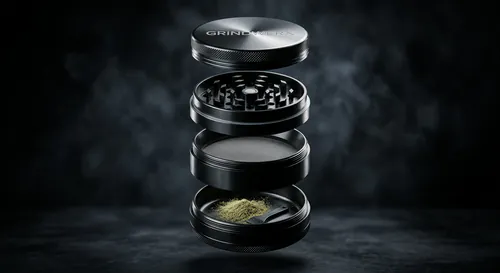
- 4-piece grinders — the setup you want if kief collection matters. Three chambers: grinding on top, herb storage jars in the middle, kief tray at the bottom separated by a fine mesh screen.
If you smoke regularly, the 4-piece is worth it. A good grinder beats sticky fingers and unevenly broken bud every time.

Need Something Simple That Works?
Our Diamond Edge Grinder gets the job done without any fancy bells and whistles. Just solid grinding at a price that won't make you cry.
Check It Out
What to Look For
Here's what actually matters when choosing a kief catcher grinder:
- The kief screen — this is the whole point. A 4-piece grinder has a mesh screen between the herb chamber and the bottom kief tray. Screen size matters: too coarse (above ~150 microns) and plant matter falls through with the kief; too fine (below ~75 microns) and barely anything collects. Most quality grinders sit around 100–120 microns, which catches kief cleanly without clogging fast.
- Chamber layout — three sections: top for grinding, middle where herb drops after cutting, bottom where kief accumulates. Keeps ground herb from mixing back into the teeth and keeps kief separate until you're ready to use it.
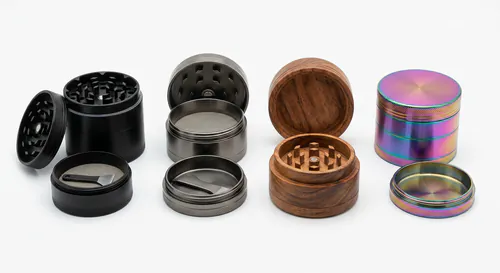
- Build material — aluminum or stainless steel. Metal grinders hold their edge and don't contaminate your herb the way plastic does. Biodegradable options also exist if that matters to you.
- Tooth design — diamond-cut or pyramid teeth cut through bud rather than mashing it. You shouldn't have to crank hard. If it takes real effort, the teeth are either dull or poorly angled.
- Size — 2-inch diameter fits most pockets and handles a gram or more per grind. Larger 2.5-inch or 3-inch grinders process more at once but aren't as portable.
Size and Portability
If you carry your grinder out of the house, get something compact. A 2-inch grinder is the standard for a reason — enough grinding capacity for a session, small enough to disappear in a pocket or bag.
One thing worth checking: magnetic lids. A strong magnet keeps the top chamber sealed so ground herb doesn't spill when you flip it over or carry it around. It also makes it easier to open one-handed. Grinders without magnets rely only on thread tension, which loosens over time.
What to Actually Consider When Buying
- Material — aluminum is lightweight and handles daily use without issue. Steel is heavier and even more durable. Skip plastic; the teeth dull fast and the threads strip out.
- Kief screen quality — check reviews specifically for kief collection. If people mention getting a lot of plant material in the kief tray, the screen mesh is too coarse. If no one's collecting anything, it's too fine or the tolerances are off.
- Size — stay home mostly? A larger grinder is more comfortable to use. Always moving? Go 2 inches or under.
- Price — the $5 gas station grinders are garbage. Somewhere around $20–40 gets you solid aluminum construction and a real kief screen. Above that you're paying for precision machining and tighter tolerances, which does make a difference if you grind every day.
- Reviews — if multiple people report the same problem (screen clogs, magnets falling out, threads cross-threading), that's not bad luck, that's the product.
- Brand — Santa Cruz Shredder is the benchmark for premium grinders. Pricier, but the tolerances are tight and the screens last. There are solid mid-range options too, but if you want to buy once and be done, that's the name most people land on.
Common Questions
What exactly is kief and why does it matter?
Kief is the powdery residue that separates from the flower during grinding. It's concentrated trichomes — the resin glands on the outside of the bud that contain the bulk of the THC and terpenes. Because it's separated from the plant material, a small amount goes a long way. Sprinkle it on a bowl, press it into hash, or roll it into a joint for noticeably stronger results.
Can any grinder collect kief?
No. You need a grinder built with a mesh screen and a separate collection chamber below it. 2-piece grinders don't have this at all. A 3-piece adds a storage chamber but still no screen. You need a 4-piece for actual kief collection.
Should I get a 2-piece or 4-piece grinder?
If kief collection is the goal, get the 4-piece. 2-piece grinders are fine for basic grinding, but every session you're losing trichomes that fall off and stick to the sides. The 4-piece catches them automatically. It's a few extra dollars upfront and you get something back every time you grind.
How do I clean this thing?
Take it apart and brush out the loose residue with a small stiff brush — an old toothbrush works fine. For the kief screen specifically, brush from the top side downward so you're pushing residue into the tray, not packing it into the mesh. If it's heavily gunked up, soak the metal pieces in isopropyl alcohol (91% or higher) for 20–30 minutes, rinse with warm water, and let them dry completely before reassembling. Clean it every few weeks and the screen won't clog.
Can I grind other stuff in it?
Yes, most dried herbs work fine. Just clean it out first if you care about flavor crossover. If you regularly grind both weed and cooking herbs, keeping separate grinders makes more sense — not because it damages the grinder, but because everything starts tasting like everything else.
How to Actually Use It
Using a grinder is straightforward, but a few things make the difference. Break larger nugs into smaller chunks before loading — don't try to force a whole nug in. Place pieces in the outer ring of the top chamber, away from the center post where the magnet sits. Close the lid and rotate back and forth with moderate pressure.
Good teeth make this easy. If you're fighting it, either the teeth are dull or the bud is too fresh and sticky. For a finer grind, keep rotating longer. The kief screen does its job passively — the trichomes separate and fall through on their own as you grind. Check the bottom chamber periodically and it'll accumulate on its own. No need to tap or shake, though a gentle tap does help dislodge anything stuck to the screen.
Bottom Line
A grinder with a kief catcher is a small change that adds up over time. Every session you're recovering trichomes that would otherwise be lost, and the four-chamber design keeps ground herb, plant material, and kief all separate until you need them.
When you're shopping, focus on screen mesh quality, material, and size. Metal over plastic, 100–120 micron screen for clean kief collection, and whatever size fits how you actually use it. Read reviews for reported screen clogging or fitment issues — those problems don't go away on their own.