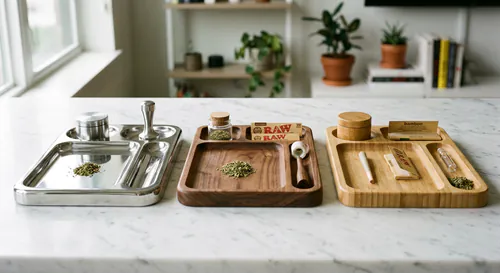
The material question matters more than most people think
When you're picking up a rolling tray, it's easy to just grab whatever looks cool without thinking about what it's made of. I've used metal trays, wood trays, bamboo trays, and a few that I still can't fully identify. They all hold your stuff, sure. But the differences in how they perform day-to-day are bigger than the marketing usually lets on.
This isn't going to tell you that every material is great for different reasons. Some are genuinely better for certain situations. Some age terribly. Some clean up in 30 seconds and some turn into a sticky mess after a few months of real use. Let's go through each one honestly.
Metal rolling trays
Metal is the default choice for good reason. Most rolling trays on the market are made from tinplate steel or aluminum, and both have real advantages over other materials.
Durability is the obvious one. A metal tray won't crack, chip, or warp. You can drop it, leave it in a car on a hot day, and clean it with something stronger than a damp cloth. The surface is non-porous, which matters a lot when you're wiping up sticky resin, shake, and whatever else accumulates on a tray you use regularly. Metal cleans up fast and completely.
Print quality on metal is also excellent. Sublimation printing on metal produces sharp, saturated graphics that hold up for years without fading or peeling. If you're buying a custom tray with a design on it, metal is the material that will keep it looking good longest. UV printing on aluminum is similarly durable.
The downside is weight and sound. Metal trays are heavier than bamboo or thin wood, and when you set one down on a hard surface it makes noise. Not a dealbreaker, but worth noting if noise is a concern in your environment. Metal is also cold to the touch, which some people find unpleasant early in the morning.
Price range for quality metal trays runs $15 to $40 for standard sizes. Custom printed metal trays for personal use or promotional purposes start around the same and scale with print complexity and quantity.
Aluminum vs tinplate steel
Within the metal category, aluminum and tinplate steel behave differently. Aluminum is lighter and easier to print on. It doesn't rust, which matters if your tray ever gets wet. Tinplate steel is heavier and more rigid, which some users prefer because it feels more substantial. Both are durable enough for daily use. Neither will give you problems for years of normal use.
The cheap metal trays you'll find at gas stations are usually thin tinplate with a spray-printed design that scratches off within a few weeks. Quality matters here. A good metal tray has a smooth rolled edge, even paint or print coverage, and enough weight that it doesn't slide around on its own. The cheapest ones have sharp stamped edges and flimsy designs. Spend $5 more and you'll notice the difference immediately.
Wood rolling trays
Wood trays occupy a specific niche, and they do it well. The appeal is genuine: wood looks good on a desk, feels warm in your hands, and has a natural character that metal doesn't. A well-made solid wood tray can be genuinely beautiful.
Performance-wise, wood is more limited than metal. The surface is porous to some degree, which means fine herb dust and resin can work into the grain over time. Deep cleaning a wood tray is more involved than wiping down metal. You can't use harsh solvents without risking damage to the finish. Water exposure is also a concern, particularly with unsealed wood, where repeated moisture contact will warp or crack it eventually.
Engraving on wood looks excellent and feels more premium than printing. Laser-engraved logos and patterns on a solid wood tray have a craftsmanship quality that sublimation printing on metal doesn't replicate. If you're looking for something that feels like a real object rather than a manufactured product, wood delivers that.
Thicker hardwood trays in materials like walnut or maple are genuinely durable and will last years if you treat them reasonably. Thin MDF or particleboard trays marketed as "wood" are a different story. They're cheap, they absorb moisture badly, and the surface coating peels under regular use. Worth avoiding entirely. Actual hardwood costs more but lasts much longer. You can find solid hardwood trays in the $25 to $60 range.
Check out the full selection of wood and organic products if the natural aesthetic is what you're after.
Bamboo rolling trays
Bamboo deserves its own section because it's different enough from wood that the comparison isn't straightforward. Bamboo is technically a grass, not a wood. Its cellular structure is denser and harder than most woods, which makes it more resistant to moisture, warping, and surface damage. A quality bamboo tray handles humidity better than softwood or MDF alternatives.
The environmental angle is real. Bamboo grows fast, something like 3 to 5 feet per day in optimal conditions, and doesn't require replanting after harvesting. For buyers who care about sustainable materials, bamboo is a more defensible choice than hardwood, even if that hardwood is responsibly sourced.
Surface feel on bamboo is slightly textured compared to the smoothness of metal, which some people prefer for keeping rolling papers in place. It also doesn't get as cold as metal in low temperatures, so if you're rolling in a drafty room in winter, bamboo is noticeably more comfortable to work on.
The practical limitation with bamboo is the same as wood: it's harder to clean than metal. Fine resin and herb dust work into the natural grain lines. You can wipe it down with a damp cloth and that handles most of it, but for deep cleaning you need to be more careful than with metal. Avoid soaking bamboo in liquid, the structure can delaminate if it gets thoroughly saturated.
Bamboo trays typically run $20 to $45, putting them in a similar price tier to quality metal. The price difference between bamboo and metal isn't really about quality at this point, it's about preference.
How each material handles customization
If you're buying a personalized tray or ordering in bulk for your brand, the material has a direct impact on what's possible and how good it looks.
Metal trays accept the widest range of printing methods. Full-color sublimation, UV printing, screen printing, and pad printing all work on metal surfaces and produce results that last. Metal is by far the best material if you want photographic detail or complex color gradients in your design.
Wood takes engraving beautifully. Laser engraving on wood creates deep, high-contrast marks that don't fade or wear. You can also print on sealed wood surfaces, but the print sits on top of the coating rather than bonding to the material, so it's more vulnerable to wear than engraving.
Bamboo engraves similarly to wood, with natural variation in tone depending on the grain. The look is more organic and less uniform than metal printing, which can be exactly what you want if you're going for a natural brand aesthetic.
Material comparison at a glance
| Material | Durability | Cleaning ease | Print/engrave quality | Eco-friendliness | Price range |
|---|---|---|---|---|---|
| Aluminum | Excellent | Easy | Excellent (sublimation/UV) | Moderate | $15 to $40 |
| Tinplate steel | Very good | Easy | Very good | Moderate | $12 to $35 |
| Hardwood | Good (with care) | Moderate | Excellent (engraving) | Moderate to good | $25 to $60 |
| Bamboo | Very good | Moderate | Good (engraving) | Very good | $20 to $45 |
| MDF / particleboard | Poor | Difficult | Poor | Low | $8 to $20 |
Weight and portability
This one matters if you move your tray around. A large aluminum tray is heavier than a bamboo tray of the same size, and both are heavier than a thin tinplate tray. If portability is your main concern, thin metal or bamboo are your best options. Large solid hardwood trays are not built for travel.
Standard tray sizes run from small (roughly 7 by 5 inches) to large (roughly 12 by 7 inches). Medium trays in the 9 by 6 inch range are the most common because they fit most rolling setups without being unwieldy. At medium size, any material works for travel. At large, you start to notice weight differences more.
Which material is right for your situation
For daily use at home, metal wins. It's the most durable, easiest to clean, and produces the best print results if you want a custom design. There's a reason most seriously used trays in dispensaries and smoke shops are metal. The maintenance is minimal and the lifespan is long.
For someone who values aesthetics and doesn't mind slightly more careful cleaning, bamboo is a genuinely good choice. It looks natural, it's harder than most people expect, and it handles regular use well. I'd pick bamboo over wood for most buyers because of the moisture resistance difference.
For gift-giving or occasional use, hardwood is the premium option. A handsome walnut or maple tray is a nicer gift than a metal one, and it will last for years if treated reasonably. Just steer clear of anything that lists the material as "MDF" or doesn't specify the wood type. That's a red flag for cheap construction.
If you're ordering branded trays in quantity for a business, metal is almost certainly the right call. The print quality is better, the durability under heavy use is better, and the cost at volume is typically lower than wood or bamboo. You can read more about what goes into picking the right option in the complete custom rolling tray guide.
The worst purchase is a cheap wood-look tray that's actually painted MDF. It will warp, the surface will peel, and you'll be replacing it within a year. Spend $20 on a basic aluminum tray and it will outlast several of the budget alternatives. Material honesty matters a lot in this product category.