Grinders get gross fast. Resin coats the teeth, kief clogs the screen, threads start sticking, and before long you're wrestling with a piece that used to spin effortlessly. I've cleaned enough of them, from cheap acrylic two-piecers to high-end titanium four-piecers, to know that the material determines everything about how you approach the job.
Here's what actually works, by material, with the specific times and concentrations that matter.
What you'll need before you start
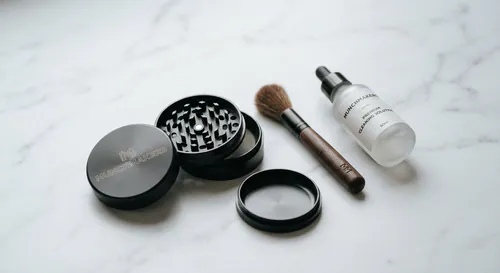
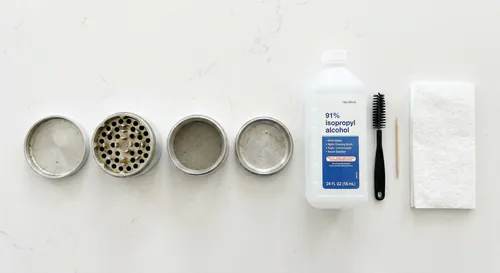
The basics cover most situations: isopropyl alcohol (90% or higher, 70% works but takes longer and leaves more residue), a soft-bristle toothbrush dedicated to this purpose, toothpicks or a dental pick, a few small bowls or glasses, paper towels, and a freezer if you're dealing with a seriously packed grinder. A coin, yes, a regular coin, is useful for maximizing kief recovery, which I'll get to below.
For wooden grinders, substitute warm soapy water for the alcohol. Wood and isopropyl are not friends.
Aluminum grinders
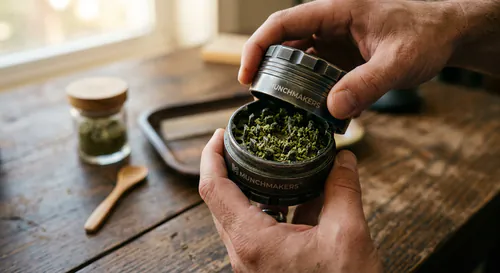
Aluminum is by far the most common grinder material, and it cleans up well as long as you don't rush the process. Disassemble the grinder completely, all chambers, the lid, the screen, and the kief catcher if there is one.
Put the pieces in a small bowl and pour in enough 91% or 99% isopropyl alcohol to fully submerge them. Let them soak for 20 to 30 minutes for a standard cleaning. If you haven't cleaned it in months, go 45 minutes. You'll see the liquid turn amber-brown as the resin dissolves, that's what you want.
After soaking, use a toothbrush to scrub the teeth and the threading. A toothpick clears residue from the screen holes. Rinse every piece under warm running water, shake off the excess, and let everything air dry completely before reassembling. Rushing the drying step is how you end up with rust spots near the threads.
One thing to avoid: dishwashers. The heat warps the tolerances over time, and the detergent strips any anodizing on colored grinders.
Titanium grinders
Titanium cleans up almost identically to aluminum, but it's more forgiving. You can soak it longer without worry, up to an hour in 91% isopropyl, and the harder surface means the toothbrush can be a bit more aggressive. Titanium doesn't corrode, so if you forget a piece in the soaking bowl overnight, it won't be ruined.
The one thing titanium grinders tend to have that cheaper aluminum ones don't is tighter machining tolerances. That means residue can pack into tighter gaps. Use a dental pick along any grooves before the soak, not after, so the alcohol can get into those spaces.
Acrylic grinders
This is where you need to slow down. Isopropyl alcohol at high concentrations can fog and crack acrylic, especially with prolonged exposure. Use 70% isopropyl at most, or skip the alcohol entirely and use warm water with a small amount of dish soap.
Soak acrylic pieces for no more than 10 minutes. Any longer and you risk clouding the surface. Scrub lightly, acrylic scratches more easily than metal, and those scratches trap residue for future cleanings. Rinse thoroughly and dry by hand rather than air drying; water spots are harder to remove from acrylic.
Honestly, if you use an acrylic grinder heavily, you'll hit a point where it's more practical to replace it than to restore it. The teeth dull faster, the threading wears down, and the material doesn't handle repeated cleanings as well as metal does. That said, for occasional use, acrylic grinders serve their purpose and clean up fine with gentle treatment.
Wood grinders
Wood requires the most care. Isopropyl alcohol at any concentration will dry out and crack the wood over time, and water left sitting will cause warping and swelling that ruins the threading. The goal is a quick, minimal-moisture clean.
Use a dry, stiff brush first to knock off loose residue. For stickier buildup, dampen a cloth or cotton swab with a small amount of warm soapy water and clean each section individually. Work quickly, you don't want the wood sitting wet. Immediately wipe everything down with a dry cloth, then let the pieces air dry for several hours before reassembling. Once dry, a very light application of food-safe mineral oil on the exterior helps condition the wood and prevents future buildup from adhering as aggressively.
Wood grinders are also the ones I'd recommend cleaning most frequently, roughly every week with heavy use, because buildup in wood is harder to remove the longer it sits. Letting it go a month means you're scraping, not just brushing.
Deep clean vs. quick clean
A quick clean is what you do every week or two: disassemble, brush the teeth out over a sheet of paper, clear the screen with a toothpick, wipe the threading with a dry cloth or a cotton swab with a small drop of isopropyl. Takes three minutes. It prevents the kind of buildup that turns into an actual problem.
A deep clean, the full soak-and-scrub process described above, is for metal grinders every four to six weeks with regular use, or whenever the grinder starts sticking, the teeth aren't cutting cleanly, or the kief screen is visibly clogged. If you smoke infrequently, you can probably stretch to every two or three months.
The biggest mistake people make is only cleaning when the grinder is visibly bad. At that point you're spending 30 to 45 minutes on a job that would have taken five if you'd done it two weeks earlier.
Recovering stuck kief
Before you soak anything, think about the kief. Once you introduce isopropyl to the screen, the kief dissolves into the solvent and is effectively gone. If you have a worthwhile accumulation sitting in the catcher, deal with that first.
The freezer method is legitimately useful here: put the fully assembled grinder in the freezer for 30 minutes. The cold makes the trichomes brittle and less sticky. When you take it out, put a coin (a dime or a nickel works well) in the herb chamber, close it, and shake it firmly over a clean sheet of paper or a folded piece of white cardstock. The coin knocks the frozen kief loose from the screen, and you'll see noticeably more collection than you would at room temperature. Collect what falls into the catcher, then disassemble for cleaning.
If the screen itself is visibly clogged but you want to clear it without losing what's there, a dry toothbrush from below the screen dislodges a surprising amount of kief back down into the catcher.
Preventing buildup
A lot of grinder maintenance comes down to what you're grinding. Very fresh, sticky flower clogs teeth and screens faster than properly cured, drier material. If you're using particularly resinous strains, plan on cleaning more frequently, the weekly quick clean becomes necessary rather than optional.
Avoid overfilling. Packing the grinder too tightly forces material into the threads and creates resistance that deposits more residue over time. Grinding smaller amounts more consistently keeps the teeth working efficiently and the threads cleaner.
One last thing: don't store ground material in the grinder. The moisture from freshly ground herb, left sitting, accelerates residue buildup and makes the next clean considerably harder. Grind what you need, transfer it, and store the rest as flower.
If you're looking for herb grinders worth keeping clean long-term, the material and machining quality make a significant difference in how the grinder holds up over months of use and repeated cleaning cycles. Cheap threading and thin walls are the first things to fail.
For more on picking the right grinder for your needs, see our guides on grinder cleaning basics and comparing grinder materials.