Why grinding matters more than you might think
A lot of new smokers skip the grinder entirely and just break up their weed by hand. I understand it. You are in a hurry, you do not want another piece of gear to carry around, and the bud looks fine as is. But there is a real difference in the final result, and it comes down to surface area. Ground weed exposes far more of the plant material to heat than chunky hand-torn pieces do. That means more even burns, better flavor, and noticeably better efficiency per gram.
The grind also determines how your session goes. Too coarse and you get air pockets, uneven burns, and runs in a joint. Too fine and you restrict airflow, get debris in your mouth, and choke a bowl. Getting the consistency right for your intended use is the actual skill here, and it is not hard once you know what to look for.
Using a grinder: step by step
Most people already own one of the herb grinders they are about to use. If you do not, the section below covers alternatives. But grinders are the standard for a reason, so let me walk through the actual process before getting into workarounds.
Start by breaking your bud down by hand into pieces that will fit in the grinding chamber. You do not need to go small. Pieces about the size of a pea or slightly larger work fine. The grinder teeth will do the rest. Removing any large stems at this point is a good habit. Stems do not grind well, they just jam between teeth and create resistance.
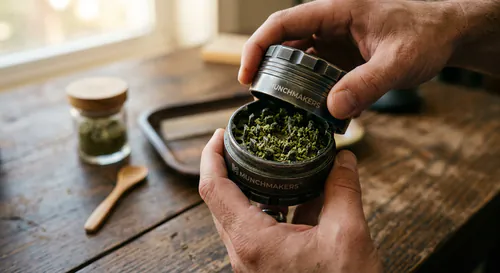
Load the pieces into the grinding chamber around the teeth. Place them between the teeth, not on top of them. If you pile weed directly on a tooth, it will just press against the lid without being cut. Fill the chamber but do not pack it tight. Leave some room for the pieces to move and fall onto the teeth properly as you rotate.
Replace the lid and apply gentle downward pressure as you start rotating. The first few rotations often feel like nothing is happening, especially if your pieces are too large or the chamber is overfull. That is fine. Give it 5 to 10 rotations, then flip the grinder upside down and do 5 more. The upside-down step is not obvious but it matters. It pushes material back up against the teeth for a second pass and produces a more even grind.
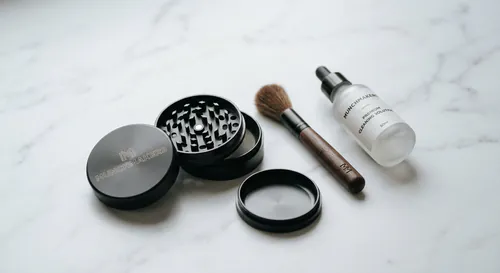
Tap the grinder lightly against your palm a few times before opening it. This loosens material stuck to the teeth or the walls of the chamber. If you have a 4-piece grinder with a kief catcher, unscrew the collection chamber below the screen to find your ground material. If you have a 2-piece, just open the lid and use a small brush or the back of a rolling tray to collect what is in the grinding chamber.
Total grind time for a normal session's worth: under 30 seconds once you know what you are doing.
Achieving the right consistency
The right consistency depends entirely on what you are doing with the material. There is no single "correct" grind size. Here is how to match grind to use:
| Use case | Target consistency | How to get there |
|---|---|---|
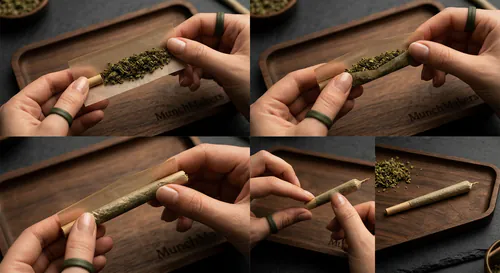
| Rolling a joint | Medium-fine, fluffy, no big chunks | Standard grind, 8-12 rotations total |
| Bowl or pipe | Medium, slightly coarser | Shorter grind, 5-8 rotations, check before overdoing it |
| Dry herb vaporizer | Fine and consistent, almost powdery | Long grind, 15-20 rotations, use a 4-piece with a fine screen |
| Blunt wrap | Medium, similar to joints but slightly coarser | Same as joint, maybe 1-2 fewer rotations |
| Kief collection | Fine, extended grinding | Long grind with a quality 4-piece, use the freezer trick |
For vaporizers especially, the grind consistency makes a bigger difference than most people expect. A vaporizer heats material by conduction or convection rather than direct flame, so uneven particle sizes mean some material vaporizes before others even get warm. An even, fine grind maximizes surface contact in the chamber and gives you consistent vapor from start to finish.
Grinding without a grinder: methods that actually work
No grinder? These methods are ordered from best to worst based on actual results, not convenience.
Scissors and a shot glass
This is the approach I would use if I had to give up my grinder. Put your bud in a small shot glass or similar narrow container. Use a pair of sharp scissors to snip rapidly, rotating the glass as you go so all the material gets cut. Aim for 60 to 90 seconds of cutting for a full session's worth. The shot glass keeps the material contained and the scissors make surprisingly clean cuts. You will end up with a consistency close to a medium grind from a standard grinder.
Clean scissors produce cleaner cuts. A dedicated pair of small scissors kept in your kit gives noticeably better results than kitchen shears.
Coffee grinder
An electric coffee grinder produces an extremely fine grind in about 2 seconds. That is both a feature and a problem. Too short and your material is uneven. Too long and you get powder. Use very short pulses (half a second each, with pauses in between) and check the consistency frequently. Clean the coffee grinder thoroughly before and after use. A dedicated coffee grinder just for weed, separate from your actual coffee grinder, is a legitimate option if you grind large quantities regularly.
An electric grinder designed specifically for herbs gives you similar speed without the dust-bowl problem of overdoing it in a coffee grinder.
Hands
Hand-breaking is the original method and it is fine for a bowl or bong where you want chunky pieces. It is genuinely bad for rolling. You end up with irregular sizes, seeds and stems you miss, and resin on your fingers. If hand-breaking is your only option for a joint, pull the pieces into thin strips rather than just crumbling. Thin strips roll better than irregular chunks.
Cheese grater
It works, technically. You run the bud across the fine side of a box grater and collect what falls through onto a plate or rolling tray. The grind is reasonably consistent but the process is messy and slow. I mention it because you will see it suggested online. It is not wrong, just not great. Clean results require a very dry bud and a grater with small holes.
Pill bottle and coin
Put a small coin in a pill bottle with your bud, seal it, and shake vigorously. This is probably the least effective method on the list. It crushes more than cuts, produces inconsistent results, and leaves material stuck to everything. In a genuine emergency where no other option exists, it gives you something to work with. But it is last resort territory.
Common grinding mistakes and how to avoid them
Overfilling the chamber is the most common one. If you load the chamber so full that pieces press against the lid when you try to close it, you will have a hard time rotating and the material will grind unevenly. Fill it about two-thirds full and you will get better results with less effort.
Leaving stems in is the second most common mistake. Stems are tough and fibrous. They wedge between teeth, make the grinder hard to turn, and produce no useful material. The 10 seconds it takes to pull major stems out before loading is worth it every time.
Not grinding long enough is a real issue for vaporizer users especially. Most people stop grinding when they feel like the material is "done," which is usually when resistance drops. That point is actually the beginning of an even grind, not the end. Keep going another 5 to 8 rotations past the point of low resistance for vape use.
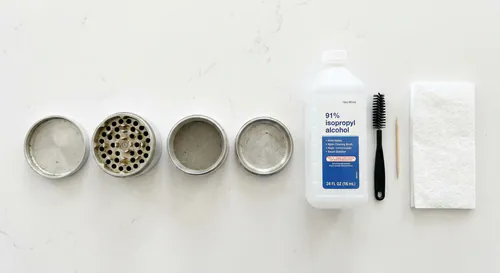
Using a dirty grinder is a consistency problem. Resin buildup on teeth means less cutting surface and more sticking. If your grinder is pulling material up when you remove the lid rather than leaving it in the collection chamber, it is probably overdue for a clean.
Wet vs dry bud: what changes
Fresh or slightly wet bud grinds badly in a standard grinder. It sticks to teeth, sticks to the chamber walls, and tends to mash rather than cut. If your material feels at all moist, let it dry for a day or two at room temperature before grinding. The difference is significant.
Conversely, very dry or old bud can turn to dust almost instantly. With older material, fewer rotations are needed than you might expect. Grind in short bursts and check frequently.
Humidity-controlled storage using Boveda packs (58% or 62% relative humidity) keeps material at the ideal moisture level for grinding and also preserves flavor and potency longer than uncontrolled storage.
Kief collection tips for grinder users
If you are using a 4-piece grinder, the kief catcher at the bottom collects fine trichomes through a mesh screen. You do not need to do anything special to collect kief. It accumulates on its own over time.
But you can speed up collection. Keep the grinder in the freezer for 20 minutes before opening the kief chamber. Cold makes trichomes brittle. When you tap the grinder lightly against your palm while still cold, significantly more kief falls through the screen than at room temperature. A small coin (a dime works well) placed in the collection chamber above the screen helps when you shake the cold grinder. The coin agitates the material and pushes more kief through.
A small, stiff brush keeps the screen clear. A clogged screen stops collecting kief entirely. Every few weeks, use the brush to clean the mesh from the underside to push accumulated material down rather than packing it back into the holes.
What type of grinder to use for different situations
Not all grinders are equal, and the right choice depends on how you smoke. A basic 2-piece aluminum grinder works fine for bowls and casual use. If you roll joints regularly, a 4-piece in the 50mm range gives you better collection and more consistent results. For vaporizers, a grinder with a finer screen in the 100-micron range produces the consistency those devices need.
For more detail on materials, sizes, and how to pick the right grinder for your setup, see our full comparison of grinder materials and the pro grinder guide.
The method you use matters less than understanding what consistency you are after. Get the grind right for the task and everything downstream, the burn, the roll, the vapor, goes noticeably better.