Mason jar weed storage: the OG method that's still one of the best
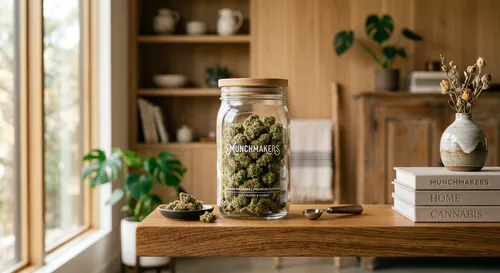
Before specialized stash jars with branded lids and UV coatings existed, people used mason jars. Ball jars, Kerr jars, whatever was in the canning cabinet. It turns out this was a genuinely good choice, not just a convenient one. The properties that make mason jars good for preserving food also make them good for preserving cannabis.
Decades of cannabis culture later, the mason jar is still one of the most recommended storage options by cultivators and home users alike. Here's why, and how to use them well.
Why mason jars actually work
The airtight seal is the main thing. A properly sealed mason jar lid creates a near-complete seal against the outside environment. Air exchange is minimal when the jar is closed. This matters because oxygen, light, and humidity fluctuation are the three main forces degrading stored cannabis, and a sealed mason jar addresses two of them (oxygen and humidity control) directly.
Glass doesn't leach anything into its contents. Unlike plastic, glass is chemically inert. Terpenes in cannabis can interact with polycarbonate and other plastics over time, especially at elevated temperatures. Glass doesn't do this. The flavor profile of your flower is preserved without contamination from the container itself.
Glass is also non-porous, so it doesn't absorb odors from previous storage or from the environment. A plastic bag or container that held a strongly scented strain will carry that smell into whatever you store in it next. A glass jar, properly cleaned, starts fresh every time.
Mason jar types and which one to use
Regular-mouth mason jars have a smaller opening (about 2.75 inches). They work fine for storing flower, but getting your hand or a spoon into the jar to retrieve cannabis can be awkward. Wide-mouth jars (about 3.38 inches opening) are noticeably easier to use and are my strong recommendation for anyone using mason jars for regular cannabis storage.
The standard two-piece lid (flat lid plus screw band) creates a very good seal when both pieces are in good condition. Over time, the flat lid can develop minor rust around the edge or the sealing compound can compress and lose its seal integrity. If your jar lid is more than a year old and has been opened frequently, it's worth swapping in a new flat lid. They cost almost nothing and a degraded seal defeats the purpose.
Bail-top mason jars (also called European-style or Weck-style jars) use a glass lid with a rubber gasket held in place by a wire bail. These create an excellent seal and look nicer than the two-piece lid. The rubber gasket does need replacing eventually - gaskets dry out and crack after a few years of use. Check them annually if you're using bail-top jars for long-term storage.
Quarter-pint (4oz), half-pint (8oz), pint (16oz), and quart (32oz) are the standard sizes. For most home use, a half-pint handles a quarter ounce well with some room for a humidity pack. A pint handles up to an ounce. Overfilling a jar compresses the flower and can cause trichome loss when you're digging through to retrieve material.
Adding a humidity pack
A mason jar with a Boveda or Integra Boost pack becomes a proper humidity-controlled storage system. The 62% RH pack is the most widely recommended for cured flower. Drop it in on top of the flower before sealing.
The pack takes a few hours to stabilize humidity inside a well-sealed jar. After that, it maintains the level passively until the pack is depleted. For the full explanation of how humidity packs work and the right RH levels to target, the weed storage humidity control guide covers the science in detail.
One 8g Boveda pack per half-pint jar is appropriate. For a pint jar, use two 8g packs or one 67g pack. Don't be tempted to use both sizes simultaneously thinking more is better - you can over-humidify flower if you overload the jar with pack capacity.
Burping jars during the curing process
If you grow your own and are using mason jars for the curing phase after drying, "burping" is an important step that storage-only users can skip. Freshly dried flower still releases moisture. If you seal it in a jar without burping, the moisture has nowhere to go and mold can develop.
During the first two weeks of curing, open the jars once or twice daily for 10-15 minutes to let moisture escape and fresh air in. After two weeks, reduce to once every few days. After 4-6 weeks of curing, the flower is stable enough to seal and store with a humidity pack without burping.
If you open a jar during curing and smell something musty or like ammonia, the flower was sealed too wet. Leave the lid off for several hours to let moisture escape and watch for mold. If you see fuzzy growth, the batch is compromised.
Light and temperature for mason jar storage
Standard mason jars are clear glass, which means UV light can reach the contents. UV degrades both THC and terpenes. Keep clear mason jars in a dark location - a cabinet, drawer, box, or wrapped in a paper bag. Blue and amber mason jars are available and provide some UV protection, though they're harder to find than clear versions.
Temperature matters too. A cool, stable temperature is better than a warm or fluctuating one. A pantry or basement cabinet is good. On top of the refrigerator (where heat from the appliance warms things) is not. Don't refrigerate cannabis in mason jars unless you're experienced with managing the condensation that forms when cold glass meets room-temperature air during retrieval.
When to upgrade from mason jars
Mason jars are excellent for most users. There are a few cases where upgrading makes sense.
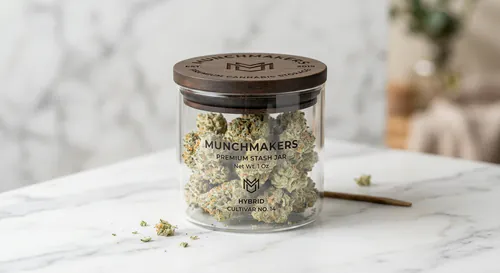
If UV light is a real concern and you want to keep your jars accessible (on a shelf rather than hidden), UV-blocking purpose-built stash jars in amber or opaque materials are worth it. They're designed specifically for this and the UV protection is built in rather than relying on placement in a dark location.
If you want a more discreet container that doesn't look like something from the kitchen cabinet, there are stash jars designed to look like other objects. This is a style and discretion preference, not a storage performance one.
If you're storing large quantities regularly and want better organization (labels, consistent sizes, stackable shapes), purpose-built cannabis storage solutions with consistent sizing and locking lids may be more practical than a collection of various-sized mason jars.
For everything else, the mason jar does the job. It's been doing it for a long time and the reasons it works haven't changed. The smell-proof storage guide is worth reading if you also need external odor containment on top of what the jar provides.