How to set up the perfect smoke session: accessories, ambiance, and flow
A well-set-up session runs on its own momentum. You have everything you need within arm's reach, the space feels right, and nobody has to stop to hunt for a lighter or find something to ash into. A poorly set-up session involves somebody crouched in a kitchen cabinet looking for a bowl to use as an ashtray while the joint goes around without them. The difference is five minutes of prep.
Workspace first
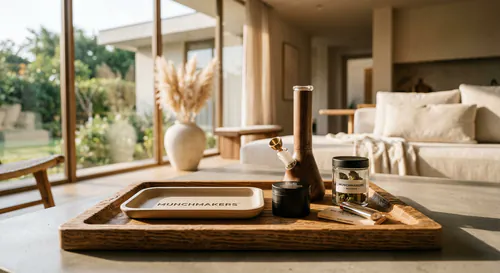
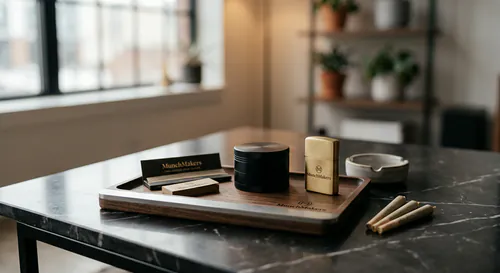
A rolling tray is the foundation of any organized setup. It keeps ground herb, papers, filters, and the lighter in one contained surface. It also catches spilled herb, which happens constantly when you're grinding directly over a coffee table. The size of the tray should match the session. A small personal tray for solo, a medium or large tray when you have people over.
Position the tray at a comfortable working height. If you're sitting on a couch, put the tray on the coffee table where you can reach it without leaning far. Awkward reach creates dropped gear and spilled herb. Simple positioning matters more than most people think.
The gear checklist
Grinder: should be loaded or at least within reach. Running out of ground flower mid-session breaks the flow. If you're preparing for a group, pre-grind ahead of time. A full grinder chamber ready to go eliminates the grinding pause.
Papers or a bowl: decide your method before people arrive and have the right materials set. Don't discover you're out of papers when everyone is already seated. Check your supplies beforehand.
Filter tips: if you're rolling joints, have a tip booklet on the tray. Running out of filter tips is a small but real inconvenience that people remember because it slows the rolling process.
Lighter: two lighters is better than one. Lighters disappear. It's a law of nature. Have a backup lighter somewhere on the tray so when the primary vanishes into a cushion, you're not stuck.
Ashtray: non-negotiable for any indoor session. Position the ashtray at the center of the group so everyone can reach it without passing it around. An ashtray that only one person can comfortably reach becomes that person's ashtray. Everyone else ashes wherever.
Water and drinks: put them out before you start. Dry mouth is predictable. Getting up to get water mid-session is disruptive and you'll want to sit back down immediately. Just prepare for it.
Grinding technique for the intended method
The grind matters and it's method-specific. For joints, you want a medium grind -- broken down enough that there are no large chunks that cause uneven burning, but not so fine that you're getting powdery herb that clogs the filter and makes the draw tight. Three to four rotations of a quality grinder is usually right.
For a bowl, go slightly coarser than you would for a joint. A coarser grind allows better airflow through the bowl and produces a fresher, more flavorful hit per draw. Fine-ground herb in a bowl burns too quickly and the ash layer forms fast and thick.
If you're packing something wider like a one-hitter or a chillum, coarser still. You want pieces large enough to not fall through the holes of the bowl piece.
Rolling vs packing a bowl
This decision is worth making consciously before the session rather than defaulting to whatever. Rolling joints takes a few minutes but produces a self-contained, shareable item that passes easily in a group with no shared mouthpiece concerns. Packing a bowl is faster to set up but requires more reloading and involves everyone sharing a pipe, which some people are fine with and others aren't.
For a group of four or more, rolling a joint or two is usually the smoother option. For two people or a solo session, a bowl is more efficient because you're controlling the amount per hit and not burning herb between draws the way a joint does.
Ambient setup
Ventilation is practical, not optional. Even for people who love the smell, a room that's visibly cloudy with smoke by the end of a long session is unpleasant. Open a window or door enough to get some airflow. A quiet fan in the background pointing toward an open window moves a lot of air without being obtrusive.
Lighting has a disproportionate effect on how a session feels. Overhead fluorescent light is the single worst option. Any lamp with a warm bulb is immediately better. Candles work well for ambiance. String lights are popular for a reason. This isn't about being precious -- it genuinely changes how comfortable people feel in the space.
Music: have a playlist ready before people arrive. The first awkward pause where someone says "what do you want to listen to?" and then everyone pulls out their phone kills the opening energy of a session. It's a small thing but it matters. Prep a playlist you can just press play on.
Snack prep
You know snacks will be wanted. Put them out ahead of time or at least have them in an accessible location. The hunger that follows a good session arrives fast and often when everyone is maximally comfortable and least interested in getting up. Low-prep snacks in a bowl on the coffee table are infinitely better than having to make food later. This is one of those hosting details that people remember even if they don't consciously notice it.
Social vs solo sessions
The social session setup described above assumes company. Solo sessions have different priorities. You don't need a full tray setup for a solo bowl before bed. You need your piece, your grinder, your stash, and something to do while you're high. The ambient setup still matters, maybe more. There's nobody else to talk to, so the space itself becomes more important. Good lighting, something you actually want to watch or listen to, a comfortable position.
The accessories that make a consistent difference
A grinder is the piece most people agree on as non-optional. After that, a rolling tray, a dedicated ashtray, and a proper stash container. These four items cover the functional needs of most sessions. Everything else, fancy lighters, rolling machines, storage accessories, builds on top of that base. The cannabis accessories that matter are the ones you actually use every session, not the ones that live in a drawer for special occasions.
The best session setup is the one you can execute in five minutes and that requires zero improvisation once the session starts. Front-load the preparation so the session itself is frictionless.