Silicone ashtrays: why silicone is the most practical ashtray material you're not using
Ceramic and glass ashtrays get all the attention. They look nice on a coffee table, they feel substantial, and there are genuinely beautiful versions of both. But if your priority is an ashtray that works well day after day without breaking, smelling, or requiring much thought, silicone is worth a serious look.
I think silicone ashtrays are underrated, and the reason most people don't use them is aesthetic bias rather than any real performance argument. So let's go through the actual case for silicone.
Heat resistance that matters
Food-grade silicone handles temperatures up to around 450°F (232°C) without deforming or releasing anything harmful. A lit cigarette or joint tip runs somewhere around 1100-1400°F at the cherry, but it's not making sustained contact with the ashtray surface. The ambient heat from a resting cherry, a dropped roach, or a smoldering cigarette end is well within what silicone handles easily.
The comparison here is to plastic. Cheap plastic ashtrays are everywhere and they're genuinely bad - they melt, they absorb smells permanently, and they look terrible after a few months. Silicone doesn't do any of that. It's also a step below ceramic and glass, which can crack if they get hit with sudden thermal shock or dropped on a hard floor.
Unbreakable is not an exaggeration
Drop a ceramic ashtray on tile and you have a good chance of breaking it. Drop a silicone ashtray anywhere and it bounces. This matters more than it sounds for certain contexts.
If you use an ashtray outdoors, put it in a bag, share it between multiple people, or use it anywhere that normal household care standards aren't the priority - silicone wins. Dispensary lounges, outdoor smoking patios, shared apartments, travel kits: these are all environments where an unbreakable ashtray has real value.
The trade-off is that silicone doesn't have the visual weight and permanence of glass or ceramic. It can look like an afterthought in a carefully decorated room. That's a valid objection if aesthetics are your primary concern.
Cleaning is genuinely easy
Silicone is non-porous and naturally resistant to residue sticking. Ash doesn't bond to it the way it does to textured ceramic. Most silicone ashtrays can go in the dishwasher. For hand-washing, a quick scrub with dish soap and warm water takes about thirty seconds.
Glass ashtrays clean well too, but you have to be careful not to scratch them with abrasive scrubbers. Ceramic is similar - most are dishwasher safe but some glazes aren't. With silicone, you don't have to think about any of that.
The smell resistance is also meaningful. Silicone doesn't absorb odors the way porous materials do. An unwashed ceramic ashtray will smell. A silicone one that hasn't been cleaned in a few days will smell less, and when you do wash it, the smell is gone completely.
Child safety is worth mentioning
Silicone has no sharp edges, won't shatter into dangerous shards, and isn't rigid. If it gets knocked off a surface onto a child or pet, nothing happens. This is a minor point for most people but a real one for households with kids or dogs that move through the same space.
Color options and aesthetic flexibility
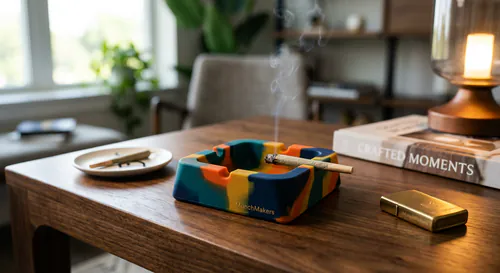
Silicone is easy to manufacture in any color, which is actually one of its genuine visual advantages. You can find silicone ashtrays in black, white, transparent, bright colors, and multi-colored patterns. They're also easy to customize with logos or text through molding, which is why custom ashtrays in silicone are popular for dispensaries and cannabis brands that want something that won't break in a lounge environment.
If the concern with silicone is that it looks cheap, the answer is to buy one designed thoughtfully. The cheap versions look cheap because they are cheap. Silicone can be made into genuinely nice objects - it's a material choice issue, not a material limitation.
Where silicone ashtrays make the most sense
Outdoor use is the strongest case. Weather, wind knocking things off surfaces, concrete floors, patio furniture - all of these are environments where you want something that can't break. Silicone handles outdoor conditions without deteriorating.
Travel is another strong case. A silicone ashtray takes up almost no space, weighs almost nothing, and you don't have to worry about it getting crushed or cracked in a bag.
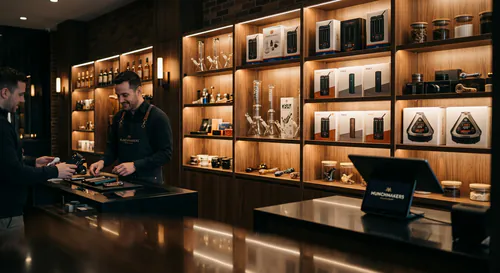
Dispensary and lounge environments are where silicone gets used commercially because staff don't have to worry about breakage. Customers set things down carelessly. People bump into tables. A cannabis accessory that survives high-traffic, shared-use environments is worth the trade-off on aesthetics for a business operator.
Where silicone is probably not your best option
If you're putting an ashtray on a display shelf, using it as a decorative object, or want something that signals care and taste to guests, silicone probably isn't the right choice. A heavy glass or ceramic piece does something that silicone can't: it looks intentional and considered in an interior space.
For a comparison across all ashtray materials and types, the guide to weed ashtray types covers everything from ceramic to glass to metal in one place.