Why grinder material actually matters
I've ground herb with everything from a $6 acrylic piece of junk to a $120 titanium-coated beast, and the material you pick changes the whole experience. Not just how long it lasts, but how it grinds, how it tastes, and whether you're unknowingly putting metal shavings in your bowl. These are things most buyers don't think about until something goes wrong.
This isn't going to be a neutral "every material has its merits" piece. Some materials are genuinely worse. Some are only worth buying in specific situations. Let's go through each one honestly.
Aluminum grinders
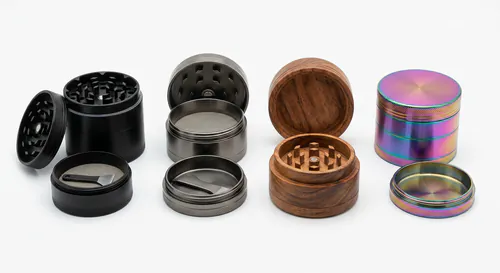
Aluminum is the most common material for mid-range and premium grinders, and for good reason. It's light, machines cleanly, and holds a sharp edge on the teeth. A well-made aluminum grinder from a reputable brand will grind consistently for years without the teeth dulling or bending.
The big caveat with aluminum is quality variance. Aircraft-grade aluminum (6061 or 7075 alloy) is genuinely excellent. The cheap stuff sold in gas stations and smoke shops is soft, scratches easily, and can shed small metal particles into your herb over time. You can usually tell the difference by price and weight. A solid aluminum grinder feels dense and the threads turn smoothly without wobble.
Anodized aluminum is worth the slight premium. The anodizing process creates a hard oxide layer on the surface that resists scratching and prevents the base metal from coming into contact with your herb. Most quality metal grinders you'll find from established brands use anodized aluminum for exactly this reason.
Price range: $20 to $80 for quality pieces. Above that, you're paying for brand name or aesthetics, not better performance.
Zinc alloy grinders
Zinc alloy (sometimes called zamak or pot metal) is where things get complicated. It's cheaper to cast than aluminum, which is why it's so common in the $10 to $25 price range. The grinders look fine out of the box. The problems show up after a few months of real use.
Zinc alloy is softer and more brittle than aluminum. The teeth chip and dull faster. The threads wear out. On cheap zinc grinders, the magnet in the top lid loses its grip relatively quickly. More concerning, low-quality zinc casting can include impurities, cadmium, lead, and other metals that have no business being near something you're going to inhale. Reputable manufacturers test for this and use food-grade zinc alloys. Random cheap imports often don't.
I'm not saying all zinc grinders are bad. Some well-made zinc pieces perform decently for casual users. But if you grind daily, you will notice the difference in consistency within a year. The teeth just don't hold up the same way aluminum does.
If you're buying zinc, buy from a brand that explicitly lists their alloy composition and has third-party testing. Otherwise, spend the extra $15 and get aluminum.
Titanium grinders
Titanium gets a lot of hype, and some of it is deserved. True titanium is harder than aluminum, corrosion-resistant, and extremely lightweight for its strength. The teeth stay sharp longer. The grinding surface doesn't wear down noticeably even after years of daily use. It's genuinely the best material for pure durability.
Here's the thing though: almost nothing marketed as a "titanium grinder" is actually solid titanium. The metal is expensive and difficult to machine, so what you're almost always buying is titanium-coated aluminum. Which is still good. The coating is hard and food-safe, and it does extend the life of the aluminum underneath. But you should know what you're actually buying.
Solid titanium grinders exist and they're exceptional, but they cost $100 to $200+. For most people, that's hard to justify when a quality anodized aluminum grinder at $40 to $60 will do 90% of the same job. If you're grinding every single day for years and you want something you'll never have to replace, then yes, solid titanium makes sense. For everyone else, you're mostly paying for the name.
I go into the full breakdown of when the upgrade is actually worth it in this comparison of titanium vs aluminum grinders.
Wood grinders
Wood is a completely different category, and the comparison to metal isn't quite apples to apples. Wood grinders are usually two-piece with metal or wood pegs as teeth, no kief catcher, and they produce a chunkier grind than metal. They're not trying to compete with metal grinders on performance.
What wood does well: aesthetics, portability, and not setting off metal detectors. A good handmade wooden grinder looks beautiful on a desk. Some people also prefer that wood doesn't transfer any metallic smell to their herb, which is a legitimate concern with cheap metal grinders.
The practical limitations are real, though. Wood absorbs moisture, which means resin buildup is harder to clean out and the grinder can warp or crack over time if it gets wet. The grind consistency is less reliable than metal, especially with denser strains. And wooden teeth (if the grinder uses them instead of metal pegs) will chip and wear down much faster than any metal option.
Wood grinders also typically have no kief collection chamber. If you're someone who likes to collect kief, wood is not your material.
Best use case for wood: occasional use, gift-giving, or if aesthetics matter more to you than raw grinding performance.
Acrylic and plastic grinders
I'll keep this short. Acrylic grinders are for people who need a grinder right now and have $5. They crack, the teeth snap off, and the plastic can leach chemicals when it heats up from friction. They're fine for travel emergencies where losing it wouldn't bother you. Don't use one as your daily driver.
Health considerations by material
This section doesn't get enough attention. The question isn't just "which lasts longer" but "what is my herb actually coming into contact with."
Anodized aluminum: the oxide layer is chemically inert and stable. Very safe. Non-anodized aluminum: still generally safe, but softer and more likely to have surface wear over time. Quality zinc alloy from reputable brands: safe. Unknown zinc alloy from unverified sources: potentially not safe due to casting impurities. Titanium and titanium-coated aluminum: excellent, non-reactive, no concerns. Wood: natural material with no metal contamination risk, but organic material that can harbor bacteria and mold if not cleaned regularly. Acrylic: concerns about plastic compounds and micro-scratches that harbor bacteria.
The main takeaway is that brand and manufacturing standards matter more than the raw material category. A well-made zinc grinder from a tested manufacturer is safer than a poorly made piece of unknown aluminum.
Grinding performance compared
After testing dozens of grinders across all these materials, here's how they actually perform in everyday use:
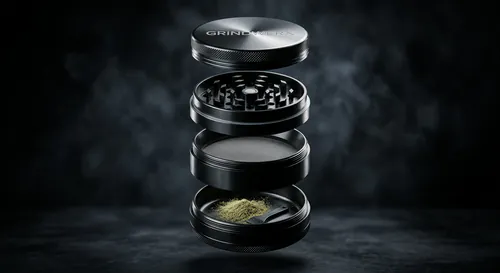
Metal grinders (aluminum and titanium) win on consistency. The teeth are sharper and stay sharper, so you get a more uniform grind. The diamond-cut teeth common on quality metal grinders create fluffy, even material that burns better than chunky or powdery grinds from inferior materials.
Zinc alloy can match this when new but degrades noticeably after 6 to 12 months of daily use. Wood grinders produce a more uneven grind, fine for some applications, but not ideal if consistency matters to you. Acrylic produces the worst grind because the teeth flex instead of cutting cleanly.
For more detail on what makes metal grinding performance superior, this guide to metal weed grinders breaks down tooth design and chamber configuration.
Material comparison table
| Material | Durability | Grind consistency | Health safety | Price range | Best for |
|---|---|---|---|---|---|
| Anodized aluminum | Excellent | Excellent | Very safe | $20 to $80 | Daily use, best overall value |
| Zinc alloy (quality) | Good | Good when new | Safe (verified brands) | $10 to $35 | Budget buyers who use occasionally |
| Zinc alloy (cheap) | Poor | Degrades fast | Potentially unsafe | $5 to $15 | Avoid |
| Solid titanium | Best in class | Excellent | Excellent | $100 to $200+ | Heavy daily users who want it to last forever |
| Titanium-coated aluminum | Very good | Excellent | Very safe | $40 to $100 | Daily users wanting durability without the premium price |
| Wood | Moderate | Inconsistent | Safe (if kept dry and clean) | $15 to $60 | Casual or occasional use, aesthetic preference |
| Acrylic / plastic | Poor | Poor | Moderate concerns | $3 to $12 | Temporary only |
So which material should you actually buy
For most people grinding regularly, anodized aluminum is the right answer. It grinds well, it's safe, it lasts for years, and it doesn't cost a fortune. You can get a genuinely excellent aluminum grinder for $40 to $50. That's the sweet spot.
If budget is tight, don't grab the cheapest zinc grinder you find. Spend $5 more and get something from a brand that actually stands behind their product. The health and durability difference is worth it.
If you're a heavy daily user and you want something you'll own for 10 years without thinking about it, titanium-coated aluminum at $60 to $80 is a smart buy. You don't need to spend $150 on solid titanium unless you specifically want to.
Wood grinders have their place. If you use once or twice a week, you value the aesthetic, or you're buying a gift for someone who appreciates natural materials, they're a fine choice. Just go in knowing the tradeoffs.
The worst purchase you can make is a $8 zinc or plastic grinder that you end up replacing every six months. Over two years, you've spent as much as a quality aluminum piece that would have outlasted you. Buy once, grind well.