Why people keep going back to manual
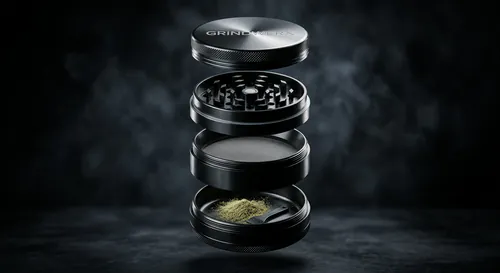
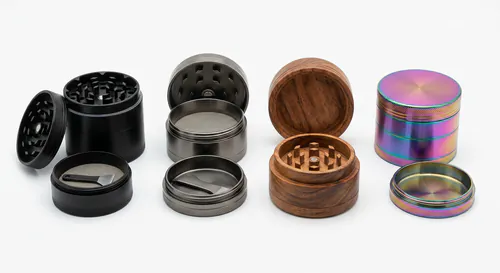
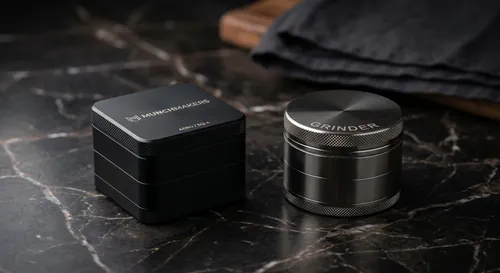
I use an electric grinder about four days a week. The other three I reach for a 4-piece aluminum manual piece that I've owned for almost two years. That probably tells you something about the state of electric grinders right now: they're good enough to use regularly, but not good enough to completely replace something simpler.
That said, the gap is closing. Electric grinders have improved meaningfully over the last few years, and for some people they're not just a convenience item -- they're the right tool. Medical patients with limited hand strength. People grinding half an ounce at a time for a large session. Anyone with arthritis who doesn't want to admit they have arthritis. The question isn't whether electric grinders work. It's whether they work for you.
This guide covers what I've actually used, what I've noticed over time, and where the honest tradeoffs are.
Electric vs manual: the real differences
The obvious difference is effort. You press a button instead of turning a lid 15 or 20 times. For a single bowl, this doesn't matter at all. For grinding a gram or more at once, or doing it repeatedly over an evening, the difference adds up fast -- especially if your hands get sore or fatigued.
The less obvious difference is grind consistency. A good manual grinder with sharp, well-spaced teeth produces a very even grind. The herb falls through holes of a specific diameter, so you get a repeatable texture every time. Most electric grinders use a spinning blade or a motorized set of teeth, and the consistency depends heavily on how long you run it. Too short and you get uneven chunks. Too long and you're approaching powder, which burns too fast and clogs screens.
Manual grinders win on consistency because the physics are simpler. The cutout holes are fixed. Electric grinders require some skill -- you learn to pulse the motor in 2-second bursts rather than holding it down for 10 seconds straight. Once you figure that out, the results are close to comparable. But there's a learning curve that doesn't exist with manual.
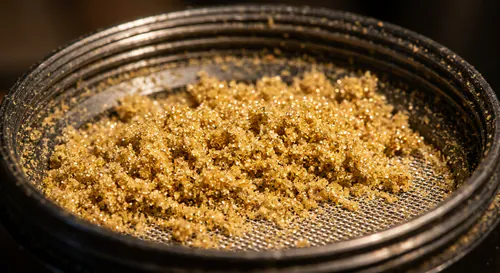
There's also the question of kief. A 3- or 4-piece manual grinder collects kief in a dedicated chamber below a fine mesh screen. Most electric grinders don't have this. The powdery trichomes just mix back into the ground herb or get lost on the walls of the chamber. If kief collection matters to you, most electric options will disappoint.
Battery life: what to actually expect
Battery life on electric grinders gets overstated in marketing almost universally. "Up to 60 grinds per charge" sounds fine until you realize that's measured with a half-loaded chamber running for 3 seconds each time. Real-world use with a full load and 6-8 seconds of runtime per session is closer to 20-30 grinds before you're looking for a USB-C cable.
The better models -- ones in the $40-$70 range -- use 1200-1800 mAh batteries and will genuinely last a week of moderate daily use. Budget models under $25 often have batteries under 600 mAh, which means you're charging every two or three days if you use it consistently. Check the mAh spec before buying. If a listing doesn't include it, that's usually a bad sign.
Charging time is the other thing nobody mentions. Some electric grinders take 2-3 hours to charge from dead. That's annoying if you forgot to plug it in and want to use it. A few newer models with larger batteries charge in under an hour via fast-charge USB-C. It's worth paying attention to.
One practical note: if you're buying an electric grinder primarily for travel or outdoor use, get one with a USB-C port rather than micro-USB. Micro-USB cables are getting harder to find, and you don't want to be searching through a drawer for the right cable when a cable is all that's standing between you and grinding herb.
Grind consistency in practice
The best electric grinders I've used produce a grind that's medium-fine and relatively even. Not as consistent as a quality manual piece, but close enough for most uses. Vaporizers are more sensitive to grind size than pipes or papers, so if you primarily vape, this is worth thinking about.
For a dry herb vaporizer that performs best with a medium grind, I'd run the electric grinder in 2-second pulses, stop when things start to look right, and not obsess about perfection. For a joint or bowl, it matters less.
Blade-style electric grinders (where a spinning blade chops the herb) tend to produce a less consistent result than motorized tooth-style grinders. Blade grinders are cheaper to manufacture, which is why they show up in a lot of the $15-$20 options. If you can see the grinding mechanism in the product photos and it looks like a food processor blade, that's what you're getting. Tooth-style mechanisms look more like a manual grinder and generally produce better results.
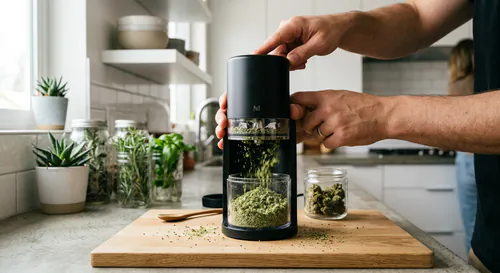
Our own electric herb grinder uses a motorized tooth design with a two-speed motor. Low speed gives you a medium grind suitable for vaporizers; high speed produces a finer texture for rolling. In testing, I found the low-speed setting more useful than the high -- the fine setting runs a little too fine for most of what I do. But having the option is better than not having it.
Ease of cleaning
This is where electric grinders consistently fall short, and I want to be direct about it. Manual grinders are a pain to clean, but they're a predictable pain. You freeze it, use a brush, maybe soak the pieces in isopropyl alcohol. Done in 15 minutes.
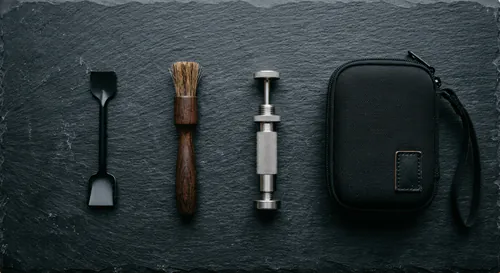
Electric grinders have a motor housing that you cannot submerge. You clean the chamber and teeth with a brush and a cloth, which is fine for light residue but inadequate for real buildup. After a few weeks of daily use, sticky resin accumulates in spots that a brush can't reach, and there's no good way to fully clean it without risking moisture in the motor. Some models have removable chambers that detach from the motor unit, which solves most of this problem. If you plan to use an electric grinder regularly, look for that feature specifically.
Realistically, expect to do a light clean with a brush every 5-7 uses, and a more thorough clean of the removable chamber every few weeks. If a grinder doesn't have a removable chamber, that more thorough cleaning becomes a genuine chore.
Who actually benefits from an electric grinder
Medical patients with reduced hand strength or dexterity issues are the clearest case. Conditions like arthritis, carpal tunnel, or MS make repetitive twisting motions genuinely painful over time. An electric grinder eliminates that entirely. This isn't a secondary benefit -- for some users it's the whole reason to buy one.
High-volume users -- people grinding more than 3-4 grams per session, or grinding multiple times a day -- benefit from the reduced effort. If you're rolling six joints in a row or loading up a multi-bowl session, an electric grinder saves meaningful time and physical effort.
Older users, or anyone whose hands get tired faster than they used to, fall into a similar category. I notice this more than I probably should. After about three full grinds in a row, my grip gets fatigued in a way it didn't five years ago. Electric fixes that.
Casual users who grind once a day or less? Honestly, a good manual grinder is probably the better choice. Simpler, easier to clean fully, better kief collection, and no battery to manage. The shift toward electric grinders in the cannabis space is real, but it doesn't mean manual is obsolete. For light use, manual is still the more practical tool.
One group that surprises people: people who entertain or share. If you're grinding for a group and someone else wants to use the grinder, an electric model is easier to hand off and explain. "Press the button" is a simpler instruction than demonstrating how much pressure to apply and which direction to turn, especially if the person isn't a regular user.
What to spend
Under $20: mostly blade-style grinders with small batteries. Fine for occasional use, frustrating for daily use. Cleaning is hard and consistency is mediocre.
$25-$40: this is where things get genuinely usable. You start seeing tooth-style mechanisms, better battery capacity, and some have removable chambers. This is a reasonable buy if you want to try electric without committing too much.
$40-$70: the sweet spot. Better motors, two-speed options, USB-C charging, removable and cleanable chambers. Most people who use an electric grinder daily land somewhere in this range and stay there.
Above $70: you're paying for specific features or brand premium. Some high-end models have built-in kief screens, dose control, or companion app connectivity (yes, really). Whether any of that is worth the money is genuinely personal. Most daily users don't need it.
The material comparison question connects here too -- if you're curious how the alloy used in grinder teeth affects longevity and grind quality, that applies to electric grinders as much as manual ones. The breakdown on grinder materials covers it in more depth.
The bottom line
Electric grinders are a real upgrade for a specific set of users and a lateral move for everyone else. If you grind a lot, have hand issues, or just want the convenience without caring much about kief collection, buy one. Get something in the $35-$55 range with a removable chamber and USB-C charging. Learn to pulse the motor instead of holding it down. Clean it every few sessions.
If you grind once a day, have healthy hands, and want the cleanest grind and best kief collection for the money, stick with a quality manual piece. The manual alternative isn't some lesser option -- it's genuinely better suited to that use case.
Most people reading this probably don't need to pick one forever. I own both and use both, and after two years that still feels like the right answer.