Everything You Need to Know About RAW Rolling Papers
RAW rolling papers have been around since 1995, and they've built a loyal following for straightforward reasons: the papers are made from natural, unrefined plant fibers, they don't bleach them, and they burn slowly without adding chemical flavor to whatever you're smoking. If you've picked up a pack and have questions — including whether you can smoke that first paper, or what that warning slip is about — this covers all of it.
What RAW Papers Are Actually Made From
RAW uses a blend of unbleached hemp and flax fibers. The papers go through minimal processing — no chlorine bleach, no chalk, no dyes. What you end up with is a paper that has a light tan/brown color instead of the bright white you see with bleached papers.
That color difference matters. White rolling papers are typically whitened using chlorine bleach or calcium carbonate. When you burn bleached paper, you're inhaling those combustion byproducts alongside your herbs. RAW skips all of that.
RAW Classic papers use a partially processed hemp fiber that gives a slightly thicker feel. RAW Organic Hemp papers use 100% organic hemp with no processing at all — the thinnest option in their lineup. Both are unbleached; the difference is mostly in feel and burn rate.
The Crisscross Watermark
Every RAW paper has a patented crisscross watermark pressed into it. This isn't just branding — it serves a functional purpose. The grid pattern creates a natural firebreak across the surface of the paper, which slows the burn and helps prevent runs (where one side burns faster than the other). If you look at a RAW paper against light, you'll see the diagonal grid clearly.
The Full RAW Product Lineup
RAW makes more variations than most people realize. Here's what you're likely to encounter:
RAW Classic
The standard RAW paper. Semi-translucent, unbleached, with a light brown tint. Burns slowly and evenly. This is what most people mean when they just say "RAW papers." Available in single wide, 1 1/4, and king size.
RAW Organic Hemp
Thinner than Classic and made from pure organic hemp with no additional processing. Burns a bit faster than Classic due to the thinner material, but some people prefer the lighter feel. Good choice if you want the most minimal paper possible.
RAW Black
RAW's thinnest paper across the board. Double-pressed to remove as much paper as possible. Burns extremely slowly because there's so little material. The tradeoff is that it's more delicate and can be harder to work with if you're a newer roller.
RAW Pre-Rolled Cones
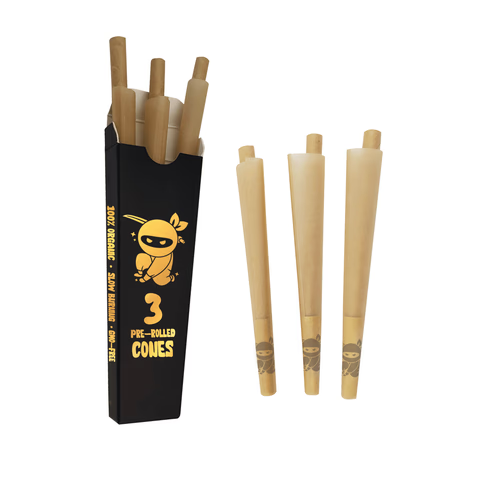
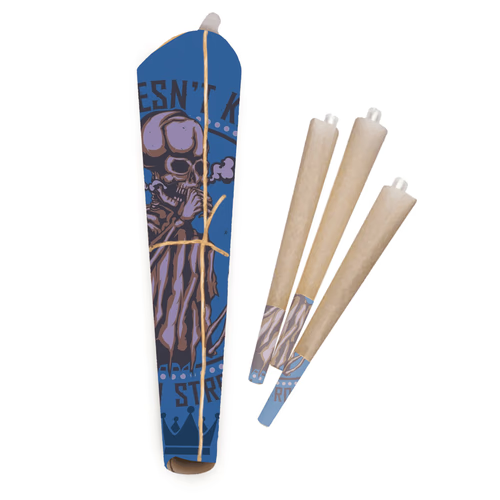
Same paper as Classic, pre-shaped into a pre-rolled cones. You pack them instead of rolling. RAW cones come in 1 1/4, king size, and 98mm lengths. A 100-pack of king size cones is standard for retail and wholesale — the cones are consistent and ready to fill without any rolling skill required.
RAW Perforated Wide Tips
Cardboard filter tips with perforations so you can tear to the right width. RAW includes these in many of their booklets. They prevent the end from collapsing and keep herb out of your mouth.
Single Wide
The smallest standard size. About 70mm long and 36mm wide. Best for single-serving rolls. Less common than 1 1/4 but still widely available.
1 1/4 Size
The most popular size for most smokers. 78mm long, 44mm wide. Gives you enough room to work with without going oversized. The standard size you'll find in most shops.
King Size
110mm long, 44mm wide. Good for sharing or longer sessions. RAW king size is also the most common size for pre-rolled cones sold in bulk.
Can You Smoke the First Paper in a RAW Pack?
Yes. The first paper in a RAW booklet is identical to every other paper in the pack. It's the same hemp fiber, same watermark, same glue strip. There's no difference in material or quality between the first paper and the last one.
This question comes up because some people assume the outermost paper acts as some kind of protective cover — it doesn't. RAW booklets use a cardboard cover for that. Every paper inside, including the first one, is a usable rolling paper.
Can You Smoke the Warning Paper in a RAW Pack?
No. The warning paper (sometimes called the "warning slip" or "advisory paper") is a separate printed insert that RAW includes for regulatory compliance. It contains printed text with health warnings and product information — it's not a rolling paper at all. The paper it's printed on is different from the rolling papers, and the ink used for printing is not safe to inhale.
It's easy to confuse it with a rolling paper at a glance, especially since it's a similar size. But look at it closely — it has printed text on it, no watermark pattern, and a different texture. Set it aside and use the actual papers.
What to Look For When Buying RAW Papers
Because RAW is one of the most counterfeited rolling paper brands, it's worth knowing what a genuine pack looks like:
- The crisscross watermark should be visible when you hold the paper up to light. Fakes often have no watermark or a printed (not pressed) imitation.
- Genuine RAW papers have a consistent light tan color. If the paper looks unusually white or very dark brown, that's a red flag.
- The glue strip on real RAW papers is thin, slightly sweet-tasting (made from natural acacia gum), and seals cleanly without excessive moisture. Knockoff glue strips often feel too wet or don't seal properly.
- The booklet cover should have crisp printing with the RAW logo. Look for the trademark symbols and manufacturing details on the back.
- Buy from distributors you trust. Counterfeit RAW products show up in bulk on gray-market wholesale sites and sometimes even in retail stores that source poorly.
Custom Rolling Papers for Your Brand
If you're stocking a shop or running an event, our custom 1 1/4 size rolling papers let you put your own branding on the booklet. Same quality paper, your logo and design on the cover. Good for dispensaries, smoke shops, or any cannabis-adjacent brand that wants something more memorable than a generic booklet.
Storing RAW Papers
Rolling papers are more sensitive to environment than most people think. Here's what actually matters:
- Humidity: Too dry and papers become brittle and crack when you roll. Too humid and they go limp, stick together, and the glue strip won't seal properly. A controlled environment — not next to a humidor, not in a car in summer — is ideal.
- Heat: High heat dries papers out quickly and can cause them to become wavy or curl. Don't store papers in a hot car or near a heat source.
- Light: UV exposure degrades the paper over time. Keep them out of direct sunlight.
- Flat storage: Papers stored under pressure (like at the bottom of a bag full of gear) can get compressed and become harder to separate cleanly. A flat drawer or box is better.
For most people, a drawer or cabinet at room temperature is all you need. If you're buying in bulk for wholesale, standard dry warehouse storage works fine. RAW papers don't require anything special — just avoid extremes.
RAW vs. Other Brands
RAW isn't the only unbleached rolling paper on the market, but they're the most recognizable. Here's how they compare to the other common options:
RAW vs. Elements
Elements papers are made from rice rather than hemp. Rice papers are thinner and burn slower than hemp papers, with almost no taste at all. Some people prefer Elements for the minimal burn flavor; others find hemp papers easier to roll with because they have a bit more grip. Both are unbleached and additive-free. It comes down to personal preference.
RAW vs. Zig-Zag
Zig-Zag makes both bleached and unbleached varieties. Their classic orange pack (bleached) is a different product category entirely from RAW — it's designed for a smoother feel and burns faster. If you're comparing RAW to Zig-Zag organic/unbleached, they're closer, but RAW's crisscross watermark generally gives it a more consistent slow burn.
RAW vs. Smoking/OCB
OCB Organic Hemp papers are a strong competitor to RAW and are popular in Europe. They use a similar unbleached hemp approach and are generally priced comparably. OCB papers tend to be slightly thinner than RAW Classic. For B2B buyers, both brands are reliable and widely distributed.
RAW Papers for Wholesale and Retail
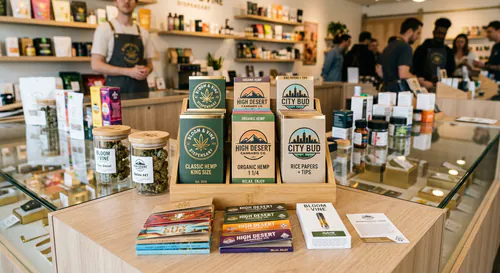
For shops and distributors, RAW comes in several formats designed for retail display:
- Individual booklets (typically 32-50 papers depending on size)
- Retail boxes of 24 or 50 booklets
- Pre-rolled cone packs (3-pack, 6-pack, or single cones in display boxes)
- Bulk cones — 100 per box or larger quantities for dispensaries and heavy-use retail
The pre-rolled cone format has become the dominant SKU for most cannabis retail because customers increasingly prefer packing to rolling. RAW king size cones in 100-count boxes are a standard item in most wholesale catalogs.
If your store sells rolling papers and smoking accessories, RAW belongs in your inventory. It's the brand customers ask for by name, and the margins on rolling papers are solid for the shelf space they take up.
Common Questions
Can you smoke the first paper in a RAW pack?
Yes. The first paper in a RAW booklet is the same as all the others — identical material, same watermark, same glue strip. There's no functional difference between the first and any other paper in the pack.
Can I smoke the warning paper in a RAW pack?
No. The warning slip is a printed insert for regulatory compliance. It contains ink, is made from a different paper stock, and is not meant to be smoked. It looks vaguely like a rolling paper in size but has printed text on it and no watermark. Discard it and use the actual papers.
What's the difference between RAW Classic and RAW Organic Hemp?
RAW Classic uses a partially processed hemp/flax blend and is slightly thicker. RAW Organic Hemp uses 100% organic hemp with no additional processing — it's thinner and burns slightly faster. Both are unbleached. Classic is more forgiving for newer rollers; Organic is preferred by people who want the lightest paper possible.
Are there counterfeit RAW papers?
Yes, RAW is one of the most counterfeited rolling paper brands. Fakes often lack the crisscross watermark, have inconsistent coloring, or use a different glue that doesn't seal properly. Buy from reputable distributors and check for the watermark when you open a new pack.
How do I store RAW papers?
Keep them in a cool, dry place away from direct sunlight and humidity. Room temperature in a drawer or cabinet is ideal. Avoid storing near a humidor, in a hot car, or anywhere with significant temperature swings. Properly stored, RAW papers last a long time without degrading.
What size RAW papers should I buy?
1 1/4 size is the most popular and versatile option — long enough to work with, not so large that it wastes paper for smaller amounts. King size is better for sharing or if you prefer larger rolls. Single wide is for smaller individual servings. Pre-rolled cones come in 1 1/4 and king size and are worth considering if you'd rather pack than roll.
Are RAW papers good for tobacco?
Yes. RAW papers work just as well with tobacco as with other herbs. The unbleached material and slow burn are actually well-suited to tobacco, since the paper doesn't add competing flavor the way some bleached papers can.
Bottom Line
RAW papers have held their position in the market because they do what they claim: unbleached, natural material, slow and consistent burn. The first paper in the pack is fine to smoke; the warning slip is not. Store them reasonably and buy from sources you trust to avoid counterfeits. If you're stocking a retail location or looking for custom rolling papers with your own branding, both are straightforward options that work well.