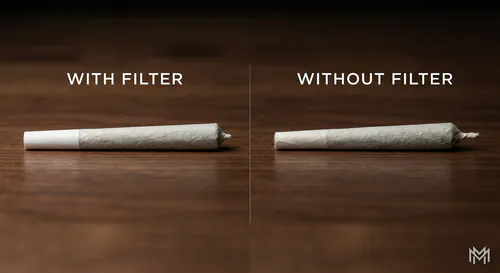
Joint filters — also called crutches or tips — don't filter smoke the way cigarette filters do. What they actually do is protect the joint's structure, keep airflow open as the paper softens, and let you smoke down to the end without burning your fingertips. Here's the real physics, plus when to use them and when to skip.
What a crutch actually does
There are some common misconceptions about joint filters that we need to set straight. A lot of people think that a paper filter, also known as a tip or crutch, works like a cigarette filter - but that's just not true. Cigarette filters are designed to absorb nicotine, tar, and other particles from the smoke, making it a bit cleaner. But a paper crutch doesn't do any of that. When you smoke a joint with a paper tip, the smoke just passes through the hollow part of the filter with hardly any resistance at all. So, if you're rolling a joint and thinking that the paper tip is making your smoke cleaner, think again - it's not really doing much of anything. The smoke is still getting through, and it's not being filtered in the same way that a cigarette filter would.
The crutch plays a crucial role in maintaining the structure of the joint. It provides a solid foundation for the tip, keeping it stable and preventing it from losing its shape as you roll. Without this support, the mouth end of the joint can become misshapen, collapsing or twisting shut, which can ruin the draw. Additionally, the crutch helps to keep the opening of the joint circular and open, preventing moisture from the lips from seeping in and compromising the joint's integrity. By keeping the joint stable and dry, the crutch ensures a smooth, consistent draw.
Using a crutch with your joint has its advantages. For one, it gives you something to hold onto, which can be really helpful. When you're smoking a filterless joint, it can get pretty short, and the last part can be super hot and awkward to hold - you don't want to burn your fingers, right? But with a crutch, you can smoke it all the way down to the end without feeling uncomfortable. It's just a more pleasant way to enjoy your smoke.
Temperature really does make a difference. When you're using a crutch, it creates a tiny space between the burning material and your mouth. As the smoke passes through this space, it cools down a bit. It's not a huge effect, but you can definitely notice it when you're smoking a long joint. The cooling of the smoke can be a nice thing, especially when you're taking a big hit. It's just one of those small things that can make a difference in your overall smoking experience.
How to fold a proper accordion crutch
Take a filter tip from a booklet or tear a small strip of thin cardboard. The strip should be about 5-6mm wide and 40-50mm long. Fold one end back and forth in a tight accordion, making 3-4 folds of equal size. The folded section should be about 10-12mm long. Then wrap the remaining unfolded strip around the outside of that accordion core, rolling it tight. You want the finished crutch to be about 5-6mm in diameter, which is a comfortable draw for most people.
The accordion structure inside is what keeps the crutch from collapsing when you draw. Without those internal folds, a rolled paper tube will pinch shut under suction. The zigzag keeps it open.
When you roll the crutch, make sure it's tight enough to keep its shape, but don't squeeze it too hard or it will block the airflow. You want to be able to blow through it easily, without having to exert yourself too much.
Types of filters: paper vs glass vs pre-cut
Paper filters made from thin cardboard are pretty common. They're not expensive and you can just throw them away when you're done. Plus, they work pretty well. The booklet style is also really handy because you can easily tear out the size you need and know you're getting the same material every time.
Using glass tips is a unique experience. For one, they're reusable, which is a big plus. They also don't absorb any moisture or flavor, so you get a pure taste. And let's be honest, there's something satisfying about the feel of glass on your lip. Another benefit is that they cool the smoke more than paper tips, which is a preference for many people. However, there are some downsides to consider. For instance, glass tips can be expensive, and they're also fragile, so you have to be careful not to break them. Additionally, a glass tip doesn't become a part of the joint structure like a paper crutch does, which means you need to adjust your rolling technique to account for the rigid cylinder at the end. This can take some getting used to, but overall, glass tips are a great option for those who want a more premium smoking experience.
Pre-cut filter tips come pre-folded and ready to roll. They're marginally more convenient than doing your own accordion fold. The quality varies. Some pre-cut tips have an accordion that's too small and collapses anyway. I'd rather learn to fold my own.
When you need a filter
Cone joints need a filter. Without a crutch to build around, you can't form a proper cone shape with a consistent base. The filter is structurally necessary.
Joints that are too long can be a problem. If they're more than 10cm long, they can start to lose their shape and get all soggy at the end. This is because they don't have enough support, and it can cause the tip to get all flattened out. By the time you're halfway through, it can be a real mess. That's why it's a good idea to use a filter to help keep everything stable and prevent this from happening.
When smoking in a group, it's really helpful to have a filter. You know, it's a total buzzkill when you're all trying to enjoy a session together and the joint falls apart because the wet end got all soggy. So, if you're rolling one for a bunch of people, using a crutch is just plain polite. It makes a big difference and helps keep everything running smoothly. Plus, it's just more considerate of the other people you're sharing with.
When the air is really humid, you need a filter to help with that. Like when you're rolling or smoking outside on a humid day, the paper can get all soggy and absorb moisture really quickly. But if you use a crutch, it can keep the airflow going even when the paper around it starts to get soft and soggy from the humidity.
When going filterless is fine
Smoking small joints can be done quickly by one person. If you have a tightly rolled pinner joint that you'll finish in about five minutes, it's probably okay to smoke it without a filter. The joint won't have time to get wet or fall apart. Some people actually prefer smoking joints without filters because they like the direct draw. As long as the joint stays together, there's no problem with smoking it filterless.
Some traditional ways of rolling don't use filters at all. In Europe, they do things a bit differently - they twist both ends of the roll. This solves the problem of it falling apart in a unique way. The twist at the mouth end acts like a built-in stopper, which is pretty clever. However, it's not as comfy to hold when you're near the end of the joint. But hey, it gets the job done.
When you're smoking by yourself at home, you can definitely skip the crutch if you want to get the full, direct flavor. The difference is pretty small, but you can still taste it. Some people think that without the paper from the crutch getting in the way, they can smell more of the terpenes.
The honest verdict
Using filters in joints can greatly improve the overall experience. Many people who disagree with using filters often misunderstand their purpose, thinking they're meant to filter out smoke, which isn't their primary function. In reality, filters provide several key benefits. For one, they help improve airflow, making it easier to smoke the joint from start to finish. They also protect your fingers from getting burned, which can be a significant advantage. Additionally, filters can make rolling the joint much simpler, which is a plus for many users. These benefits are not insignificant and can make a big difference in how enjoyable the experience is. By using a well-made filter, you can enhance the overall quality of your joint, making it more pleasant to smoke and easier to handle.
If you like the way a filterless joint feels and you're good at rolling them, then that's a valid reason to go without a filter. Some people just prefer the direct draw and the way it hits. But if you're still getting the hang of rolling, it's a good idea to use a crutch. It makes things a lot easier and more forgiving, so you can focus on getting your technique down without getting frustrated.
Whatever you decide, the rolling papers you use matter more than whether you filter or not. Thin, even-burning paper covers a lot of rolling mistakes regardless of crutch choice.
Frequently Asked Questions
Do joint filters block THC?
A paper crutch isn't what you think it is - it's actually a hollow tube that helps with the structure, not something that absorbs like a filter. When you smoke, the smoke passes through really easily, so you don't lose any of the good stuff. Those cigarette-style filters that absorb would actually block the cannabinoids, which is why people don't use them when they're rolling joints.
Are glass filter tips worth it?
For a daily roller, yes: reusable, no soggy end ever, noticeably cooler smoke, and the flavor stays clean because glass absorbs nothing. The trade-offs are cost, fragility, and adjusting your roll to a rigid cylinder.
What size should a filter tip be?
The size of this thing is about 5 to 6 millimeters across and 10 to 12 millimeters long when it's folded up - that's a pretty comfortable size for most people to handle. If it's a bit wider, it's easier to breathe, but if it's narrower, it starts to get a bit tight.
Are pre-rolled tips better than folding your own?
They're more reliable and easier to use, especially for beginners - all the tips are the same size and the accordions don't collapse. Making your own can be cheaper and allows you to customize the draw to your liking. It's no wonder that stores sell a lot more pre-rolled ones, though.