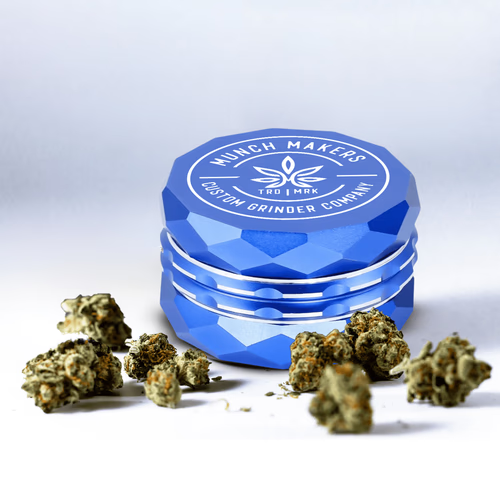
Zinc vs. Aluminum Grinders: Which Material Holds Up for Dispensary Use?
When you're purchasing grinders for a dispensary or stocking up for wholesale, the aluminum-versus-zinc question comes up often. Both are legitimate materials — neither is junk — but they perform differently, and those differences matter depending on how the grinder will be used and what you're paying per unit.
This breakdown covers the actual material properties, what they mean in practice, and which scenarios each material suits best. No material is universally superior; the right answer depends on your priorities.
Material Properties: Aluminum vs. Zinc
Both aluminum and zinc are non-ferrous metals, which means neither will rust. Beyond that shared trait, their mechanical properties diverge in ways that affect grinder performance.
Aluminum (6061 Alloy)
Most quality grinders use 6061 aluminum — the same alloy series found in structural aerospace and automotive components. Its tensile strength runs around 276 MPa, with a Brinell hardness of roughly 95 HB. For a grinder, that translates to teeth that hold an edge through repeated use and threads that engage cleanly without galling.
Aluminum forms a passive aluminum oxide layer on its surface that acts as a natural barrier against corrosion. This happens automatically on exposure to air and doesn't require any coating. It also means that if the outer finish gets scratched, the underlying metal isn't suddenly exposed to corrosion risk the way zinc can be.
Weight is the other notable property. A standard 2-inch, 4-piece Premium 4 Piece Aluminum Grinder typically runs 80–120 grams. That matters for customers who carry their grinder on them — lighter hardware is simply more comfortable over time.
From a finishing standpoint, aluminum accepts more surface treatments than zinc. Anodizing creates a durable, porous oxide layer that can be dyed in a wide color range without adding meaningful thickness. It also takes laser engraving cleanly, producing sharp contrast without burning through to bare metal. Powder coating, ceramic coating, and UV printing are all options.
Zinc Alloy (Zamak)
Zinc grinders are almost always die-cast from Zamak — a zinc-aluminum-magnesium-copper alloy. Die casting allows for tighter dimensional tolerances and more complex geometries than CNC-machined aluminum, which is why zinc grinders often have more intricate surface details and embossing. The trade-off is that die casting is better suited to higher production volumes.
Zinc alloy is denser than aluminum: roughly 6.6 g/cm³ compared to 2.7 g/cm³ for 6061. That density difference is immediately noticeable in hand — a zinc grinder of the same dimensions will weigh about 2.4 times as much as its aluminum counterpart. Some customers interpret this weight as a quality signal; others find it tiring to carry.
Zinc alloy is harder than aluminum in typical die-cast form, which can mean better abrasion resistance at the grinding teeth. However, it is more brittle at low temperatures and more susceptible to stress cracking if dropped on a hard surface. Zinc also lacks the passive oxide protection of aluminum — if the plating or coating is compromised, the base metal can corrode or develop white oxidation (zinc white) over time.
Zinc's primary finishing limitation is that anodizing is not possible, so color options come from plating or UV printing. Laser engraving cuts through any surface coating down to bare metal, which works better on aluminum. For dispensary merchandise purposes, UV printing on zinc produces good results but doesn't have the same depth and permanence as anodized aluminum.
Chamber Design Matters More Than Material
Grind quality is more a function of chamber geometry and tooth design than material choice. A well-engineered grinding chamber — proper tooth spacing, angled cutting geometry, smooth airflow between sections — will consistently outperform a poorly designed one regardless of whether it's aluminum or zinc.
Look for consistent tooth height with no visible casting flash or machining burrs, smooth interior surfaces that herb doesn't cling to, and threads that close smoothly without catching. These are quality indicators that cut across both materials. When reviewing aluminum and zinc grinders for dispensary orders, these construction details matter more than the base material spec.
Larger chambers produce more consistent grinds for bigger quantities because the herb has more room to move. For dispensaries doing volume prep, this is worth factoring into size selection.
Aluminum Grinder Options
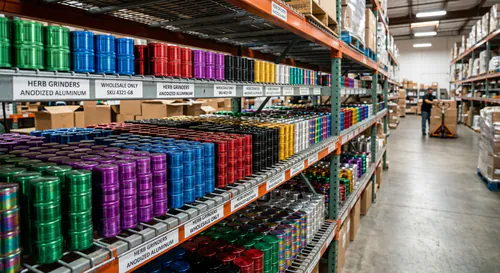
The following aluminum grinders are stocked for dispensary and wholesale orders, with bulk pricing available on all models.
Custom 4-Piece Aluminum Grinder
Aircraft-grade 6061 aluminum with anodized finish. Four-piece configuration includes grinding chamber, collection chamber, and kief catcher with stainless steel mesh screen. The screen gauge is fine enough to collect kief-catching grinders without clogging under normal use. Available with laser engraving or UV printing for dispensary branding.
Standard 2-inch diameter. Teeth are diamond-cut with consistent height across the full circumference, which produces a more even grind than grinders with irregular tooth spacing.
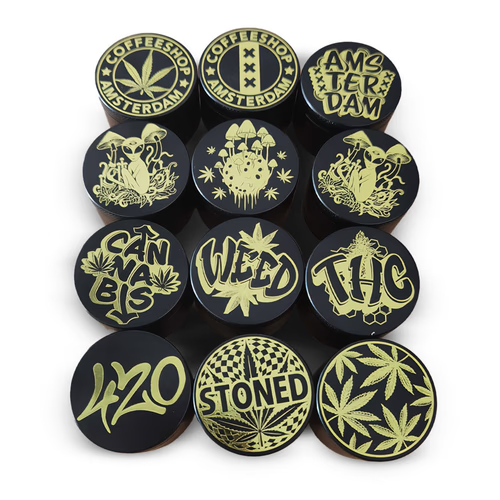
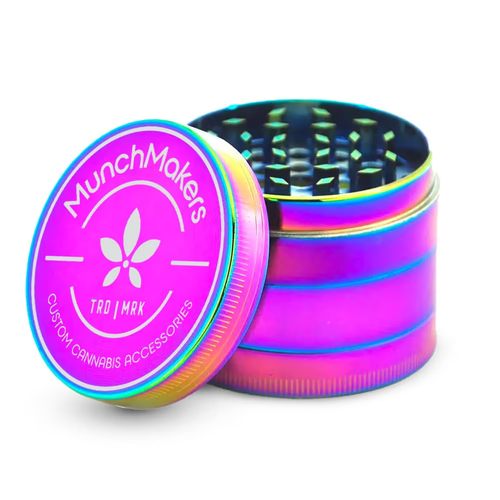
$21.95 (cheaper in bulk)
Matte-Coated Grinder
Aluminum body with a matte rubberized coating. The coating adds grip — noticeable when hands are wet or sticky — and also acts as a secondary scratch barrier over the anodized base. Available in multiple colors. Customizable via laser engraving or UV print.
The matte finish reduces surface reflectivity, which is a practical consideration for retail display. Non-slip base keeps it stable on flat surfaces during use.
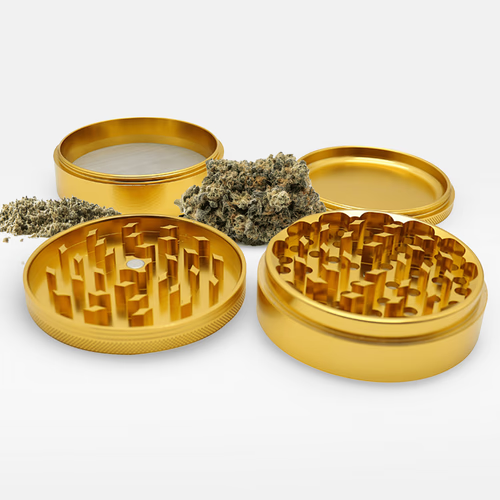

$29.95 (bulk pricing available)
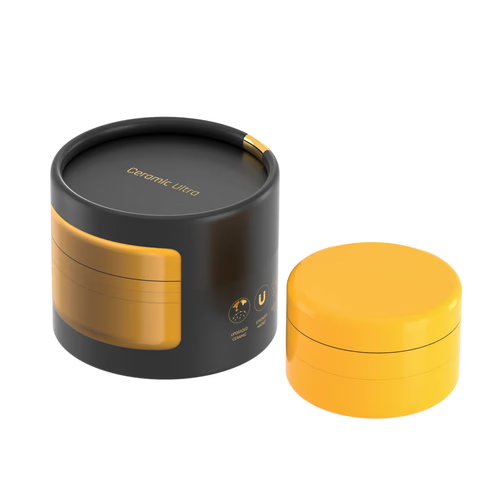
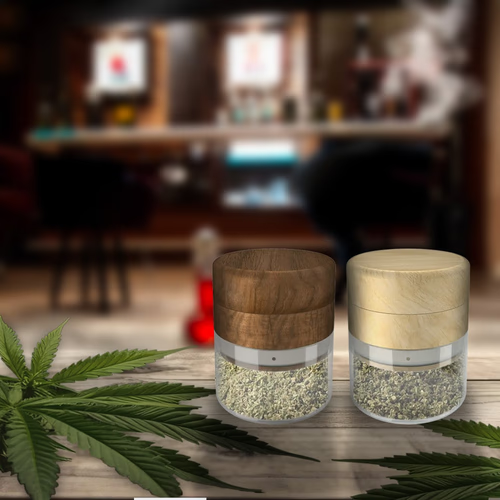
Ceramic-Coated Grinder
Aluminum substrate with a ceramic coating applied over the anodized layer. Ceramic coating has a lower surface energy than bare metal, which reduces herb adhesion inside the chamber. In practice, residue clears more easily — typically a wipe rather than a soak. The coating also increases surface hardness above the base aluminum spec, improving scratch resistance.
This is a practical choice for dispensaries that prioritize low maintenance. The ceramic layer adds meaningful durability without significantly increasing weight.
$24.95 (buy more, save more)
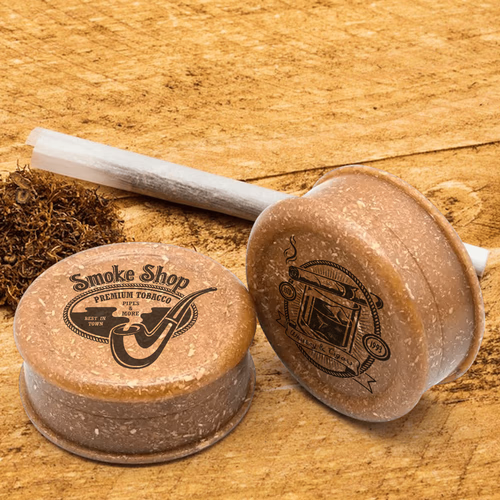
Phat Boy Grinder (4-Inch)
Oversized aluminum grinder at 4-inch diameter. The larger chamber handles higher volumes per grind cycle and distributes material more evenly, which reduces the clumping that's common in smaller chambers when grinding larger quantities. Teeth geometry is scaled to the larger diameter, maintaining consistent grind texture.
Despite the size increase, it's still aluminum, so weight stays reasonable. A good option for dispensaries that do prep work rather than single-serving grinding.

$39.95 (volume discounts ready)
Zinc Option
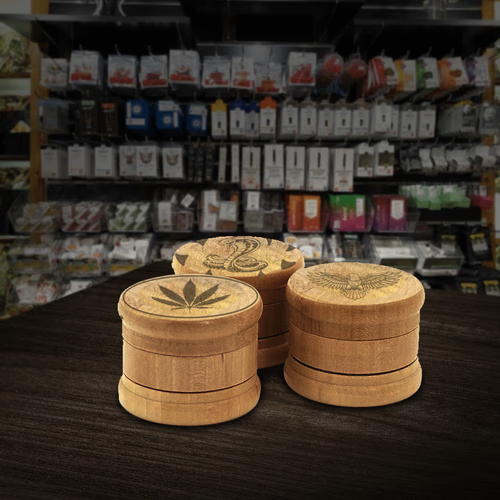
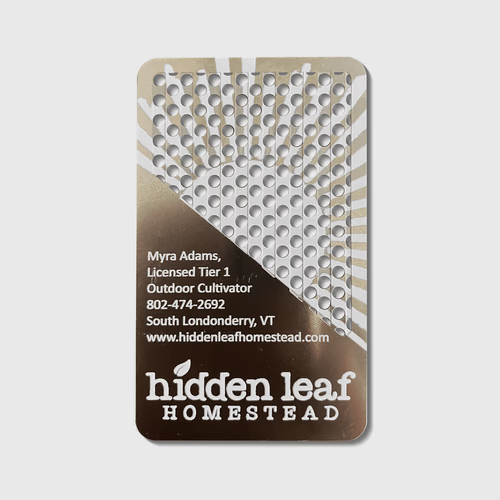
Zinc Alloy 4-Piece Grinder
Die-cast Zamak construction with a plated finish. The die-casting process produces tight tolerances and smooth interior surfaces that don't require as much post-machining as aluminum. The result is a grinder with consistent thread engagement and a dense, substantial feel.
At roughly 2.4 times the density of aluminum, zinc alloy grinders have a noticeably heavier hand feel. For customers who associate weight with quality, this is the right choice. The tradeoff is portability — it's not ideal for all-day carry, but fine for counter use or home use.
Branding options are limited to UV printing. Laser engraving through the plated surface isn't recommended as it exposes bare zinc to oxidation. UV print on zinc produces crisp results and holds up well under normal handling.
$22.95 (bulk orders save you money)
What to Watch Out for in Low-Cost Grinders
The $5–$8 grinders sold through general merchandise channels are typically made from low-grade aluminum alloys or unspecified zinc alloys with minimal quality control. The failure modes are predictable: teeth snap or deform after a few weeks of regular use, threads strip or cross-thread easily, and metal particles can shed into the ground material.
Metal shedding is the most serious concern. It happens when casting flash or machining burrs are left in the grinding chamber, or when teeth are made from alloys too soft to hold an edge. A reputable manufacturer specifies alloy grade, finishes interior surfaces, and tests grind output. Low-cost producers skip these steps.
For dispensary purchasing, the replacement cycle on cheap grinders makes them a net cost increase over time. A mid-range aluminum grinder at $20–25 will typically outlast several $5 units. If you're buying in volume, the total cost of ownership calculation favors quality hardware.
Electric Grinders
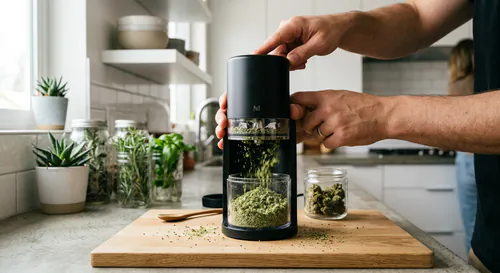
Electric grinders operate differently from manual herb grinderss and belong in a separate category for purchasing decisions. They deliver consistent grind texture with minimal user effort, which matters for customers with arthritis or hand mobility limitations, or for dispensaries doing high-volume prep where manual grinding creates fatigue.
The downsides are higher unit cost and battery dependency. For dispensary gifting or bundled product programs, electric grinders make sense as a higher-tier SKU alongside standard manual options.
Maintenance for Both Materials
Both aluminum and zinc grinders require the same basic maintenance routine. The main failure mechanism for well-made grinders is resin buildup — sticky terpene residue that accumulates on teeth and threads, increasing torque and eventually making the grinder hard to turn.
- After each session, tap out loose herb and brush the teeth and screen with a small bristle brush. This takes under a minute and prevents residue from hardening.
- Every few weeks with regular use, disassemble fully and soak all metal parts in 91%+ isopropyl alcohol for 20–30 minutes. The alcohol dissolves resin without damaging either aluminum or zinc. Rinse with warm water and dry completely before reassembly.
- Dry completely before closing. Moisture trapped between sections can cause corrosion on zinc (white oxidation on the plating) and accelerate wear on aluminum threads.
- Store in a cool, dry location. Heat and humidity accelerate resin hardening and, for zinc, can affect the plated finish over time.
Dishwasher cleaning is generally not recommended. The combination of heat, detergent, and water pressure can damage finishes and, on zinc grinders with plating, cause delamination. Isopropyl alcohol cleaning is more reliable and less likely to cause unintended damage.
Common Questions
See the full grinder catalog with wholesale pricing for dispensary orders.
Summary
Aluminum and zinc are both viable grinder materials. The practical differences come down to weight (aluminum is lighter), customization range (aluminum is broader), and corrosion resistance (aluminum's passive oxide layer is more reliable than zinc plating long-term). Zinc alloy has advantages in density and die-casting detail, which some customers prefer.
For most dispensary applications — branded grinders, bulk purchasing, customer-facing products — aluminum is the stronger choice. The anodized finish holds up over time, laser engraving produces clean results, and the lighter weight is practical for daily carry.
In either case, alloy specification and manufacturing quality matter more than material choice. A well-made zinc grinder will outlast a poorly made aluminum one. The specs to ask for: alloy grade, interior surface finish, and whether the manufacturer can confirm no post-cast residue in the grinding chamber.