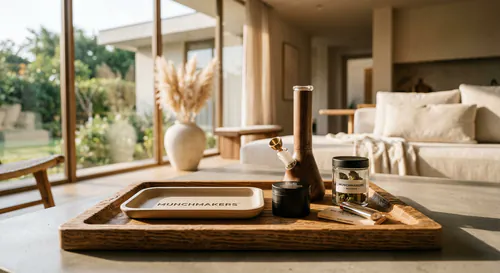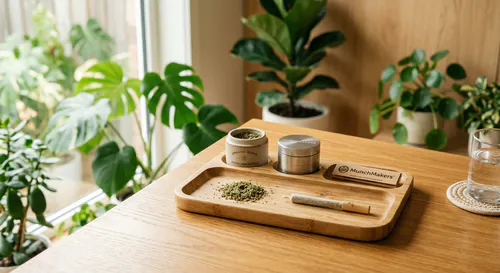
Bamboo rolling trays tend to get grouped in with "natural" or "sustainable" lifestyle products in a way that makes them sound like they're trading function for ethics. That's not accurate. Bamboo is harder than most domestic woods, ages well, and produces a clean surface for rolling that competes with metal in most practical tests. The eco credentials are real, but they're not the reason to buy one. The tray itself earns its place.
Bamboo vs wood vs metal: the honest comparison
Bamboo isn't wood in the technical sense. It's a grass, and its fiber structure is fundamentally different from timber. That structure is what makes it harder than most woods you'd use for a tray. On the Janka hardness scale, bamboo typically sits between 1300 and 1800 lbf depending on species and processing, which puts it harder than red oak (1290 lbf), maple (1450 lbf), and comparable to many hardwoods used in furniture. A bamboo tray won't dent from a dropped grinder. It won't warp as quickly as pine or MDF under humidity changes.
Metal trays beat bamboo on raw durability. A rolled-edge metal tray is essentially indestructible under normal use. You can drop it, scratch it, bend it slightly, and it keeps functioning. Bamboo can crack if it's dropped on a hard corner or stressed along the grain.
On the other hand, bamboo trays beat metal in aesthetics. The natural grain variation, warm color tone, and organic texture make bamboo look more considered as a desk or shelf object. Metal trays look functional. Bamboo trays look intentional. Whether that matters depends entirely on your setup, but it's worth acknowledging.
Wood trays, by comparison, are softer and more prone to warping. Pine and MDF tray surfaces absorb moisture more readily than bamboo and need more aggressive sealing to hold up over time. Bamboo is the better wood-adjacent choice for rolling tray use specifically because of its hardness and moisture resistance.
Sustainability: what's real and what's marketing
Bamboo is one of the fastest-growing plants on Earth, reaching harvestable maturity in three to five years versus the decades required for most hardwood timber. It doesn't need replanting after harvest because it regrows from its root system. It requires no pesticides to grow commercially and sequesters carbon quickly during growth.
The sustainability credentials hold up, but only if the product is made responsibly. Bamboo products made in factories with poor environmental practices, coated in solvent-based lacquers that offgas VOCs, and shipped around the world in excessive packaging aren't particularly sustainable in practice even if the raw material is. Look for trays with water-based or food-safe finishes, and buy from brands that are transparent about their sourcing.
Engraving and customization on bamboo
Bamboo laser engraves exceptionally well. The contrast between the engraved area and the natural surface is sharp and clean, and the grain texture adds visual interest to engraved designs in a way that flat metal doesn't. For brands and dispensaries wanting a tray with a premium, artisanal feel rather than a printed graphic look, bamboo with laser-engraved logos is a strong option.
Print adhesion on bamboo requires the right surface prep. UV printing on bamboo is possible but needs a light sanding and primer step. Vinyl wraps adhere well to flat bamboo surfaces, though the organic grain texture can cause minor adhesion inconsistencies at raised grain lines. Engraving is the most reliable and highest-quality customization method for bamboo specifically.
Cleaning bamboo trays
The main cleaning consideration with bamboo is avoiding extended water exposure. Bamboo tolerates a damp cloth well but leaving standing liquid on the surface or soaking the tray will cause swelling and surface damage over time. Wipe clean with a lightly damp cloth and dry immediately.
Bamboo trays benefit from an occasional light application of food-safe mineral oil, maybe once every few months, if the surface looks dry or slightly chalky. It restores the natural sheen and provides a modest barrier against moisture. This is the same maintenance you'd do with a bamboo cutting board. It takes about 60 seconds and extends the life of the tray meaningfully.
Avoid harsh chemical cleaners. Isopropyl alcohol in high concentrations can dry out bamboo and cause surface checking (small cracks along grain lines). A diluted solution, around 30 to 40%, is fine for cleaning resin residue without damaging the surface.
How bamboo trays photograph
This matters for brands. Bamboo has natural variation in grain and color that makes products photographed on it look warmer and more organic than those photographed on metal or acrylic. If you're shooting product photos for a brand with a natural, botanical, or health-oriented aesthetic, bamboo trays contribute to that visual language in a way that metal simply doesn't. The surface texture adds depth to flat lay photography.
For a dispensary or brand building visual content around wellness or sustainability positioning, bamboo accessories photograph better than metal for most content styles. That's a real, practical benefit beyond the environmental story.
Browse our full range of rolling trays including bamboo options. If you're still choosing between materials, the rolling tray materials comparison lays out the full case for each. And the wood and organic products category covers our broader range of bamboo and natural material accessories if you want a consistent aesthetic across your setup.