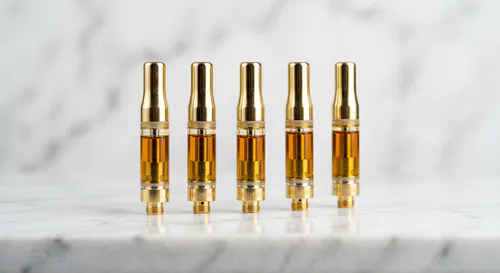
Vape cart buying guide: everything you need to know before your next cartridge purchase
Cannabis oil cartridges have flooded the market. At a well-stocked dispensary you might see fifty different carts on the shelf, and the price range can be enormous - anywhere from $20 to $80 for a half-gram in some markets. The difference between the cheap end and the expensive end isn't always what you think, and knowing what to look for means you're making the choice deliberately rather than guessing.
Cart hardware: why it matters more than the price tag suggests
The cartridge itself is not just a container. The hardware determines how consistently the oil vaporizes, how well it handles different oil viscosities, and how long it lasts before the coil degrades or clogs.
CCELL is the brand most people in the industry point to when they want reliable hardware. CCELL uses a ceramic heating element with a hollow core that wicks oil efficiently and heats it evenly. The result is consistent vapor from the first hit to the last, less clogging, and a cleaner flavor because ceramic doesn't impart any taste of its own. Many licensed cannabis brands use CCELL hardware specifically and say so on the packaging. That's worth something.
Ceramic core carts (not necessarily CCELL branded but similar technology) are the next tier. They use a porous ceramic wick and heating element. Quality varies more widely here because ceramic construction isn't standardized across hardware suppliers. Good ceramic carts perform well. Poorly made ones crack, leak, or produce an off flavor.
Cotton wick carts are the oldest design and, at this point, the lowest tier. Cotton heats unevenly, absorbs flavors, and burns if it dries out. You see them mostly in the cheapest, unbranded carts. If you're buying from a licensed dispensary, you'll rarely encounter cotton wick carts. In unregulated markets, they're more common.
Glass vs polycarbonate oil chambers
The chamber holding the oil is either glass or plastic (usually polycarbonate). Glass is inert. It doesn't react with cannabis oil, doesn't leach chemicals, and doesn't develop cloudiness over time. Premium carts use glass chambers.
Polycarbonate is lighter and cheaper. At room temperature and with short contact times, it's generally considered safe. But cannabis oils, especially terpene-rich extracts, can be slightly acidic and may interact with plastic over longer storage periods. Some terpenes are also mild solvents. For a cart you'll finish in a week, polycarbonate is probably fine. For something sitting on a shelf for months, glass is the better choice.
When you're looking at a cart, you can usually tell. Glass has a slight weight and clarity to it. Polycarbonate is lighter and can have a very faint texture or seam.
Oil types in cartridges
Distillate is the most common fill. It's clean, stable, flows well into carts, and produces consistent potency readings. The downside is that distillate is stripped of terpenes during processing, so they have to be added back. The quality of those added terpenes varies. Cannabis-derived terpenes (CDT) that come from the same plant species are generally considered better than botanical terpenes sourced from non-cannabis plants, which can taste perfumey or artificial. Synthetic terpenes are the bottom tier.
Live resin carts use oil extracted from fresh-frozen plant material. The terpene profile is preserved from harvest, so the flavor and effect profile more closely represents what the live plant smelled and tasted like. These are noticeably better in my opinion. The price premium is usually justified.
Live rosin carts are the top of the market. Solventless extraction, full-spectrum oil, no cutting agents needed because rosin is naturally viscous. These are expensive, but for consumers who want the most complete cannabis experience in a portable format, they're the category to look at.
You'll also see "cured resin" (from dried and cured flower, better than distillate but not as expressive as live resin) and "sauce" or "THCA diamonds" suspended in terpene-rich liquid. The diversity of oil types has grown significantly in the last few years.
Lab testing and certificates of analysis
Every cart from a licensed cannabis brand should come with a COA - a certificate of analysis from a third-party lab. The QR code on most dispensary-purchased carts links directly to it. Check the following:
Cannabinoid potency: confirms the THC percentage listed on the label is accurate. Some brands have been caught significantly overstating potency.
Residual solvents: should be non-detectable or well within state-regulated limits. High residual solvent levels mean the extraction process wasn't complete.
Pesticides: should be non-detectable. Cannabis is a bioaccumulator - it absorbs whatever's in the soil. Pesticide-contaminated oil is a real issue in markets with limited testing oversight.
Heavy metals: lead, cadmium, arsenic, and mercury are tested in most state-licensed markets. This is especially important for carts because heavy metals can leach from low-quality hardware into the oil over time.
If a brand won't share a COA or doesn't have one, don't buy from them.
Avoiding counterfeits
The counterfeit cart problem emerged mostly in unregulated markets where brands sold packaging wholesale to anyone who wanted it. Someone would buy empty carts, fill them with untested oil, and sell them in fake branded packaging. The Vitamin E acetate lung illness outbreak in 2019 was directly linked to this.
In state-licensed dispensaries, the risk is much lower because the supply chain is tracked. If you're buying outside a licensed store, you're taking a real risk. Authentic packaging from licensed brands will have state-required labels with batch numbers, testing dates, and licensed producer information. If anything on the packaging seems off (blurry printing, misspelled words, missing license numbers), it's a red flag.
Battery compatibility and performance
Standard carts use 510 threading, which is compatible with the vast majority of 510 thread batteries. Some brands use proprietary pod systems that only work with their own battery. Proprietary systems lock you into their ecosystem, which may be fine if you love the brand but is limiting if you want to use multiple brands with one battery.
Your battery's voltage affects how the cart performs. Most oil carts vaporize best at 2.4-3.2V. Running a cart at 4.0V will produce more vapor but burn through terpenes and degrade the coil faster. The 510 thread battery guide covers this in detail.
Cart storage to protect your investment
Store carts upright, tip down, at room temperature. Keeping them upright prevents oil from pooling in the mouthpiece and clogging the airflow. Extreme cold thickens oil and can cause clogging. Extreme heat degrades terpenes and can cause oil to thin and leak past the seals. A drawer at room temperature is ideal.
If you end up with a clogged cart, gentle warmth usually clears it. Hold it in your hand for a few minutes, or place it briefly near (not on) a heat source. Don't blast it with a hair dryer.
For the bigger picture on portable vaping, the disposable vape pen guide covers the pre-filled all-in-one format. And if you're choosing between cartridge systems and concentrate pens, the vape pen vs dab pen comparison is worth reading before you commit. Custom vape pens are also available for brands looking to build out their own cartridge line.