Custom BIC lighters: design options, MOQs, and why BIC is still the gold standard
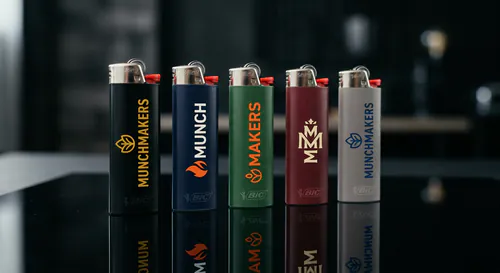
If you've ever handed out a promotional lighter at an event and watched it get slipped into someone's pocket without a second thought, you already know the problem with generic lighters. They get used and forgotten. A BIC lighter gets used and remembered, partly because the brand itself carries thirty-plus years of reliability, and partly because a well-printed custom BIC looks genuinely good.
This isn't just brand loyalty talking. BIC sells about 4 million lighters per day worldwide. That recognition matters when your logo ends up on one. People don't throw away BICs the way they discard cheap lighters from a bin at a gas station checkout. They keep them in their pockets, their bags, their kitchen drawers, until the last drop of fluid is gone. That's a lot of impressions from a single unit.
The two sizes you need to know
BIC makes two sizes that matter for custom printing: the J5 (mini) and the J6 (full-size). Most custom orders default to the J6 because the print surface is substantially larger, roughly 32mm wide by 40mm tall on the primary face. The J5 gives you around 22mm by 30mm, which is still workable for a logo or simple text but starts to feel cramped if you want any real detail.
For most promotional use I'd go J6 without hesitation. The J5 makes sense if you're doing a product bundle where the lighter is a small extra, or if the compact size itself is part of the appeal. Otherwise, bigger print surface means better brand visibility.
Printing methods and what each one gets you
There are three main ways to print on a BIC lighter, and they differ significantly in output quality and minimum order quantity.
Pad printing is the traditional method. It transfers ink from an etched plate onto the lighter surface through a silicone pad. The result is sharp and durable, but you're generally working with 1-4 spot colors. Gradients and photographic images don't translate well. Pad printing usually has the lowest MOQ, often 100-300 units depending on the supplier, which makes it the go-to for smaller runs or tight budgets. The tradeoff is design flexibility.
Full-color digital printing (sometimes called wrap printing) uses a shrink-wrap sleeve or digital UV process to apply your artwork across the entire lighter surface. You can reproduce photographs, complex gradients, full-bleed backgrounds. The output looks closer to what you'd see on a premium product label. MOQs for full-color runs typically start at 250-500 units, and the per-unit cost is higher. For brand-heavy use cases where visual impact is the whole point, it's worth it.
Sleeve wraps are a third option where a printed plastic sleeve fits over the lighter body. Quality varies depending on the supplier, but good sleeve wraps hold up reasonably well and allow 360-degree coverage. Some brands prefer this method because it's easier to order quickly and update designs without retooling. The sleeve itself can peel at the edges over time, which is worth factoring in if longevity matters to you.
For serious branding work, full-color digital printing on the J6 is usually the right answer. The BIC body color should also be part of your design brief. White is the standard choice for full-color because it doesn't influence the inks, but if your brand palette is dark, a black or colored body might photograph better as a product shot even if it limits print contrast.
Artwork requirements
Send vector files whenever possible. AI, EPS, or high-resolution PDF at 300 DPI minimum. If you're submitting rasterized artwork for a full-color run, 300 DPI at actual print size, not scaled up from a small source file. Manufacturers will accept JPEGs but they'll come back to you if the resolution isn't sufficient, which adds turnaround time.
Keep critical text and design elements at least 2mm from the edge of the print area. Lighters have a slight curve that can affect edge printing. Any fine lines under 0.3pt tend to fill or disappear on the finished product, so check your minimum stroke widths before you submit.
Most suppliers require a proof approval before production starts. Review the proof carefully, especially for color accuracy. Pantone matching is available with pad printing but adds cost. Full-color digital printing matches RGB and CMYK profiles but won't perfectly reproduce every Pantone swatch, so if your brand has strict color standards, discuss this upfront.
MOQs and realistic timelines
Pad printing: typically 100 units minimum, sometimes as low as 50 with a setup fee. Full-color: usually 250-500 units minimum. Rush production (7-10 days) is available from most suppliers but costs more and limits customization options. Standard production runs 2-4 weeks from proof approval, plus shipping. If you're ordering for an event, build in at least 4-5 weeks from artwork submission to delivery.
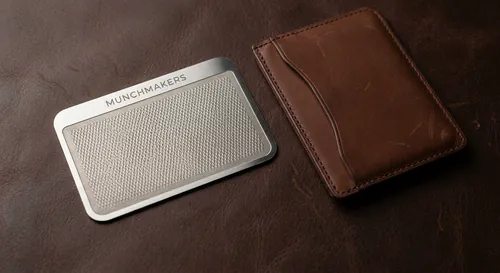
We carry custom lighters with competitive MOQs and full-color printing options for both BIC sizes. We can also help with MunchMakers custom accessories beyond lighters if you're putting together a branded kit.
Why the generic alternative usually loses
I've seen companies go the cheap route with unbranded lighters from overseas suppliers to save a few cents per unit. The lighters sometimes work fine. More often, the print fades, the ignition is unreliable, or the fuel runs out suspiciously fast. When someone's trying to light up and a lighter fails twice in a row, they're not thinking about your brand in a positive way. The association sticks.
BIC's consistency is the whole argument. Reliable ignition, predictable fuel volume, a form factor people recognize and trust. When your logo is on that lighter, some of that trust transfers. That's the value of putting your brand on a product that already has brand equity of its own.
For dispensaries, events companies, spirits brands, or anyone doing volume promotional work, custom BIC lighters have one of the best cost-per-impression ratios in the merchandise category. They're cheap enough to give away freely, durable enough to stay in circulation for weeks, and functional enough that people actually carry them. That combination is harder to find than it sounds.
See our complete custom lighter branding guide for a broader look at lighter types, or check the personalized lighters gift guide if you're sourcing for retail rather than bulk promo.