Rolling trays for beginners: why you need one and how to choose your first
If you're new to rolling and you've been doing it on a magazine, a hardcover book, or whatever flat surface was nearby, a rolling tray will immediately make the whole process better. Not marginally better. Meaningfully better. I say this from experience, because I rolled on random surfaces for longer than I'd like to admit before I bought a tray and wondered why I waited.
Here's what a rolling tray actually does for you, and what to look for in your first one.
What a rolling tray actually does
The most obvious thing is containment. When you grind herb and it scatters, when you tear a paper and the pieces go sideways, when you drop your filter tip, all of it stays on the tray. On a book or a table, you lose small amounts of herb every session. On a tray, you can sweep it back into your grinder or onto your paper. Over time, this adds up.
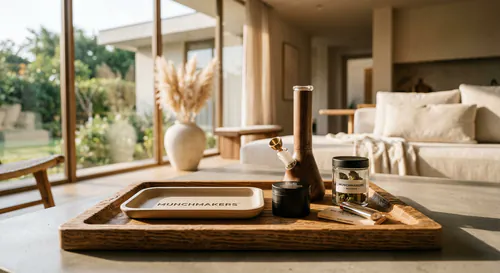
Organization is the second benefit. A tray gives every item in your rolling session a place to sit. Your grinder, papers, lighter, and filter tips aren't scattered across a desk. They're all within reach on one surface. You stop looking for things. You stop knocking items off the edge of whatever you were using before.
The rolling surface itself matters. A flat, smooth tray surface makes rolling easier. Textured surfaces, curved book covers, and uneven tables all work against you when you're trying to roll an even cylinder. Even a basic metal tray is flatter and smoother than most improvised surfaces.
Cleanup becomes a habit instead of a chore. Brushing out a tray takes 15 seconds. Cleaning herb off a textured desk takes longer and you lose more in the process.
What size to start with
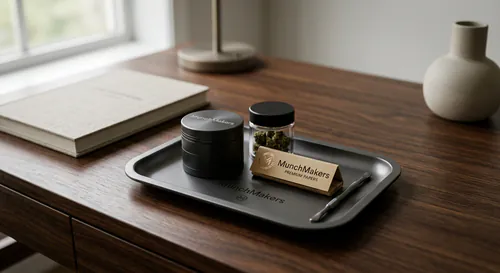
A medium tray, roughly 11 by 7 inches, is the right starting point for most beginners. It's big enough to fit your grinder, papers, lighter, and a container for filters without feeling crowded. It's small enough that it doesn't dominate a desk or shelf.
Don't start with a small tray unless you have a specific reason, like you're primarily rolling for travel. Small trays are limiting until you know exactly what you need on the surface. A medium tray leaves room to figure out your workflow before you optimize for size.
A large tray is overkill for most beginners. If you're rolling one or two at a time for personal use, you don't need 14 by 10 inches of space. Save the large tray for when you know you want it.
Best material for your first tray
Metal is the right choice for a first tray. The reasons are simple: it's durable, easy to clean, and cheap enough that you're not stressed about scratching it while you're learning. Metal trays with rolled edges keep herb from falling off the sides. They don't absorb anything, so residue wipes off cleanly with a damp cloth.
Wood and bamboo look better but require a bit more care. If you're new to rolling, you don't want to be thinking about whether you're using the right cleaner on your tray surface. Start with metal, move to wood or bamboo later if the aesthetic matters to you.
Avoid plastic for a first tray. It scratches easily, can develop static that pulls fine herb toward the surface, and looks worn faster than metal or wood. The price savings aren't worth it.
What accessories to pair with your first tray
You don't need everything at once. Start with a grinder and rolling papers, because those two items are where most beginners struggle. A good grinder makes a bigger difference than most people expect. Grinding by hand produces inconsistent pieces that roll unevenly and burn poorly. Even a mid-range 4-piece grinder produces a noticeably better grind.
Rolling papers in a 1.25 or king-slim size are the standard starting point. Unbleached papers from brands like RAW are widely recommended for beginners because they're forgiving and easy to work with. Avoid ultra-thin rice papers until you've built some technique, because they tear more easily when you're still learning the feel.
Filter tips matter more than people expect at first. Rolling without a filter (also called a crutch) is harder because the open end of the paper collapses under your fingers as you roll. A filter tip stiffens that end and gives you something to hold onto. Try them in your first few sessions and see if your rolling improves. Most people's does.
How a tray changes the rolling experience
The first thing you'll notice is that you stop losing herb. The second thing is that your rolling spot feels intentional instead of improvised. Having a dedicated surface that's always set up the same way creates a routine, and rolling improves with repetition done in consistent conditions.
Rolling on a book is like trying to cook in a kitchen with no counter space. You can do it, but everything is harder than it needs to be. A tray is counter space.
Browse our full selection of rolling trays to see what size and style fits your setup. If you want to build out a full beginner kit, the cannabis accessories starter kit guide covers everything you need. Once you have a tray, the rolling tray organizer setup guide will help you get the most out of your surface. And if you're working on your rolling technique alongside getting your gear sorted, how to roll a perfect joint for beginners covers the mechanics.