What "smell-proof" actually means
The term gets applied to a wide range of products, most of which aren't actually smell-proof in any meaningful sense. A product that reduces odor is not the same as one that eliminates it. Understanding the difference is the first step to buying something that actually works rather than something that just says the right words on the label.
True smell containment requires two things: a physical barrier that odor molecules can't pass through, and a closure that doesn't let them escape around the edges. Most weed storage products that fail at smell-proofing fail on the second part. The bag or jar itself might be fine, but the zip or the cap has gaps that any trained nose or dog will detect.
The three technologies that actually work are activated carbon filtration, airtight seals (silicone gaskets, compression closures), and certain types of glass with tight-fitting lids. Everything else is a partial solution at best.
Smell-proof bags: what works and what doesn't
Smell-proof bags are the most popular format and the category with the most variance in actual performance. At the bottom of the market, you have nylon bags with a basic zip that might delay smell for a few hours. At the top, you have activated carbon-lined bags with double-sealed closures that genuinely contain odor for days.
The activated carbon lining is the key feature to look for. Carbon has an enormous surface area at the molecular level and physically adsorbs odor molecules, trapping them rather than blocking them. A bag with a high-quality carbon lining and a well-sealed closure will outperform a bag without one regardless of how thick the outer material is.
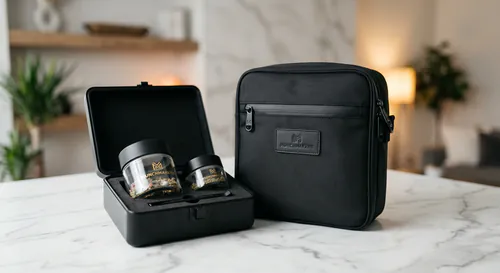
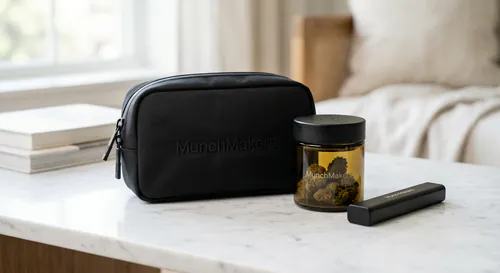
The closure matters as much as the lining. A carbon-lined bag with a basic single-zip closure is better than nothing but will still allow odor escape around the teeth of the zip over time. Double-zip closures, or bags with a rubber strip pressed inside the closure to complete the seal, perform significantly better. The smell proof pouch uses this design -- the closure is the part worth examining closely when evaluating any bag.
Soft-shell vs hard-shell bags is a secondary consideration. Soft bags are more packable and lighter; hard-case options provide crush protection in addition to smell containment. For carrying ground herb or pre-rolls that can be damaged by compression, a hard or semi-rigid case is worth the extra bulk.
The limitation of bags is longevity. Activated carbon saturates over time. A bag used daily will have noticeably less smell-containment capability after several months than when it was new. Some bags have replaceable carbon inserts; others need to be replaced entirely. If you're investing in a quality bag, check whether the manufacturer sells replacement inserts -- it dramatically extends the useful life of the product.
Glass stash jars
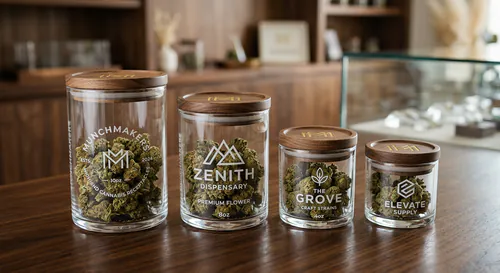
A well-made glass jar with a properly sealed lid is arguably the best long-term storage format for cannabis, both for smell containment and for preserving the herb itself. Glass is non-porous and non-reactive, meaning it doesn't absorb odors or off-gas compounds that can affect the taste or potency of what's inside.
The lid seal is where most glass jars either succeed or fail. A basic screw cap with no gasket will leak odor. A lid with a silicone or rubber gasket that compresses when tightened creates an airtight seal that contains odor effectively. UV-protective glass (amber or dark green) adds the benefit of blocking the light spectrum that degrades cannabinoids over time, which matters for long-term storage.
Stash jars in amber UV glass with silicone-sealed lids are the right format for home storage of anything you want to keep fresh for more than a week. The combination of airtight seal, non-reactive material, and light blocking addresses the three main environmental factors that degrade cannabis: air, moisture exchange, and light.
Sizing matters practically. An oversized jar stores air along with your herb, which accelerates oxidation. A jar that's roughly matched to your typical volume is better. A small jar that you refill from a larger container, rather than keeping everything in one big jar you open repeatedly, is an even better approach if you're storing significant quantities.
One thing to avoid: storing in clear glass near a window or a light source. The UV transmission through clear glass is enough to degrade quality over time, even if the seal is perfect. If you only have clear glass jars, store them in a dark cabinet or drawer.
Humidity control: why it matters alongside smell-proofing
Smell-proofing and freshness preservation are related problems but not identical. A bag that contains smell but doesn't regulate humidity will give you an odor-free container full of herb that's either too dry (crumbles, harsh smoke) or too moist (burns unevenly, prone to mold).
The target humidity range for cannabis storage is generally cited as 58 to 62 percent relative humidity. Below 55 percent, terpenes start to degrade noticeably and the physical texture becomes brittle. Above 65 percent, mold risk increases significantly.
Boveda packs are the standard solution for maintaining humidity in a sealed container. They work bidirectionally -- adding moisture when the environment is too dry, absorbing it when it's too humid -- and maintain a specific target RH depending on which pack you use. The 58% and 62% packs are most common for cannabis storage. Drop one in your sealed jar or bag and it handles the moisture regulation passively. They need to be replaced every few months, or when they harden and feel completely solid.
Humidity packs are worth using in any container you're sealing long-term, including smell-proof bags. They don't add odor and they meaningfully extend the time your storage stays in good condition.
Joint cases and rigid holders
Loose herb is only part of the storage problem. Pre-rolls and joints have their own set of considerations: crush protection, shape preservation, and smell containment. A joint in a pocket without any protection gets bent, cracked, or squashed within hours.
Rigid joint cases provide the physical protection that bags and jars can't. The hard shell means the joint arrives in the same condition it left. Combined with a gasket-sealed closure, a good joint case also contains smell. The full breakdown of formats -- from simple metal tubes to waterproof sealed cases -- is covered in the joint holder and case guide, which is worth reading if you're trying to figure out which format fits your carry habits.
For home storage of pre-rolls, the tradeoff between bags and cases is mostly about freshness versus convenience. A sealed jar or bag maintains better humidity than most open cases. But a case that you open and close many times a day is more practical than a jar if you're frequently grabbing one at a time. The practical answer is often both: store the bulk in a jar with a humidity pack, and load a day or two's worth into a case for carry.
Joint cases that include a silicone gasket under the cap are meaningfully better for smell containment than simple screw caps. The gasket creates a physical barrier that the thread alone doesn't provide.
Home versus travel storage: different requirements
Home storage and travel storage have different priorities. At home, smell-proofing matters primarily for discretion within the space. A good glass jar in a cabinet is usually sufficient. Travel storage adds the requirement of portability, resistance to physical damage, and often a higher bar for smell containment because you're in a shared space.
For travel, the combination of a compact rigid case inside a smell-proof pouch gives you both crush protection and redundant smell containment. If either fails, the other is still doing its job. This two-layer approach is more reliable than relying on any single product to do both jobs perfectly.
Car storage deserves a specific mention. A hot car is a bad environment for cannabis in multiple ways: heat degrades terpenes and cannabinoids faster than almost any other storage condition, and the temperature fluctuations from cold nights to hot afternoons create moisture cycling that affects quality. If you're storing in a car, use the glove box or another area that's less exposed to direct sun, and consider adding a humidity pack to your container.
Organized setups that actually work
The most effective storage approach combines the right container for each category of item rather than trying to make one solution do everything.
For bulk flower: a UV glass jar with a silicone-sealed lid and a Boveda pack inside, stored in a cool dark location. Replenish into smaller containers as needed.
For daily carry of ground herb: a smell-proof pouch with activated carbon lining and a well-sealed closure. Check the closure quality before buying.
For pre-rolls: a rigid case with a gasket seal for carry, and back-fill from the bulk stash jar at home.
For accessories: keep papers, filters, and other session supplies together in a small pouch or dedicated compartment so they're not scattered. This is less about smell and more about not losing things.
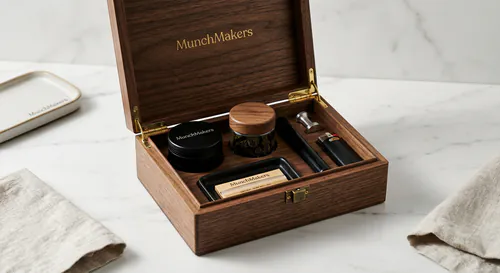
The full picture of weed storage -- including stash boxes and combination solutions -- is worth looking at in the guide to weed storage boxes for discreet keeping. It covers some of the combination products that integrate multiple storage functions in a single piece, which can simplify a setup considerably.
What to skip
Fabric bags without activated carbon lining. They are not smell-proof. The fabric is porous and the typical zip closure doesn't seal. They are a style item, not a functional storage solution.
Plastic bags of any type, including zip-lock. They don't contain smell, they allow moisture and air exchange that degrades the herb, and the static charge in plastic attracts trichomes and pulls them off the bud. All three of these things are bad.
Screw-cap containers without a gasket. The thread creates a delay, not a seal. For short-term carry, it's fine. For extended storage or travel where smell containment matters, it's not sufficient.
Very cheap smell-proof bags with unspecified carbon content. Some bags marketed as smell-proof contain a negligible amount of carbon in the lining -- not enough to do the job meaningfully. Buy from a manufacturer that's specific about what their product contains and what it's rated to contain.
Getting the setup right
The investment in proper storage pays off in two ways: better quality herb over time, and genuine confidence that your storage isn't announcing itself. Neither of those is a small thing.
Start with a quality UV glass jar and a humidity pack for home storage -- that's the highest-impact first purchase for anyone who cares about freshness. Add a smell-proof bag with activated carbon for travel. Add a rigid joint case if you carry pre-rolls. Those three pieces cover most use cases without overcomplicating the setup.