Where to start when you have nothing
Walking into a smoke shop for the first time is a bit like walking into a kitchen supply store without knowing how to cook. There is a lot on the shelves, prices range from $5 to $200, and nobody is explaining why any of it exists. This guide is the explainer you do not get in the store. I am going to tell you what you actually need to start, what order to buy things in, and what is worth spending money on versus what you can get cheap without noticing a difference.
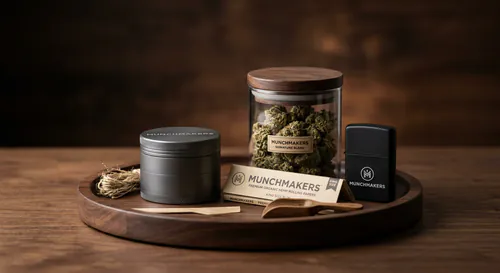
The honest short answer is: you need five things. A grinder, rolling papers, filter tips, a lighter, and somewhere to put your weed. Everything else is optional at first, though some of the optional stuff becomes important pretty quickly once you start smoking regularly. I will cover all of it, but those five are the non-negotiables.
Item 1: the grinder
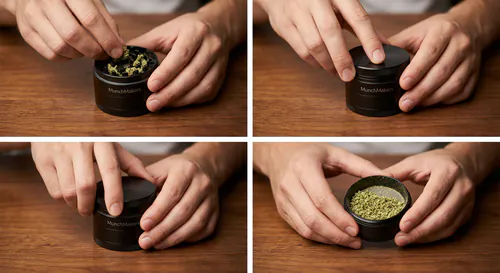
A grinder is not optional. I know some people say you can just break weed by hand and technically you can, but the result is never as good. Ground weed burns evenly. Hand-torn weed burns in clumps. Ground weed rolls into a tight, even joint. Hand-torn weed gives you lumpy, unpredictable rolls. For any use case, a grinder produces better material.
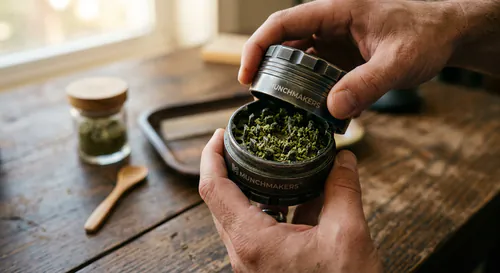
What to buy: a 4-piece aluminum grinder in the 50mm range. This is the right choice for most people starting out. It has a grinding chamber, a collection chamber, and a kief catcher at the bottom. It is portable enough to carry and large enough to grind a full session in one go. Expect to spend $15 to $35 for a decent one.
What to avoid: acrylic grinders. They break, they leave plastic fragments in your weed (it happens), and the teeth are often poorly shaped. Spend a bit more and get aluminum. Zinc alloy is acceptable but heavier and less durable long term than good aluminum.
The full range of options across sizes and materials is covered in the grinder section. If you are on a strict budget, a 2-piece aluminum grinder at around $15 does the job without the kief collection. If you want to start collecting kief from day one, spend a bit more and get the 4-piece.
For a walkthrough of how to actually use a grinder and get the right consistency for different purposes, the complete grinding guide covers everything in detail.
Item 2: rolling papers
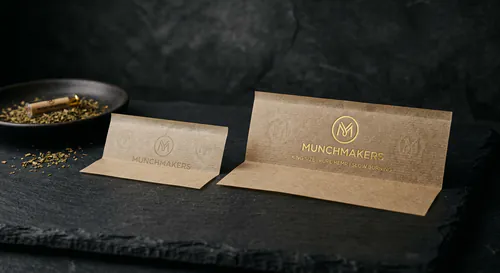
Rolling papers come in more varieties than you probably realize. Different materials, sizes, thicknesses, and flavors. For a beginner, the choice matters but does not need to be complicated.
Start with a standard 1 1/4 paper in hemp or rice. These are the most common size, work well with the amount of weed most people roll in a single joint, and are what most rolling tutorials assume you are using. They are easy to find, cost $2 to $6 per booklet, and last a while.
Avoid ultra-thin rolling papers at first. Papers marketed as "extra thin" or "transparent" are harder to handle, tear more easily, and do not give you much margin for error when you are learning. Pick them up once you can roll consistently.
Hemp papers burn slightly slower and cleaner than wood pulp papers. Rice papers are the thinnest natural option and the most neutral in taste. Wood pulp papers (what most cheap papers are made of) are tougher and easier to handle but add more flavor to the smoke. For a first buy, hemp is a good middle ground. The rolling papers selection covers a range of options across materials and sizes.
Item 3: filter tips
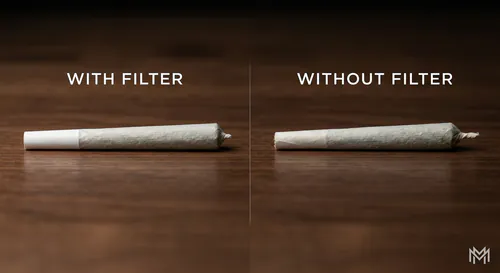
Filter tips (also called crutches or roach tips) are small pieces of cardboard that you roll into a tight cylinder and place at one end of a joint. They do three things: keep the end of the joint open so you can actually draw air through it, stop weed debris from falling into your mouth, and give you something to hold as the joint burns down to the end.
You can make filter tips from torn pieces of cardboard or rolling paper booklet covers. But buying a proper filter tips booklet gives you the right thickness and size without any improvisation. A booklet costs $2 to $4 and lasts months. There is no reason to skip them.
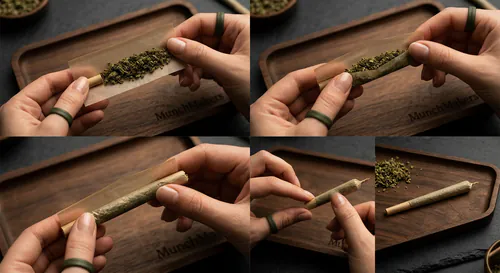
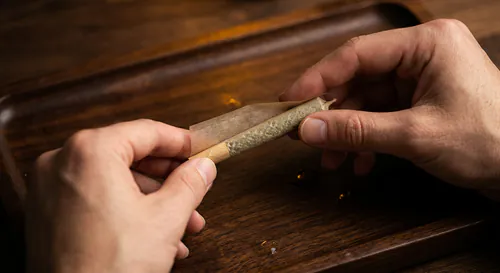
How to use one: fold the end back and forth in an accordion fold of 3 to 4 folds (making a small W shape), then roll the flat remaining portion around the folded section to form a cylinder. Place it at the filter end of your joint before rolling. That is all there is to it.
Item 4: a lighter
A standard disposable lighter works. A BIC is the standard for a reason: reliable spark, consistent flame, long life, cheap. Torch lighters burn hotter and are better for vaporizers or outdoor use in wind. For general smoking, a basic pocket lighter is fine.
Buy two. Lighters disappear. Everyone who smokes knows this. Having a backup immediately prevents the specific frustration of being ready for a session and having nothing to light with.
Custom printed lighters are a cost-effective upgrade if you want something more personal or less likely to walk off with a friend who "borrowed" it. They are also one of the most practical gifts in this space, which is worth knowing if you end up buying starter kit items for someone else.
Item 5: storage (stash jar)
Weed needs to be stored properly to stay fresh. Exposure to air dries it out, exposure to light degrades potency over time, and most plastic bags do nothing to contain smell. A proper storage solution matters from the start.
For most people starting out, a small UV-resistant glass jar with an airtight seal is the right choice. These run $8 to $20 and keep weed fresh for weeks without any significant potency loss. The UV protection is important if the jar will sit on a shelf where light hits it.
Silicone containers are easier to handle, non-stick, and close to indestructible. The trade-off is that silicone does not protect against light. Fine for storage in a drawer or bag, less ideal on a shelf.
The stash jars section has options across both materials.
Item 6 (first upgrade): a rolling tray
A rolling tray is not strictly required for your first session, but it becomes almost essential after the first time you tip over your weed onto the floor or spend five minutes picking up rolling paper and filter tip pieces that scattered across your desk. A rolling tray with raised edges keeps everything contained and gives you a clean surface to work on.
In the $15 to $30 range, a standard metal rolling tray is solid enough to last years with no care required. Larger trays give you more room to work, which is helpful when you are still learning to roll. The rolling trays section has standard and custom options.
Eventually most regular smokers end up with a tray that is specific to their setup and matches how they use it. But for starting out, any reasonably sized metal tray works.
Item 7 (first upgrade): a joint case or holder
If you leave the house with pre-rolled joints, you need something to carry them in. A loose joint in a pocket or bag gets crushed, untwisted, or destroyed before you get where you are going. A basic doob tube (a small plastic tube with a cap) costs $3 to $8 and solves the problem completely. A nicer metal joint case in the $15 to $30 range protects multiple joints and looks much better.
The joint holders section covers everything from single-joint tubes to multi-joint travel cases with smell-resistant seals.
Budget vs premium: where to spend more
Not everything in this list needs to be bought at the top of its price range. Here is where quality actually matters versus where cheap is fine:
| Item | Buy cheap if... | Spend more if... |
|---|---|---|
| Grinder | Rarely used, budget is tight | Daily use, want kief collection, want it to last |
| Rolling papers | Just starting out | You notice taste, smoke often, want consistency |
| Filter tips | Always. Cheap tips are fine. | N/A |
| Lighter | Standard BIC is perfectly good | You want something that does not disappear |
| Stash jar | Short-term storage only | Long-term freshness matters, potency is a priority |
| Rolling tray | Home use only, care about looks | You want a quality surface and a specific design |
| Joint case | Occasional carry | Daily carry, travel, smell containment matters |
The grinder is the one item where I would not recommend going cheap if you are going to smoke regularly. A bad grinder that produces inconsistent grinds, strips threads after a month, or leaves metal debris in your material is worse than no grinder. Spend $20 to $35 on aluminum and it will last for years.
Building your kit over time
Nobody needs everything on day one. The realistic path is: buy the five essentials first (grinder, papers, filter tips, lighter, storage), then pick up a rolling tray once you have had a few sessions and know you want one. Add a joint case if you start carrying pre-rolls. Consider upgrading individual items as you learn what you actually use and what matters to you.
The cannabis accessories market is enormous and the number of products can feel overwhelming. Most of it is genuinely optional. The core kit is small and inexpensive. Everything after that is a quality-of-life upgrade rather than a necessity.
For the technique side of things, once you have your kit together, the joint rolling guide for beginners covers the whole rolling process from paper selection through common mistakes and how to fix them.
Start simple, learn what you actually want from your setup, and build from there. The accessories you end up using daily are the ones worth spending real money on. Everything else can wait until you know what matters.