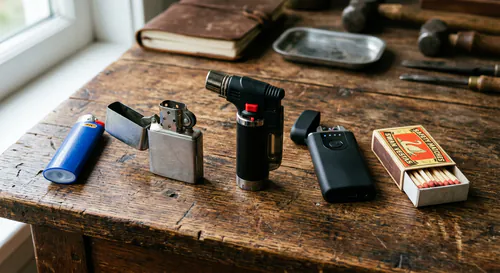
There are 7 functional categories of lighters in common use: disposable plastic (BIC, EZ Wider), refillable butane with flint (Clipper, Zippo), refillable soft-flame (Cricket), torch (jet, single or multi-flame), plasma arc (USB-rechargeable, no fuel), candle/utility (extended-reach), and electric resistance (no flame at all). Each wins in different scenarios — wind resistance, cost, refill convenience, and dispensary use case.
Below: side-by-side comparison plus which categories make sense to stock as custom-branded dispensary swag.
Disposable lighters
Most people around the world use disposable lighters, and BIC made a lot of money from this. These lighters run on butane, use a flint to make a spark, and are meant to be used until they're out of fuel. You can't refill them, so when they're empty, you just throw them away. They're not made to last, just to be used once and then discarded.
These lighters are a great choice because they're really cheap, usually under a dollar, and they work well in most situations. They're also small enough to fit in any pocket, which is really convenient. The flame they produce is soft, meaning it spreads out instead of being focused in one spot, which makes them good for things like lighting cigarettes, joints, candles, campfires, and stove burners. For just everyday use, a standard disposable lighter can handle almost any situation you might come across, probably about 90% of the time, without any issues. They're just a simple, reliable option that gets the job done.
BIC has built a reputation for being consistent. They make their lighters with a flint mechanism and butane valve that are put together very well, so you don't see a lot of differences in quality even when you're talking about hundreds of millions of units. On the other hand, disposable lighters from companies you've never heard of can be a gamble - sometimes the flint wheel gets stuck, the flame can be hard to control, or the fuel runs out faster than you think it should. This is because these companies might not be as careful when they're making their lighters, which can lead to some pretty big problems. BIC, however, has shown that they can make lighters that work well and last a long time, which is why they're so well-known and trusted.
The big problem with disposable lighters is how they hurt the environment. They're made of plastic and when they're empty, they get thrown away. This bothers some people a lot, but not everyone. If you care about how your choices affect the planet, a lighter that can be refilled is the way to go. But if you use a lot of lighters, like if you own a dispensary and give them out to customers, then disposable ones might make more sense because they're cheaper.
Refillable lighters
Refillable lighters are made to last for a long time, not just a few days. When you buy one, you also need to get butane or lighter fluid separately. Then, when the lighter starts to run out, you just fill it up again and it keeps working. This can go on forever, or at least until you misplace the lighter, which is probably what will happen eventually.
There are two main types of fuel used in this category: butane and liquid naphtha, also known as lighter fluid. Butane refillables, which can be refilled through a valve at the bottom, are often found in slim metal designs and torch styles. On the other hand, naphtha-fueled refillables, with Zippo being a well-known example, work in a different way. They use a cotton wick and a felt reservoir that's saturated with lighter fluid, and they have a flint-and-wheel ignition system. One of the benefits of Zippo's wick-and-flint design is that it's windproof, which is a real advantage, not just something that sounds good in marketing. This means that you can use it even in windy conditions, and it will still work reliably. The way it works is that the flint strikes the wheel, creating a spark that ignites the fuel, and the windproof design helps to keep the flame steady. Overall, the choice between butane and naphtha-fueled refillables depends on your personal preferences and needs.
Refillable lighters sit higher on the perceived-quality scale. Handing someone a Zippo is different from handing them a BIC — it communicates something about the giver. This is why refillable lighters, especially metal-body models, are popular for gifts, engraved mementos, and premium promotional applications. A metal lighter with a laser-engraved logo will outlast anything printed on plastic.
One big problem with refillable lighters is that you always need to have butane or lighter fluid around. If you run out at the wrong time, it can be really annoying. Some people get around this by keeping a disposable lighter as a backup, which kind of goes against the point of having a refillable one, but that's just what people do.
Torch / jet flame lighters
Torch lighters give off a strong, narrow flame. This is because they use compressed butane at high pressure, unlike regular lighters. The flame is very hot and doesn't move around, making it good for use in windy conditions. It's also more precise than a standard lighter flame, which can be shaky and hard to control. This makes torch lighters really useful for things that need a steady, strong flame.
People who smoke cigars like to use torch lighters because they can get the cigar lit evenly, without the flame touching the tobacco and changing the way it tastes. The flame from the torch is strong and focused, so you can control exactly where the heat goes. It's similar for people who use cannabis concentrates - they often use torch lighters too, because they can get the concentrates to the right temperature quickly and evenly, whether they're using a single-flame or triple-flame torch. This makes it easier to get the best flavor and effect from the concentrate.
Most torch lighters can be refilled with butane, which keeps the cost of fuel down over time. The most common type of torch lighter is the single-flame kind, and it's usually enough for lighting cigars and doing things around the house - these typically cost between $5 and $20. However, if you're looking to light bigger cigars, like ones with a 60-ring gauge, you might want to consider a triple-flame or quad-flame torch, as they can get the job done more efficiently. It's worth noting that the bigger the cigar, the more useful it is to have multiple flames.
Torch lighters aren't the best choice for everything. For instance, they can be too much for candles - the flame is too strong and can cause wax to spill or splatter everywhere. They're also not ideal for lighting cigarettes or joints, unless you're really careful, because the flame can create a hot spot instead of a smooth burn. And you should definitely avoid using them around paper or anything flammable, it's just not safe. They're really meant for specific tasks, not for general use.
Temperature is something to keep in mind. A regular lighter with a soft flame can get as hot as 1,800 to 3,500 degrees Fahrenheit. But a butane torch is even hotter, burning at around 3,500 to 4,800 degrees Fahrenheit. That's why torches are good for things like dabbing, working with glass, and soldering when you need a lot of heat. But it also means you have to be extra careful when using them, because they can be really dangerous if you're not paying attention.
Electric / plasma lighters
Plasma lighters are a new type of lighter that works in a completely different way than the others. They don't use flames or fuel, but instead use electricity to create a superhot beam of gas between two special electrodes. This beam is called a plasma arc. You can charge these lighters using a USB port, and they will produce a small, extremely hot arc of light when you need it. There's no flame, no fuel to run out, and no flint to wear out. They're a pretty cool and modern way to get a spark.
The real benefits of these lighters are that they are much more windproof than regular butane lighters, since there is no flame that can be blown out. Another advantage is that they don't need any fuel, so you don't have to worry about running out at the wrong time. Lots of people find them to be really reliable when it comes to lighting candles, incense, and cigarettes - the plasma arc makes it easy to ignite the wick or paper.
There are some real downsides to consider. For one, the flame is pretty small and focused, which can make it tough to get a campfire or stove going - anything that needs a lot of heat over a bigger area is going to be a challenge. The battery life is also a factor, with most lasting around 100 to 200 uses per charge, which is okay if you're just using it here and there, but might not cut it if you're using it all the time. And then there's the cost - a basic plasma lighter can run you $10 to $25, which is a lot more than a disposable lighter that you can get for under a buck.
Some people really like plasma lighters because they don't need butane and they work well even when it's windy. These people probably use lighters a lot, like to light candles or cigarettes. For them, a plasma lighter is a good choice. But for most people, the excitement of having a new gadget wears off after a while, and they go back to using regular lighters.
Zippo-style lighters (naphtha wick lighters)
Zippos stand out and should be in their own group because they have a unique look, a special fuel, and a lot of fans who really love them. The metal case that opens and closes, the sound it makes when you click it, and the wheel you turn to make the flame - these are things you can touch and feel that make a lighter more than just something you use, it's something people get excited about.
One of the biggest benefits of a Zippo is that it's really good at staying lit in windy conditions. The way the wick is designed helps it keep burning even when it's really windy, which is something that a regular lighter like a BIC can't do. So if you're someone who likes to spend time outdoors and needs to light things like campfires or cigarettes when you're on a boat, a Zippo or a similar type of lighter is a great choice because it can handle the wind. This makes it really useful for people who like to camp or grill outside, because it's not going to get blown out by a little bit of wind.
One big problem with Zippo lighters is that the naphtha fuel inside them can evaporate quickly. This is different from butane lighters, which can hold their fuel until you need it. With a Zippo, even if you're not using it, the lighter fluid will still slowly disappear. For example, if you fill up your Zippo and then leave it in a drawer for a couple of weeks, it might be empty by the time you go back to it. This is why a lot of people like to switch between their Zippo and other lighters, instead of just using one all the time.
When it comes to gifts or collectibles, Zippos stand out from the rest. They're often given as special presents, like when someone gets married and wants to give their groomsmen a unique gift, or to commemorate time in the military, or to mark a big milestone in life. What makes Zippos really special is that they can be personalized with engravings or custom paintings, making each one truly one-of-a-kind. And the best part is, these lighters can be refilled over and over, so they can be passed down to others, giving them a sense of permanence that you just don't get with disposable things. This makes them a really thoughtful gift, something that can be treasured for years to come.
Candle lighters / utility lighters
These long-neck lighters are really handy - they're usually around 10 to 12 inches long. You know, they're perfect for when you need to light something that's a bit out of reach, like candles stuck deep in a jar, or when you're trying to get a fire going in the fireplace. They're also great for lighting up the gas grill or getting to those hard-to-reach back burners on your stove. The best part is, the long neck keeps your hand nice and safe from the heat, so you don't have to worry about burning your fingers. It's just a simple, clever design that makes a big difference in those tricky lighting situations.
Many lighters you use every day are really easy to light. They have a special button you press and it makes a spark. You don't need to turn a wheel or use a flint like the old kind. This makes them great for people who can only use one hand or have trouble gripping things. Also, you can fill them up with butane when they run out, which is nice. However, some of the cheaper ones you can only use once and then you have to throw them away.
You don't usually find a utility lighter in someone's pocket, it's more of a thing you keep in the kitchen or near the fireplace. If you have candles, a gas stove, a fireplace, or a grill at home, it's a good idea to have one of these lighters around. They're pretty cheap, usually between $5 and $15, and it's worth spending a bit more to get a refillable one instead of a disposable one.
Pipe lighters
People who smoke pipes are familiar with this type of thing, but others might not be. A lighter for pipes is special because the flame comes out sideways, at a right angle, or on a curved part, so you can hold it over the pipe's bowl while pressing the tobacco down without burning your knuckles. If you try to light a pipe with a regular lighter, you have to bend your wrist in a weird way, which gets uncomfortable really quickly. This is why pipe lighters are designed the way they are, to make it easier and more comfortable to light your pipe.
Pipe lighters come in different types, with some using soft-flame butane and others using soft-touch naphtha. What's common among them, though, is that they're usually refillable. This makes sense, given that pipe smokers often have a thoughtful approach to their gear. When it comes to cost, you can find quality models from brands like Colibri or S.T. Dupont for anywhere from $15 to $60.
Unless you smoke a pipe, you don't need a pipe lighter. But if you do, using anything else is noticeably inconvenient.
Matchbooks and strike-anywhere matches
Matchbooks may not be the first thing that comes to mind, but they're still really useful. You've got your strike-on-box safety matches and strike-anywhere matches, which are cheap and easy to use - no need to worry about fuel or batteries. When it comes to emergencies, camping trips, or power outages, waterproof matches are usually the way to go. They're reliable and can get the job done. Plus, they don't take up much space, so you can easily toss them in a kit or backpack. Overall, matches are a simple, low-tech solution that can be a lifesaver in certain situations.
For a long time, matchbooks with custom covers were a great way to promote businesses like bars, restaurants, and hotels. Even though custom lighters have become more popular, custom matchboxes still look good for brands that want a vintage, rustic, or welcoming feel. They can be a nice touch for certain companies.
Choosing the right lighter for your needs
To be honest, most people get by just fine with a regular disposable lighter for their daily needs and don't really need to think about it too much. However, the best choice for you really depends on what you're looking for and what you'll be using it for.
If you're someone who smokes cigarettes or joints, or likes to use candles a lot, you should get a good lighter. Look for one that's reliable, like a BIC, or consider a refillable one to save money and cut down on waste in the long run.
If you smoke cigars: a single or triple-flame torch lighter. The controlled, wind-resistant flame is worth the extra cost and the learning curve.
If you're into dabbing concentrates, you'll need a few things. For most rigs, a butane torch is the way to go - and I'm talking about the bigger, dedicated kind, not just a pocket lighter. But if you're looking for something more portable, a good torch lighter will do the trick.
If you're primarily lighting candles indoors: a utility lighter or plasma lighter. Both keep your hand safe and work reliably for wick ignition.
If you want a long-term keepsake or gift: a metal refillable lighter or Zippo, ideally with custom engraving.
If you need something for custom branding or promotional use: custom lighters in the disposable BIC category are the standard choice for scale, but premium custom metal lighters work well for targeted gift applications. See our full breakdown in the custom lighters branding guide for everything you need to know about promotional options.
For a deeper look at the torch lighter category specifically, our guide on custom torch lighters covers design and function in more detail.
A note on fuel safety
When using any kind of lighter, there are some simple safety rules to keep in mind. First, make sure to store butane canisters in a safe place, away from things that could get hot, like heaters or direct sunlight. This is important because butane canisters can be dangerous if they get too hot. Also, don't try to refill a butane lighter right after you've been using it - let it cool down first. And, of course, keep lighters where kids can't get to them. When you're lighting candles in small spaces, be careful not to hold the flame near your face or hair. These are all pretty basic precautions, but they can really help prevent accidents with lighters. By being aware of these simple safety rules, you can use your lighter safely and avoid any problems.
When purchasing disposable lighters in large quantities for retail or promotional purposes, it's crucial to ensure they adhere to child-resistant safety standards, as mandated by the Consumer Product Safety Improvement Act. You can trust reputable suppliers to guarantee compliance with these standards without needing to ask, giving you peace of mind that the products you're distributing are safe for consumers, especially children.
Final thoughts
When it comes to lighters, there's one for every occasion. Usually, a simple disposable one will do the trick. But if you're a cigar enthusiast, planning a special celebration, or looking to give a thoughtful gift, it's worth putting some thought into your choice. The different types of lighters out there really do serve distinct purposes, and it's not just about marketing hype. You've got your basics covered, and then you've got the ones that are perfect for specific situations - like when you want to make a statement or show someone you care.
A BIC in your pocket. A torch on the cigar shelf. A Zippo in a gift box. Each one is the right tool for something specific, and a poor fit for something else.
All 7 Types at a Glance
| Type | Fuel | Wind resistance | Refillable | Typical price | Best for |
|---|---|---|---|---|---|
| Disposable (BIC) | Butane | Low | No | Under $1–$2 | Everyday use, promos |
| Refillable soft-flame (Clipper) | Butane | Low–Med | Yes | $2–$10 | Rollers, daily carry |
| Naphtha wick (Zippo-style) | Lighter fluid | High | Yes | $15–$60+ | Outdoors, gifts, keepsakes |
| Torch / jet flame | Butane (pressurized) | Very high | Yes | $5–$30 | Cigars, concentrates |
| Plasma arc | USB charge | Highest | Rechargeable | $10–$25 | Candles, cigarettes, wind |
| Utility / candle | Butane | Low | Some | $5–$15 | Kitchen, grill, hearth |
| Pipe lighter | Butane/naphtha | Low | Yes | $15–$60 | Pipe smokers only |
Frequently Asked Questions
What type of lighter lasts the longest?
You can count on a naphtha wick lighter or a good refillable butane one to keep going for a really long time - we're talking decades. They've got flints and fuel that can be replaced, and their metal bodies are built to last. On the other hand, disposable lighters usually only last a few weeks or months. And then there are plasma lighters, which will keep working as long as their battery can hold a charge - but once that's gone, they're done.
What's the best lighter for joints?
A soft flame is what you need - it can be either disposable or refillable. The thing is, torch flames are just too hot and harsh for paper, they tend to scorch a spot instead of giving you a nice, even light. If you're using a roller, a Clipper is a good choice because it has a built-in packing tool that makes things easier.
Why do cigar smokers insist on torch lighters?
Toasting a cigar can be a delicate process. But with a directed jet, the cigar foot is charred evenly, without the flame ever touching the tobacco. This helps preserve the flavor and prevents it from becoming tainted. Plus, the jet is gentle enough that it won't blow out, even when you're enjoying your cigar on a patio.
Are plasma lighters worth it?
When it comes to things like candles, cigarettes, and windy conditions, the answer is definitely yes. However, for things that need a lot of heat, like bowls or campfires, the answer is no - the heat just isn't spread out enough. The arc of heat is too small to be effective in those situations.