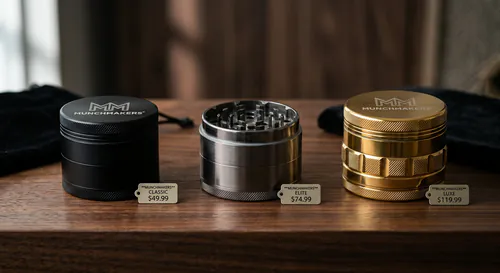
Thirty dollars used to be the floor for a grinder worth owning. That's changed. The manufacturing quality on budget grinders has improved enough that you can now get a solid 4-piece aluminum grinder, sharp diamond-cut teeth, a real kief screen, and decent threading for under $20. You don't need to spend $80 to get something that works well for years.
That said, not all cheap grinders are equal. There's a wide range of quality in the sub-$30 category, and some of it is genuinely bad -- zinc alloy construction that sheds metal particles into your herb, peg-style teeth that tear instead of cut, kief screens that clog after two uses. This list focuses on what actually earns your money at this price point, and what you're trading off when you skip the premium tier.
What to avoid before we get into picks
Zinc alloy is the main thing to watch for. It's cheaper than aluminum and much heavier for its size. More importantly, zinc alloy can flake micro-particles into your herb over time, especially when the anodized coating wears off from regular use. You don't want to smoke zinc. Check product listings for "aircraft-grade aluminum" or "anodized aluminum" and avoid anything that lists "zinc alloy" or just "metal alloy" without specifying.
Avoid single-piece or 2-piece grinders if you want kief collection. A 2-piece grinder is just a grinding mechanism with no screen and no kief chamber. It's fine for grinding, but you lose everything that falls through in the chamber or onto your tray.
Cheap threading is the other failure point. If the lid cross-threads easily or the chambers wobble when assembled, the grinder will shed metal debris into your material. Test fit before you commit, or buy from a seller with easy returns.
The best choices under $30
Best overall: a mid-size 4-piece anodized aluminum grinder, $15-22
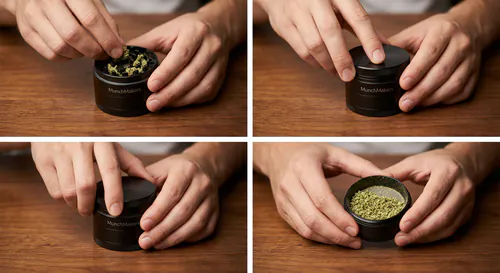
In this price range you'll find several grinders from brands like Santa Cruz Shredder's budget line, Space Case alternatives, and a few direct-import options that punch well above their cost. Look for 2.5" diameter, 4-piece design (top + grinding chamber + pollen screen chamber + kief catcher), diamond-cut teeth, and a neodymium magnet in the lid. At $18, this category is the clearest value in the entire sub-$30 range.
The grind quality at this price is genuinely good for rolling joints. The kief screen won't be as fine as what you get on a $60 grinder, but it collects. The threading is smooth enough to not be annoying. This is the pick for someone who wants one reliable grinder at home without spending much.
Best for travel: a compact 1.5" to 2" aluminum 4-piece, $10-18
Our mini keychain grinder fits exactly this category. Small enough to throw in any bag, light enough not to notice, and durable enough to survive being knocked around. At under 2 inches diameter, you're loading smaller amounts at a time, but for travel use that's usually fine.
The small size does mean the kief catcher fills faster and the teeth wear proportionally faster with heavy use. For frequent home use, go larger. For travel and backup, small is the right call.
Best for heavy users: an XL 4-piece at the top of the price range, $24-30
An XL 4-piece grinder at the top of the $30 range gives you a larger grinding capacity, more kief collection surface, and better longevity from sheer material thickness. If you're grinding frequently and in larger quantities, the bigger diameter means fewer grinding sessions per week and a kief catcher that doesn't fill as fast.
At this price you're not getting features that aren't present in cheaper options -- you're getting more of the same features in a larger format. The trade-off is bulk and weight.
What you sacrifice vs spending $50+
I want to be honest here. There are real differences between a $20 grinder and a $60 Santa Cruz Shredder or a $90 Phoenician.
The kief screen on a budget grinder is typically a steel mesh with a standardized hole size. Premium grinders use finer mesh, sometimes graduated across two screens, which catches more trichomes and lets less particulate fall through. You'll collect more kief per session from a premium grinder over time.
The teeth on premium grinders are machined from solid material with more precision. They stay sharp longer and cut more cleanly. A budget grinder's teeth are typically stamped or cast, which means they start duller and dull faster. After six months of daily use, a premium grinder grinds better than on day one. A budget grinder will start to struggle.
The threading and magnet on premium grinders are tighter and stronger. The lid snaps shut with a satisfying precision that cheap grinders don't match. It's not functionally important, but if you use a grinder every day, you notice the difference in feel.
For occasional or moderate use, a sub-$30 grinder is genuinely sufficient. For daily heavy use over multiple years, spending more is worth it.
Tips to extend a budget grinder's life
Clean it regularly. Resin buildup on budget grinder teeth causes more damage faster than on premium material. Every two to three weeks, put the pieces in a freezer bag for 30 minutes, then tap each piece against a hard surface to knock loose the frozen material. Then clean with isopropyl alcohol.
Don't force the grinding when it feels resistant. If buds are too fresh or too moist, they'll jam a budget grinder's teeth. Break larger pieces apart by hand first.
Store it with the lid off when not in use. A grinder sitting assembled with residue inside stays wetter and builds up resin faster than one that can air out.
The grinder materials comparison guide is worth reading if you want to understand exactly why material quality matters at different price points. And if you're trying to figure out what size makes sense for your use pattern, the guide on choosing the right grinder size covers the practical considerations.
For now, the bottom line is simple: under $30, you can get a grinder that works well. You just have to pick the right one and maintain it. The herb grinders available here are worth comparing side by side if you want something that performs at this price with a design you actually like carrying.