Rolling paper holder cases: keep your papers flat, fresh, and always ready
If you've ever pulled a rolling paper from your pocket and found it bent, damp, or stuck to itself, you understand the problem a paper case solves. Papers are thin and delicate. They travel in pockets, bags, and kit rolls alongside heavier items. Without protection, they absorb moisture from your hands and body heat, crease at the corners, and develop the kind of damage that makes rolling frustrating rather than smooth.
A rolling paper holder case is a simple accessory but it genuinely improves the experience. Here's what's available and what matters when you're choosing one.
Why the case matters more than you think
Rolling papers are sensitive to humidity. At elevated moisture levels, the gum strip on the edge of a rolling paper absorbs ambient moisture and becomes pre-activated, meaning it's already slightly tacky before you lick it. This makes the final seal harder to control and can cause papers to stick together inside the booklet. In humid climates or during summer, this is a real problem that most smokers have experienced without necessarily diagnosing.
Cold temperatures make paper brittle. A paper that's been in your jacket pocket at a January outdoor event will tear more easily when you try to separate it from the booklet. The mechanical stress of handling a cold, stiff paper creates micro-tears that make rolling harder.
A good paper case creates a small insulating barrier from both of these extremes. It's not a hermetic seal, but the reduction in direct humidity and temperature exposure makes a measurable difference over a day of carrying papers around.
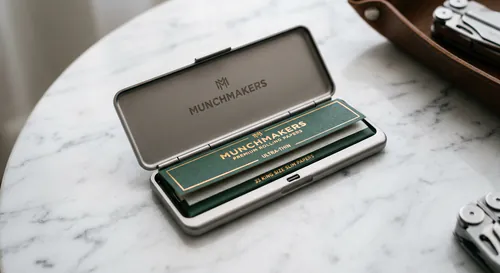
Slim metal cases
The most common format is a slim aluminum or stainless steel case with a spring or sliding mechanism. These are designed to hold one or two booklets of standard 1.25 or king size papers flat and protected. The metal construction prevents bending and creates a pocket that maintains pressure against the papers without crushing them.
Quality varies significantly. Cheap versions have weak spring mechanisms that lose tension after a few months. Look for cases where the mechanism feels positive and firm when new; that indicates better material gauge and likely better longevity. The cases that survive daily use for years tend to be the ones where the open/close mechanism has a satisfying solidity to it rather than feeling like a hair clip.
Magnetic closure cases
Magnetic closure cases use recessed magnets to hold the lid shut rather than a spring or hinge mechanism. They tend to be flatter than spring cases and work well for single-booklet storage. The closure is reliable but less positive than a spring: the papers are protected when the case is flat but don't have the same clamped pressure as a spring case. Good for desk or bag storage; slightly less ideal for pocket carry where the magnetic seal might open against other objects.
Leather cases
Leather paper cases exist primarily as a premium aesthetic item. Full-grain leather with stitched edges and a snap or magnetic closure makes a nice gift and a personal accessory statement. Practically, leather provides reasonable moisture resistance and good mechanical protection. The tradeoff is that leather cases are usually thicker and heavier than metal ones, which makes pocket carry less convenient. For people who carry a kit bag or roll case rather than pockets, leather is a legitimate and nice option.
Multi-paper storage solutions
Standard single-booklet cases work for one type of paper. If you carry multiple brands or sizes (a common situation for people who use different papers for different applications), multi-paper cases hold two or three booklets separately within the same case. These are usually slightly wider than single-booklet cases and often include a small section for a filter tip booklet alongside the papers.
Combined rolling kits, which include paper holder, filter section, and sometimes a small tray, are available from several brands. These are the all-in-one solution for people who want everything in one organized unit. They're bulkier than a slim paper case but significantly more practical for rolling on the go.
Size compatibility
Not all cases fit all paper sizes. Most slim metal cases are designed for standard 1.25 size papers (roughly 78mm x 44mm when open). King size papers are longer and won't fit in a standard 1.25 case. If you primarily roll king size, confirm the case dimensions before buying. King size cases do exist but aren't as universally available as smaller formats.
For pre-rolled cones, paper holder cases don't apply in the same way (cones are typically stored in their original tube packaging), but if you store loose unrolled papers alongside other items in a kit, the size compatibility question still applies.
Custom branded paper cases for dispensary kits
From a dispensary merchandising perspective, branded paper cases are underused as a product. A slim metal case with a dispensary's logo etched or printed on the lid is a genuinely useful accessory that customers will actually carry daily. Unlike a t-shirt or tote bag, a paper case gets handled multiple times per day. The brand visibility per use is very high for a modest product cost.
Custom kits that include a branded case, a booklet of custom papers, and a lighter create a premium bundle that works as both retail merchandise and a high-value promotional gift. The case is the piece that makes the kit feel substantial rather than just a small collection of consumables.
Browse our rolling papers and joint cases and holders, including the waterproof joint case for full environmental protection. For a broader view of what to pair with your papers, the rolling papers buyer's guide covers the full accessory picture. For a step up in storage, see the joint holder case guide.