Rolling tray dimensions: every standard size explained so you buy the right one
Buying a rolling tray without checking the dimensions is how you end up with something that either can't fit your grinder or takes up half your desk for no reason. Tray sizes are fairly standardized across the industry, but the naming conventions, "small," "medium," "large," vary by brand enough that you need the actual numbers rather than the labels.
Here are the real measurements and what they mean in practice.
The standard size chart
Rolling trays come in four common sizes:
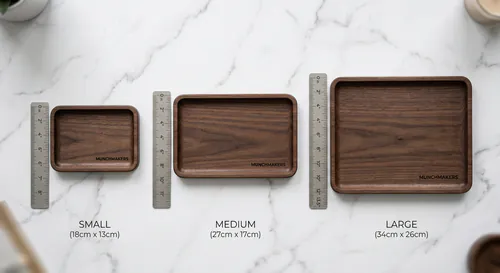
- Small: approximately 7 inches by 5 inches (18 x 12.5 cm)
- Medium: approximately 11 inches by 7 inches (28 x 18 cm)
- Large: approximately 14 inches by 10 inches (35.5 x 25.5 cm)
- XL: approximately 14 inches by 11 inches or larger (35.5 x 28 cm)
These are industry norms, not universal standards. A brand's "medium" might be 10 by 7 inches or 12 by 8 inches. Before ordering, check the actual product dimensions, not just the size label. The numbers above are what most brands mean when they say small, medium, or large, but check anyway.
What fits on each size
Small (7x5 inches): fits a compact grinder (under 2 inches in diameter), a pack of rolling papers, a lighter, and a small container of filter tips. That's genuinely it. If you try to fit a full-size 4-piece grinder on a 7x5 tray alongside papers and a lighter, you'll have maybe 2 to 3 inches of clear rolling room in the center. Workable for skilled rollers, frustrating for beginners or anyone who needs room to spread out.
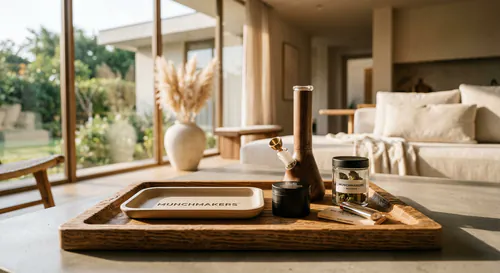
Medium (11x7 inches): the most versatile size and my honest recommendation for most people. A 2- to 3-inch grinder, rolling papers, a lighter, filter tips, and a small stash jar can all fit with clear rolling space in the center. Most grinders on the market are between 1.5 and 2.5 inches in diameter; medium trays accommodate all of them comfortably. The 11-inch length gives you enough rolling room to fully extend a king-size paper (roughly 4 inches long) with room on both sides.
Large (14x10 inches): designed for multiple accessories or a very organized setup. You can fit a large grinder, a stash jar, papers, filters, a lighter, a hemp wick, and a poker or tamper and still have clear rolling room. This is the size for people who like an organized setup or who sometimes roll for more than one person at a time. It's also appropriate for dispensary counter setups where you want a tray that can display multiple items attractively.
XL (14x11 and above): proportionally similar to large but wider. The extra width lets you add an additional item column to the back of the tray without crowding the front rolling area. Most home users don't need this size. It's most useful for display setups, communal use, or brands building out a featured counter display.
How to measure your rolling space
Before buying, measure the surface where the tray will live. A medium tray at 11 by 7 inches needs at minimum a 12 by 8 inch clear surface to sit without overhanging anything. Large trays need more than a square foot of dedicated space.
For desk setups, the tray usually lives in the corner or to the side of a monitor. Measure from the desk edge to your monitor stand, or from the wall to any obstacle on your desk, and compare that to tray dimensions. Don't assume a large tray will fit a small desk. Many people buy large trays, find they're constantly moving them, and switch to medium.
For travel, measure the main compartment of your bag. Most backpack main pockets are 12 to 13 inches tall. A small tray fits with room to spare. A medium tray fits in most bags but takes up meaningful space. Large trays are not travel-friendly.
Depth and raised edge dimensions
The footprint dimensions (length by width) get most of the attention, but depth matters too. Tray depth, meaning the height of the raised sidewall that contains the tray contents, typically ranges from 0.5 inches to 1.5 inches depending on the design.
Shallower trays (0.5 inches) are better for rolling because your hands can move freely without hitting the walls. They keep contents on the tray surface but don't confine them as aggressively.
Deeper trays (1 to 1.5 inches) are better for storage and transport. Contents stay contained when you move the tray. If you use a rolling tray with magnetic lid, a slightly deeper tray paired with a lid means you can carry it without spilling. Shallow trays with lids work less reliably for this because there's not enough depth to contain items fully when the tray is tilted.
Sizing for custom orders
If you're ordering custom-printed rolling trays for a brand or dispensary, size selection affects print area and visual impact. A medium tray gives you roughly 77 square inches of print surface. A large tray gives you about 140 square inches. That's nearly double the graphic area for branding, which matters significantly if you're printing a detailed design, logo with supporting text, or full-bleed illustration.
For brand display trays where the graphic is the point, go large. For giveaway trays where portability and usability matter more than display, medium is the right call. Small trays are inexpensive enough to work as high-volume promotional items but the print area is limited.
Browse our rolling trays in all sizes to compare options. If you're deciding between small and medium specifically, the small rolling tray guide goes deeper on what fits and what you sacrifice. The rolling tray organizer setup guide shows how different sizes affect what you can put on the surface and where. And if material choice is part of your decision, the materials comparison guide covers how size interacts with material for different use cases.