The supplier problem most smoke shop owners don't see coming
The smoke shop wholesale market has more options than it's ever had, which sounds like a good thing until you're on your third supplier in eighteen months because the first two had quality control problems and the third kept missing ship dates. More options means more decisions to get wrong.
I've worked with enough small retail operations to know that supplier relationships are one of the variables that separates shops running cleanly from shops constantly firefighting. Getting this right early saves time, money, and the specific stress of being out of stock on your bestsellers two weeks before a major holiday. This guide covers how to find reliable wholesale suppliers, what to ask before you commit to anyone, and the red flags that are worth treating as disqualifying.
What you actually need from a wholesale supplier
Before going through the evaluation process, it helps to be clear on what a wholesale relationship needs to deliver. The obvious things are price, product quality, and availability. But a few things matter almost as much that get underweighted:
Consistency across orders. A supplier who sends excellent product in the first order and inconsistent quality in the third is worse than a supplier who's consistently mediocre, because at least with mediocre you can make decisions. Inconsistency makes inventory management impossible and customer satisfaction unpredictable.
Communication responsiveness. When an order is delayed, when a product is suddenly out of stock, when a shipment has a quality issue, you need a contact who responds within a business day and gives you real information rather than canned responses. This sounds basic and it should be, but a significant percentage of wholesale suppliers are genuinely bad at this.
Minimum order flexibility. Most suppliers have MOQs, and those MOQs are often set for larger buyers than a single-location smoke shop. A supplier willing to work with you on minimums while you're building volume is more valuable than one with slightly better unit prices but rigid MOQ requirements that force you to overstock slow-moving SKUs.
How to find wholesale suppliers worth talking to
Trade shows are still the best first-pass filter. The Annual Retail Tobacco and Specialty Products trade show (RetailPro), the National Association of Tobacco Outlets conference, and the various regional cannabis industry shows all have wholesale supplier floors where you can see product in person, talk to sales reps directly, and get a feel for how suppliers present themselves. A supplier with a professional booth, printed catalogs with actual pricing, and staff who know their products is starting from a better place than someone with a folding table and a price list they "can email you."
Industry directories and B2B platforms (Faire, Tundra, and cannabis-specific directories like Leafly Wholesale for dispensaries) can surface suppliers you wouldn't find otherwise. The limitation is that these platforms can't tell you much about supplier reliability, so treat them as a discovery tool, not a vetting tool.
Other shop owners are the best source of referrals. If you have relationships with owners in non-competing markets (different metro areas, different state), ask who they buy from and whether they'd recommend them. The wholesale market has a reputation economy that functions reasonably well if you tap into it. A supplier who keeps screwing up orders eventually gets talked about.
Online searches for "smoke shop wholesale" and "wholesale smoke accessories" will return hundreds of options. Most of them are resellers rather than manufacturers. Resellers aren't necessarily a problem, but you're paying their margin on top of the manufacturer's price, and they generally have less ability to address quality issues directly. If you're looking for branded or customized products, a manufacturer relationship will give you more flexibility.
Evaluating a supplier before you commit
The first order with any new supplier is a test, whether you treat it that way or not. Structure it intentionally.
Start with a small order across your core categories. Don't go in with a large order because the price is good. Order enough to get real product in your hands and go through the receiving, quality-checking, and customer feedback cycle. If the product is good and the process was smooth, you have reason to increase volume. If either is off, you've limited your downside.
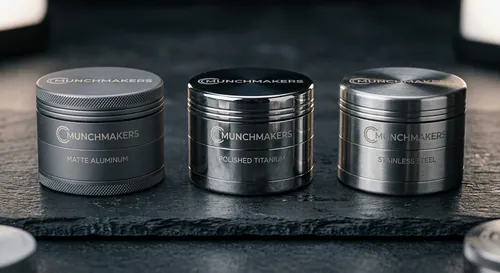
Inspect the first shipment thoroughly. For grinders specifically, check that the teeth are consistent across units, that the magnets hold, and that the anodizing or finish is uniform across a sample of the batch. For lighters, test fire a sample. For rolling papers, check that the booklets are consistent and the seam gums aren't dried out. These checks take twenty minutes but tell you whether quality control is real or aspirational.
Ask directly about their quality control process. Where is the product manufactured? Is there in-line QC at the factory or is it inspection at the warehouse? For products with safety relevance (lighters, anything with a battery), do they have testing certifications? A supplier who can't answer these questions clearly either doesn't know or doesn't prioritize it. Either is a signal.
Get references from other retail clients. A supplier who's been in business for more than two years should be able to provide two or three references from shops similar to yours. If they're reluctant to provide references, that's telling. If the references don't actually pick up or respond, that's also telling.
Red flags to disqualify
Some things are worth treating as hard stops:
No verifiable business address or contact information beyond a contact form or email. Legitimate wholesale operations have a physical presence you can verify. A supplier you can't find independently of their own website should be approached with real skepticism.
Prices so far below market that the only explanation is quality compromise or product authenticity issues. If someone is selling "brand-name" lighters at 40% below what every other supplier charges, they are either selling counterfeits or the product has been compromised in some way. The market for commodity smoke accessories has pricing floors that real manufacturers can't get below. Anything substantially cheaper than that floor is a problem.
Reluctance to provide product samples before a first order of any meaningful size. If you're going to order 500 units of something, you should be able to get a sample first. Any supplier who won't send a sample before a $1,000+ order is prioritizing the sale over the relationship.
Vague or evasive answers about lead times and restock schedules. You need to know how long it takes to get product, when restocks happen for items that go out of stock, and what the process is for expedited orders if you have a supply emergency. A supplier who can't give you concrete answers on these questions will not be reliable when it actually matters.
No clear returns or quality dispute process. If product arrives damaged or defective, what happens? If a supplier's answer to this question is vague or involves significant friction, assume that getting any relief on a bad order will be a fight you may not win.
Domestic vs import: the real tradeoffs
Most smoke shop accessories are manufactured in China, and that's not inherently a problem. Chinese manufacturing for this category ranges from genuinely excellent to genuinely terrible, and the country of origin tells you almost nothing about which end of that spectrum you're dealing with.
What actually matters: whether the manufacturer has been audited, whether there are documented QC processes, and whether the importer or distributor you're buying from has a real relationship with the factory or is just buying on price from whoever has inventory.
Domestic suppliers, meaning US-based distributors who import from Asia, generally offer faster shipping (5 to 10 days versus 3 to 6 weeks), easier returns and quality dispute resolution, and customer service in your time zone. You pay for this in unit cost, but the operational benefits are significant for a shop that needs to reorder quickly.
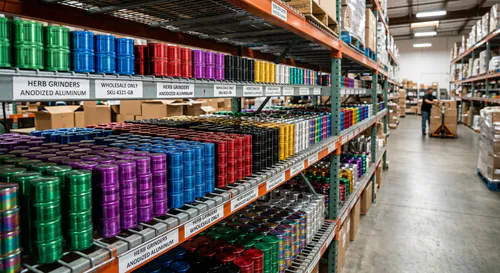
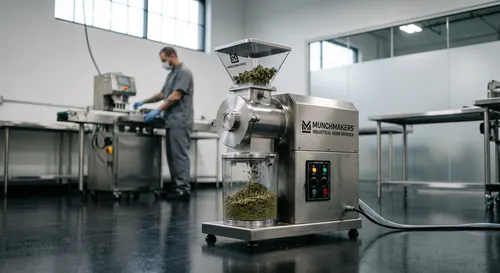
Going direct to an overseas manufacturer makes sense when you have the volume to justify the minimum orders (typically 500+ units per SKU), you can plan 6 to 8 weeks ahead for restocks, and you're looking for custom or branded products that require working directly with production. The wholesale grinder guide covers this tradeoff in more detail for that specific product category.
Building a product mix that actually sells
The wholesale process is about more than sourcing. It's about buying the right product for your specific customer base, which requires knowing who's buying from you and what they actually want.
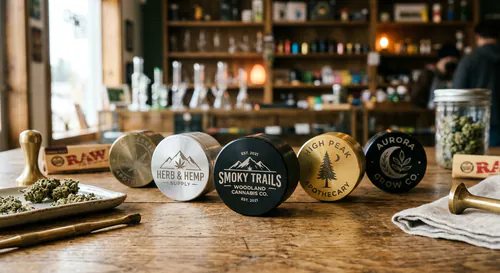
For grinders, understand your customer's price tolerance. A $15 grinder at retail with a $6 cost is a very different product and a different conversation than a $35 grinder with a $14 cost. The margin is similar in percentage terms, but the customer who buys the $15 grinder and the customer who buys the $35 grinder are often different people with different expectations. Carrying both has merit. Overloading your display with too many options has costs in terms of decision complexity and inventory management. For building out the grinder category specifically, check out what's available in wholesale grinders.
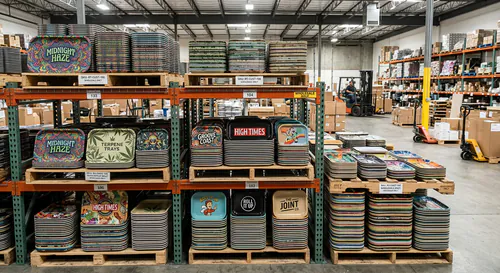
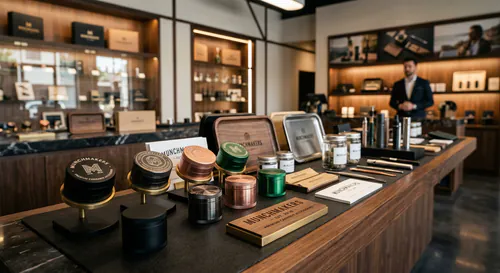
Rolling trays have emerged as a strong-performing category for smoke shops. They're visible in the display, they have good margin, and customers replace them or buy them as gifts fairly regularly. The key is carrying a range of designs without going so deep into inventory that slow-moving designs tie up cash. Wholesale rolling trays with custom branding options give shops the ability to carry exclusive designs that can't be found at competing shops, which is worth thinking about from a differentiation standpoint. The dedicated rolling tray wholesale guide covers pricing and selection for retail environments.
Payment terms and what's normal
For new relationships with established suppliers, net-30 terms are attainable once you've placed a few paid orders and demonstrated reliable payment. Don't expect to walk in as a new customer and get credit terms. Pay on time (or early) for your first several orders, and then have the conversation about terms when you have a track record.
Credit card payments are standard in this industry, but they add cost. If you're buying at volume, ask about ACH or wire transfer pricing. Suppliers often have better pricing for non-card payment, and the savings can be meaningful on larger orders.
Be cautious about prepayment requirements for very large orders with suppliers you haven't worked with before. Full prepayment before you have a relationship and a track record with a supplier is normal for the first order. Full prepayment for a $10,000+ order from a supplier you've never done business with is a risk structure you should at least negotiate. Try to get a deposit/balance structure (50% down, 50% on shipment) rather than 100% upfront.
The relationship side of wholesale
Good wholesale relationships are worth cultivating actively. The supplier rep who knows your business is more likely to flag relevant new products, warn you about upcoming supply constraints, and go to bat for you on a quality issue. This takes some effort beyond transactional ordering.
Check in with your rep periodically even when you don't have an immediate order. Ask about what's coming, what's been popular with similar shops, what's been discontinued. This kind of ongoing conversation means you find out about things before they become urgent.
When something goes wrong (and it will, eventually), approach it as a problem to solve collaboratively rather than an accusation. Suppliers remember how customers handle issues. A shop that handles a quality dispute professionally is one the supplier will work harder to keep.
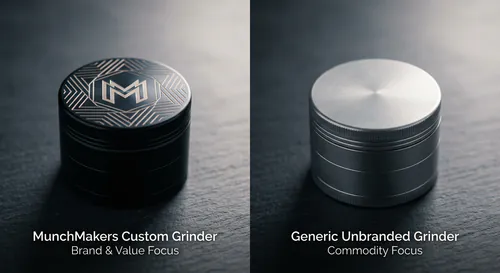
MunchMakers wholesale works with smoke shops and dispensaries on the custom and branded accessories side of the category. If you're building out a merchandise program alongside your retail inventory, or looking for branded products that differentiate your shop from competitors carrying the same generic accessories, that's a conversation worth having early in the process rather than after you've already committed a wholesale budget to standard product.
The shops that run well have figured out that supplier relationships are infrastructure. You build them deliberately, you maintain them with the same attention you give to the customer side of the business, and when they work, they quietly take a significant operational problem off your plate.