If you've owned a 4-piece grinder for more than a month, you've probably heard about the coin trick. Drop a coin into the middle chamber, shake the grinder, and watch your kief catcher fill up faster than it normally would. It actually works. But there are a few details -- which coin to use, how to do it properly, how often to do it -- that most explanations gloss over. This one won't.
Why the coin trick works
The kief that collects in the bottom chamber of a 4-piece grinder falls through a fine mesh screen that separates the grinding chamber from the catcher below. In a well-used grinder, that screen gradually gets clogged with sticky trichome residue. Resin coats the mesh holes, progressively reducing how much kief actually makes it through.
At the same time, a significant amount of kief accumulates on the underside of the screen and on the walls of the grinding chamber itself. It sticks to the metal rather than falling through.
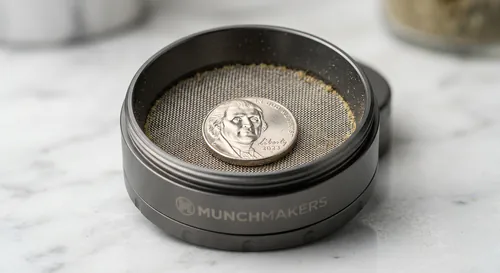
A coin dropped into the middle chamber -- between the ground herb collection area and the screen -- acts as a physical agitator. When you shake the grinder, the coin slides and bounces across the screen mesh. That mechanical vibration dislodges the trichomes that have stuck to the mesh walls and the screen surface. More kief falls through than would have otherwise.
It's a simple mechanical trick, not a chemical one. The coin doesn't react with anything. It's just weight and friction doing physical work on sticky material.
Which coin to use
A US nickel is the standard recommendation, and there's a specific reason why. Size matters for this: you want a coin that covers a good portion of the screen when it lies flat, creating maximum contact with the mesh. A nickel's diameter (21.2mm) fits well inside the chamber of most standard 2.5" and 3" grinders without getting stuck.
The weight also matters. A nickel (5 grams) is heavy enough to create meaningful vibration when shaken but not so heavy that it damages the screen. A dime is too light and too small. A quarter is often too large for the chamber diameter and can jam or damage the threading when you try to reassemble.
Coin cleanliness is something people overlook. A coin that's been in your pocket or wallet carries bacteria, skin oils, dirt, and in older coins, copper oxidation that you really don't want in your herb. Before using any coin in a grinder, wash it with dish soap, rinse thoroughly, and dry it completely. Some people use a coin specifically designated for grinder use and keep it with their grinder. That's the right approach if you're going to do this regularly.
How to do it
Start with a grinder that has some ground material already in the middle chamber -- you want some herb to help transfer trichomes along with the coin's movement. If the grinder is bone dry, the trick still works on the screen, but you'll get more result when there's material involved.
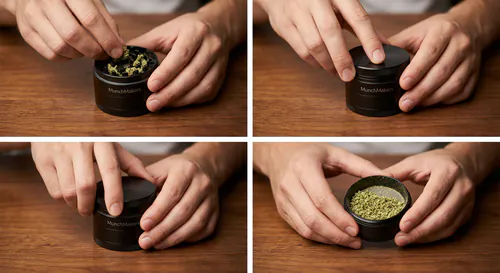
Drop the clean coin into the middle chamber, on top of the screen. Reassemble the grinder fully -- lid on, all chambers connected. Then shake firmly for 30 to 60 seconds. The motion should be enough to get the coin sliding across the screen repeatedly. Side-to-side and circular shaking works better than just up-and-down, which tends to bounce the coin without much lateral movement.
Open the bottom kief catcher and check the result. You should see noticeably more kief than before you started.
The freezer trick combination
The coin trick pairs especially well with a quick freezer session. Cold makes trichomes brittle and reduces the stickiness of resin, which means they detach from surfaces more easily. Put your grinder (without the coin) in the freezer for 20 to 30 minutes before you start. Then drop in the coin and shake. The combination of cold-brittled trichomes and the coin's agitation produces significantly more kief fall-through than either technique alone.
Don't leave the grinder in the freezer for hours -- extended cold can affect the magnet and make the threading contract slightly, which isn't a permanent problem but can make the grinder harder to open when it's very cold.
How often to use the trick
The coin trick works best as a periodic technique, not a daily habit. If you're using a 4-piece grinder with kief catcher regularly, the coin trick makes sense every two weeks or so -- or whenever you notice the kief collection has slowed down noticeably compared to when the grinder was clean.
Using it too often on a very fine mesh can gradually enlarge the holes slightly over time, which eventually lets more plant material fall through along with the kief and reduces the quality of what you're collecting. Once or twice a month is plenty.
A note on kief collection strategies
The coin trick is one part of a broader kief optimization approach. The other key factors are the screen mesh quality in your grinder with kief catcher, how dry your herb is when you grind it (drier herb releases more trichomes), and regular cleaning to keep the screen from clogging.
If you want to understand all of it in one place, the kief catcher guide covers everything from screen selection to collection tools to what to do with the kief once you have it. And the cleaning and maintenance guide shows how to keep your screen clear so the coin trick has more to work with each time you use it.
Simple trick. Real results. Just make sure the coin is clean.