Dab pen temperature guide: finding your sweet spot for flavor vs potency
Temperature is the single most important variable in how a dab pen hits. Too low and you're getting thin vapor with almost nothing in it. Too high and you're scorching the oil, producing harsh hits with a burnt taste and burning off terpenes before they can do anything. The range between those two extremes is where all the interesting decisions happen.
Most variable-voltage 510 batteries use voltage settings rather than direct Fahrenheit or Celsius readings, so I'll cover both.
The three temperature ranges and what they actually do
Low temperature: roughly 315-450°F at the coil, or 1.8-2.4V on a variable-voltage battery. This is where terpenes live. Terpenes are volatile compounds and many of them boil off above 350°F. If you want to taste the actual flavor profile of a live resin or live rosin concentrate, this is the range to be in. The vapor is cooler, thinner, and less visible. Hits feel milder even when they aren't. Many experienced users prefer this range for the full terpene experience even though the clouds are smaller.
Medium temperature: roughly 450-600°F, or 2.4-3.2V. This is where most people land. You get a meaningful balance of flavor and vapor production. THC and CBD have vaporization points in this range, so you're getting full cannabinoid activation without fully sacrificing the terpene profile. If you're new to dab pens and setting your battery to whatever comes as the middle option, this is probably where you are and it's a reasonable default.
High temperature: 600°F and above, or 3.2-4.0V. At this range, you're producing thick, dense vapor and maximizing cannabinoid extraction per hit. The trade-off is that you're burning through terpenes fast, the hits are harsher, and you'll often see more residue buildup on the coil because concentrate is being burned rather than fully vaporized. Some people want the maximum potency hit and don't care about flavor. This range delivers that.
How concentrate type affects your ideal temperature
Not all concentrates behave the same way under heat, and the type you're using should influence your temperature choice.
Live resin has a high terpene content because it's made from fresh-frozen material. It deserves low-to-medium temperatures to protect those terpenes. Running live resin at high heat wastes the thing that makes it special.
Live rosin is similar. It's solventless and full-spectrum, so the flavor and effect complexity come from the preserved terpene and minor cannabinoid profile. Low temperatures treat it better. Rosin also tends to be slightly more viscous than resin, so a very brief warm-up hit at low temp before your main hit helps it flow properly onto the coil.
Distillate in a dab pen (less common than in carts, but it happens) is already stripped of most terpenes. There's less to protect, so medium-to-high temperatures work fine without a major quality loss.
Shatter and crumble are harder concentrates. They don't melt and flow as easily as wax or rosin. Medium-to-high temperatures work better with these because you need enough heat to fully liquefy the concentrate before it vaporizes. Low temperatures can leave you with half-melted concentrate that pools at the bottom of the chamber without fully vaporizing.
Wax and budder are soft and melt quickly. They're actually better suited to low-to-medium temperatures because they overheat easily and can flood the coil if they liquefy too fast at high temps.
How to tell if you're running too hot
The signs are obvious once you know what you're looking for. Harsh, throat-burning hits that make you cough immediately usually mean the temperature is too high for the concentrate you're using. A dark, nearly black residue in the coil chamber after just a few sessions indicates burning rather than vaporization. Bitter or acrid flavor where the concentrate used to taste good is a clear signal the terpenes are gone.
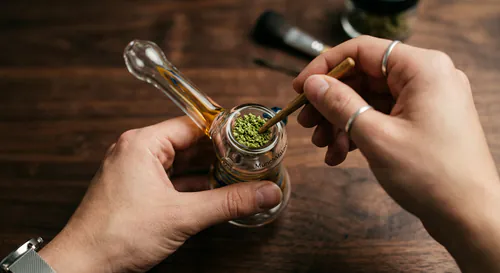
If the coil is gunking up fast, either the temperature is too high, you're loading too much at once, or both. A dab mat on the table helps you manage loading without making a mess, but controlling temp and load size extends coil life more than anything else.
Variable voltage 510 batteries
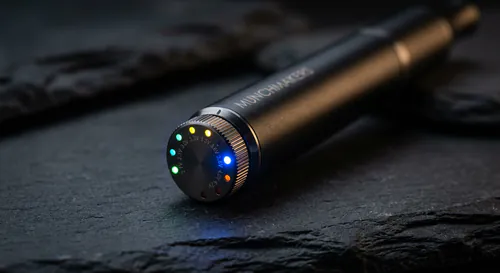
Most 510 batteries with variable voltage offer three preset settings selected by clicking the button multiple times. The LED color changes to indicate which level you're on. A typical three-setting battery runs something like 2.0V (green), 2.8V (blue), 4.0V (white) or similar. The exact voltages vary by manufacturer, so check the product specs.
Some premium batteries offer a dial or digital display with more granular control. These are worth it if you care about dialing in specific temperatures for different concentrate types. If you use one kind of concentrate consistently, the three-preset version is fine.
The relationship between voltage and temperature isn't fixed because coil resistance varies between atomizers. A 2.8V hit on a 1.0-ohm coil produces more heat than a 2.8V hit on a 1.8-ohm coil. This is why two batteries set to the same voltage can feel quite different. It's also why the general voltage-to-temperature ranges I've given are approximations rather than exact values.
Start low and work up
If you're using a new concentrate you haven't tried before, start at the lowest setting. Take one slow, measured hit. Evaluate the flavor and the vapor. Move up a setting if the vapor is too thin or the concentrate isn't fully activating. This approach protects the terpene profile of good material and saves you from the unpleasant experience of torching expensive live rosin on a hot coil.
Temperature control is also where dab pens differ most from vape pens. Cartridge systems run at a fixed or narrower temperature range because the oil is formulated for it. With a dab pen and self-loaded concentrate, you're making the call yourself. That's more control and more responsibility. The battery safety guide covers what to watch for when running at higher voltages.