Using a grinder for the first time is one of those things that feels complicated until someone just walks you through it. Once you've done it a few times, it takes maybe thirty seconds. Here's exactly how to do it, plus a few things that'll save you from the mistakes that frustrate beginners.
What you're working with
Most grinders you'll encounter come in two or four pieces. A 2-piece grinder has a lid with teeth on the inside and a base with more teeth, and that's it -- you grind, and everything collects in the bottom. A 4-piece grinder adds two extra chambers: one that collects the ground material after it falls through holes in the grinding chamber floor, and a bottom kief catcher separated by a fine mesh screen.
For a first grinder, a 4-piece is worth it. The kief catcher collects the most potent part of your herb over time. More on that below.
The top and bottom halves of the grinding chamber each have teeth that interlock when the pieces are together. Rotating one piece relative to the other is what grinds the material between the teeth. You don't need to press hard -- let the teeth do the work.
Loading the grinder
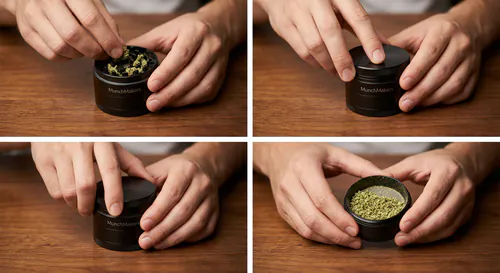
Pull the lid off the top. You'll see the teeth on the underside of the lid and in the base of the grinding chamber. Place your herb between the teeth, not in the center.
The center of the grinding chamber -- the very middle point where the magnet holds the lid -- has no teeth. Material placed there just sits and spins without getting ground. Break your herb into pieces roughly the size of a pea or smaller, and place them around the outer ring where the teeth are.
Remove stems before loading. Stems don't grind well, they're hard enough to jam teeth, and there's nothing useful in them anyway. Large seeds are the same -- remove them before you start.
Don't overfill the chamber. A full-to-the-brim grinder grinds unevenly and makes the rotation stiff. About two-thirds full is the right amount. You'll figure out what feels right after a few uses.
Grinding
Place the lid back on and feel for the magnet to click it into position. Then grip the bottom half with one hand and the lid with the other and rotate. Ten full rotations is usually enough for a medium grind. You'll feel resistance at first as the teeth catch the herb, then it gets lighter as the material breaks down and falls through to the chamber below.
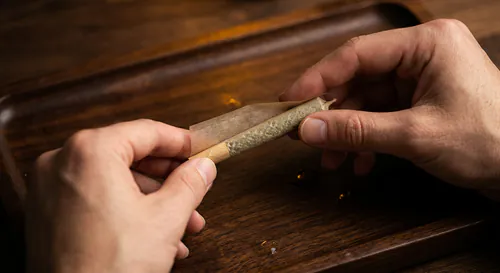
For a finer grind, keep rotating past the point where resistance disappears -- another five to ten turns. For a coarser grind, ten turns is plenty. If you're rolling a joint or blunt with rolling papers, medium-fine is ideal. If you're packing a bowl, medium-coarse works well.
You don't need to press the lid down hard while rotating. Excessive pressure doesn't help -- it just makes your wrist tired and can warp the chamber alignment over time on cheaper grinders.
Opening and collecting
After grinding, don't open the lid. Instead, unscrew the bottom grinding chamber from the middle section (on a 4-piece) to access where your ground herb has collected. The ground material falls through holes in the floor of the grinding chamber and lands in the middle collection chamber.
Tap the grinder gently on a surface or against your palm before opening -- this helps any herb clinging to the teeth fall down into the collection area. Then unscrew and open.
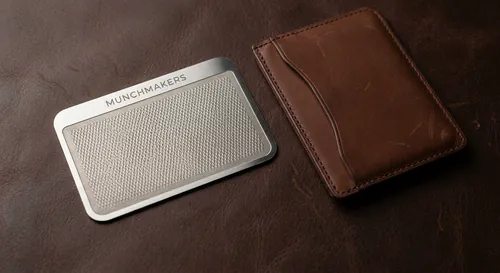
Use a small tool, card, or your finger to scoop the ground herb onto your rolling surface or into a bowl. The mini grinder has a narrower chamber, so you may need to tap it more to get everything to fall out.
Understanding the kief catcher
The bottom chamber of a 4-piece grinder is separated from the collection chamber above it by a fine mesh screen. Trichomes -- the tiny crystalline structures on herb that contain the most active compounds -- are small enough to fall through that screen. They collect in the bottom chamber as a fine powder called kief.
Kief collects slowly. After several sessions, you'll start to see a visible layer of pale powder at the bottom. Don't collect it until there's a meaningful amount -- scraping after every session is inefficient. Many people let it accumulate for weeks before collecting it, then use it in a single session.
The small tool (pollen scraper) that comes with some grinders is specifically for scooping kief without losing it. A small brush works too.
After your first use
New grinders often have machining dust or anodizing residue from the manufacturing process. Before your first real session, grind a small piece of bread and discard it. This clears any metal particles from the teeth and chambers so they don't end up in your herb. Some people wipe the chambers out with a dry cloth instead. Either approach works.
After a few sessions, you'll notice residue building up on the teeth and chamber walls. This is normal. The complete guide to grinding weed covers technique in more detail, and the cleaning and maintenance guide shows exactly how to clean it when things get sticky.
Common beginner mistakes
Putting herb in the center of the chamber. It won't grind. Put it around the teeth ring.
Opening the grinding lid instead of unscewing the collection chamber. When you open the lid, ground material can fall out and scatter. Always open from the bottom section first.
Grinding too little. Under-filled grinders feel strange to rotate and produce uneven results. A grinder works best when the teeth have enough material to cut through.
Forgetting to tap before opening. Ground herb clings to the teeth and inner walls. Tapping the assembled grinder against a surface before opening gets more material down into the collection chamber where you can actually use it.
If you're trying to figure out what size grinder makes sense for how you typically smoke, the guide on how to choose grinder size and piece count makes that decision simple. And if you're still assembling your setup, the herb grinders section has options at every size.