TSA Cannabis Travel Rules: Complete Guide for Dispensaries to Educate Customers
One of the most common questions dispensary staff face: "Can I fly with my cannabis vape?" The honest answer is no — and explaining why, clearly and without alarm, is one of the more useful things a budtender can do. This guide gives dispensary owners and staff the specifics they need to answer travel questions accurately, protect the business from liability, and help customers find legal options that actually work.
Whether customers ask about disposable vape pens, THC cartridges, or flower, your staff needs clear, accurate information about what's legal, what's risky, and what alternatives exist for customers who travel. This guide covers federal regulations, TSA policies, state-by-state enforcement patterns, and how to stock and recommend compliant travel products.
Federal Law vs. State Law: The Core Conflict for Cannabis Travelers
The fundamental problem with air travel and cannabis is jurisdictional. Airports, airplanes, and all U.S. airspace fall under federal jurisdiction, where cannabis is still a Schedule I controlled substance under the Controlled Substances Act — regardless of what any state has legalized. The moment a customer walks into an airport, state law stops mattering.
Even flying between two legal states — say, California to Colorado — doesn't change this. The flight crosses federal airspace. A customer who legally bought product at your counter is violating federal law the moment they bring it into the terminal.
State-issued medical cannabis cards offer no protection here. TSA agents and federal law enforcement operate under federal rules and are not required to honor state medical programs, even though practical enforcement varies a lot depending on where someone is flying out of.
This is worth understanding as a dispensary: you're not just in the business of selling products. Part of what keeps your license intact is making sure customers understand where the legal line is — and helping them find legal alternatives when they need one.
TSA's Official Policy: Security First, Not Drug Enforcement
TSA's job is finding weapons and explosives, not drugs. Their published policy is clear: cannabis remains federally illegal, and if an agent discovers it during screening, they're required to refer the matter to law enforcement. But they're not actively hunting for cannabis. Detection is incidental to their actual mission.
This is why so many people get through without incident — but it's also why getting caught is unpredictable. You can't count on being overlooked.
One commonly misunderstood point: most airport K9 units are trained to detect explosives, not drugs. Drug-detection dogs do exist at some airports, but they're typically run by local police rather than TSA, and they're far less common than travelers assume.
The takeaway for dispensary staff: don't tell customers TSA won't find it. They're not looking for it, but they will act on it if they find it — and the consequences vary a lot depending on where someone is flying out of.
Vape Pen Rules: Carry-On Only, No Exceptions
Even if you set aside the cannabis question entirely, vape pens have their own TSA rules that customers regularly get wrong. All vaping devices and lithium-ion batteries must go in carry-on luggage — never checked bags. This is a fire safety rule, not a drug rule, and it applies to nicotine vapes just as much as cannabis hardware.
Checked baggage containing vaping devices violates TSA regulations. It can trigger a bag search, cause customers to miss flights, and result in confiscation. Loose 510 batteries must be in protective cases that prevent short circuits. Damaged or recalled batteries aren't allowed at all.
Carrying large quantities — say, dozens of disposables or multiple boxes of cartridges — will raise flags even if the hardware is otherwise legal. More product means more scrutiny from both TSA and law enforcement.
If you sell travel cases for vape hardware, this is a good reason to recommend them even to customers flying with nothing but nicotine devices. It's useful information that builds credibility.
What Actually Happens When TSA Finds Cannabis
Customers ask this a lot. The honest answer is: it depends heavily on where they're flying from.
At airports in fully legal states — California, Colorado, Nevada, Washington — local law enforcement often declines to pursue personal-use amounts. Travelers report products being confiscated and nothing else happening. But that's discretion on the part of local police, not a rule. It can change based on the officer, the amount, and the day.
At airports in non-legal states — Texas, Florida, Idaho — the risk is much higher. Texas and Florida have prosecuted travelers over small amounts. A misdemeanor or felony cannabis charge creates a permanent criminal record, and that's a real consequence to communicate to customers who think the worst case is losing their stash.
International travel is a different category entirely. Taking cannabis across an international border is drug trafficking under federal law, regardless of the destination country's rules. This applies even to Canada, where cannabis is nationally legal — U.S. federal law still applies to American travelers departing from U.S. airports.
Checked bags are generally higher risk than carry-ons. Checked luggage goes through different screening, and a vape battery in a checked bag triggers an automatic bag search due to fire safety rules. Cannabis found in checked luggage tends to produce more serious law enforcement responses than carry-on discoveries.
Legal Travel Alternatives: What to Recommend Instead
When customers mention travel, the most useful thing dispensary staff can do is shift the conversation toward options that actually work.
Hemp-derived CBD products (under 0.3% THC) are federally legal under the 2018 Farm Bill and permitted by TSA. Many dispensaries now stock CBD vapes, tinctures, and gummies specifically for this reason. If a customer is looking for something to take the edge off a flight, a quality CBD product is a legitimate answer. Make sure lab reports or packaging clearly show the THC content — TSA agents sometimes stop travelers over CBD products until documentation is produced.
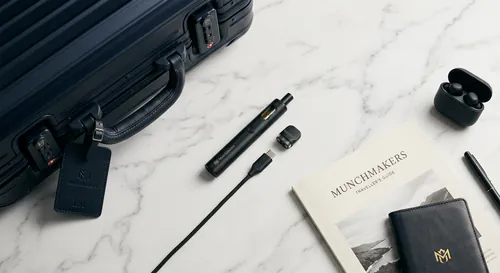
Empty vape hardware is completely legal to fly with. A customer can travel with a clean, empty battery and pick up cartridges when they land — assuming they're flying into a legal state. If you have wholesale relationships with dispensaries in Las Vegas, Denver, Los Angeles, or Seattle, this is worth mentioning. Some shops have informal reciprocal referral arrangements exactly for this reason.
Purchasing at the destination is the cleanest option for customers flying to legal states. The product stays legal at every step. If customers are heading to a state where they've never bought before, pointing them toward a well-regarded shop in that city is a useful service — and they'll remember that you helped.
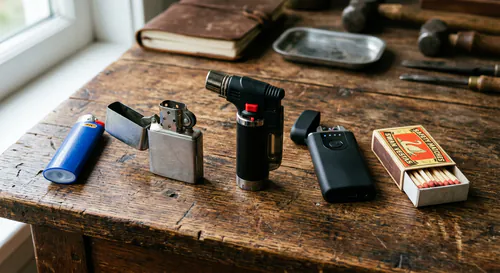
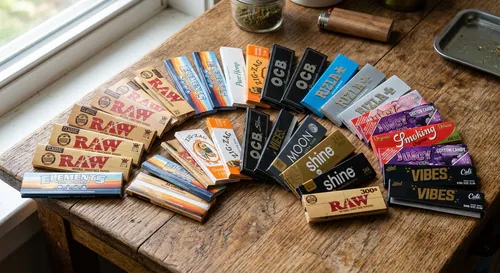
Legal travel accessories — rolling trays, lighters, smoking accessories — are all legal to fly with and useful at the destination. These aren't consolation prizes; they're practical products customers actually want.
What Dispensary Staff Should Say: Scripts for Common Questions
Consistent, accurate responses protect both customers and your business. These aren't scripts to recite robotically — they're the substance of what staff should communicate.
When asked "Can I fly with this?": Be direct. Airports and planes are under federal jurisdiction, and cannabis is federally illegal. You can't recommend it. What you can do is help them find CBD alternatives for the trip, or point them toward a dispensary at their destination if they're flying to a legal state.
When asked "Have you ever flown with it?" or "Do people do it?": Don't share personal anecdotes and don't imply it's common practice. The legal risk is real, outcomes vary by airport, and it's not your place to tell someone the odds are fine. Redirect to legal options.
When asked about medical cards: Be honest that state medical cards have no standing under federal law. TSA doesn't care about a state-issued card. If the customer is looking for functional relief during travel, CBD is a real option worth discussing.
None of this has to be stiff or lecturing. The goal is to be the staff member who actually knows the answer, not the one who says "I don't know, good luck."
Travel Products Worth Stocking
Customers who ask about travel have a specific need. You can often meet that need with legal products instead of sending them out the door empty-handed.
CBD travel products: CBD vapes, gummies, and tinctures marketed for travel fill a real gap. Clear packaging showing "less than 0.3% THC" with lab documentation removes confusion at the airport. Price these as impulse buys near checkout for customers planning trips.
Clean vape hardware: Stock your best 510 batteries with the understanding that customers can fly with empty devices. If you have a partner shop at a common travel destination, that referral adds real value to the transaction.
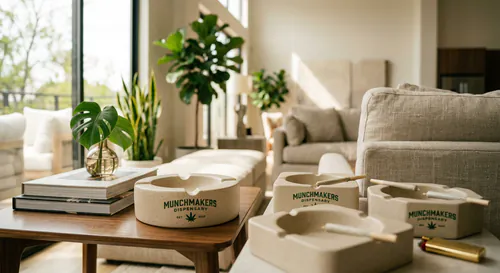
Compact accessories: Small grinders, portable cases, and travel ashtrays are useful for customers flying to legal states and purchasing there. These products are fully legal to transport and practical at the destination.
Smell-proof storage: Odor-proof cases have broad appeal beyond cannabis — prescriptions, jewelry, anything discreet. Marketing them as general travel storage opens the customer base beyond cannabis users.
State-by-State Enforcement: Where the Risk Is Highest
Airport enforcement follows local law enforcement priorities more than TSA policy. Understanding regional patterns lets your staff give more specific guidance.
At major airports in fully legal states — LAX, SFO, DEN, SEA, LAS — local police often exercise discretion for small personal-use amounts. It's not policy, and it can change, but discovery typically results in confiscation rather than arrest. That said, airlines and TSA are still federal entities, and staff can't promise anything.
In medical-only states like Florida, Pennsylvania, and Maryland, enforcement is less predictable. Florida airports have prosecuted travelers even when amounts were consistent with personal medical use. A state medical card does not change what federal law says at those checkpoints.
In full prohibition states — Texas, Idaho, Wyoming — zero-tolerance is the realistic expectation. Even trace amounts have resulted in arrest and criminal prosecution. These are the customers who most need a clear, honest conversation before they get on a plane.
Airports that serve international routes tend to have a heavier federal law enforcement presence regardless of state law. Even in the domestic terminal of an international hub, federal agents are more likely to be present.
Liability Protection: Documenting Your Customer Education
When customers violate federal law after buying from your dispensary, your business can face regulatory scrutiny even if you did nothing wrong. Documented education efforts show good faith.
Put clear language on receipts: "Products are for use in [STATE] only and may not be transported across state lines or onto commercial aircraft." This isn't just legal cover — it's accurate information customers need.
Train staff to ask about travel during checkout when relevant, and document that training in employee records. If a customer mentions an upcoming trip, staff should have a consistent, accurate response ready — not improvised advice.
Post visible signage stating that products cannot be taken on planes or across state lines. It demonstrates that your business takes compliance seriously and doesn't encourage customers to break federal law.
Keep printed take-home materials available: a simple one-page card explaining TSA rules, what CBD alternatives are available, and how to find a dispensary at a travel destination. Your logo on that card is worth something too.
Running a Travel Education Program
Some dispensaries have turned travel education into a genuine customer service differentiator. It doesn't require a big budget — mostly training and a few product decisions.
A 30-minute staff training module covering federal law, TSA policies, enforcement by region, and what products to recommend handles the core of it. Run it quarterly, test for consistent responses, and document completion for compliance records.
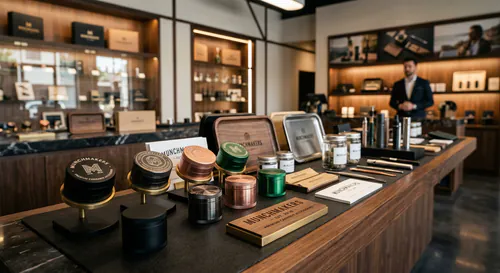
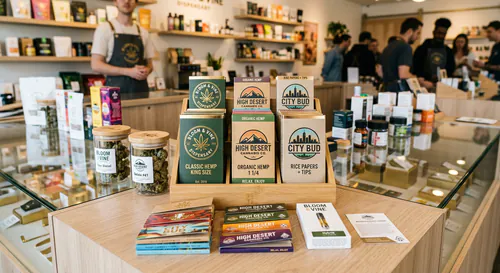
A small customer information display near the entrance — maps of legal states, travel rules in plain language, CBD samples, travel accessory demos — gives customers something to engage with before they get to the counter. It sets the tone and often answers questions before staff have to.
Seasonal promotions around spring break, summer travel, and the holidays can feature CBD bundles, empty hardware, and travel accessories explicitly marketed as TSA-compliant. "Legal Nationwide" is a straightforward selling point.
QR codes linking to a state legalization map or a partner dispensary directory turn a printed card into something useful that customers keep. It also keeps your business in their heads when they're out of town and looking for somewhere to shop.
FAQs: Travel Questions Dispensary Staff Must Answer Correctly
Q1: Can I fly with CBD vapes?
Yes. Hemp-derived CBD products containing less than 0.3% THC are federally legal and permitted by TSA. Customers should carry lab reports or product packaging showing THC content — TSA agents sometimes flag CBD products during screening, and documentation clears it up quickly.
Q2: What if I'm flying between two legal states like California and Colorado?
Federal law still applies. Flying crosses federal airspace, and state legalization has no effect on that. The flight itself is a federal jurisdiction. Many people take this risk, but it's still a federal crime.
Q3: Can medical patients fly with cannabis if they have a prescription?
No. State medical programs have no standing under federal law. TSA operates under federal rules and is not required to honor a state-issued medical card. The answer is no, regardless of how long someone has been a patient.
Q4: Will TSA definitely find cannabis in my bag?
TSA isn't looking for cannabis. But if they find it while searching for something else, they're required to refer it to law enforcement. Checked bags are screened thoroughly, and vape batteries in checked luggage trigger automatic searches — which means cannabis packed with a battery is a much higher-risk situation.
Q5: What's the penalty if TSA finds a small amount?
It depends entirely on the airport. A legal-state airport may confiscate the product and nothing more. A prohibition-state airport can result in arrest, criminal charges, and a permanent record. International travel is drug trafficking under federal law regardless of amount. There's no reliable way to predict the outcome.
Q6: Are edibles easier to fly with than vapes?
Legally, no — all THC products are equally prohibited. Edibles might be less visually obvious, but if they're detected, the same legal consequences apply. Neither form is legally safer than the other.
The Bottom Line
Cannabis is federally illegal, airports are federal jurisdiction, and state laws don't change that. Customers who know this and still take the risk are making an informed choice — but that's on them, not your business.
What you can control is making sure your staff has accurate information, your store has legal options ready, and your documentation shows that you took customer education seriously. That's good practice regardless of what any individual customer decides to do.
Customers who get honest, useful answers — even ones that aren't what they wanted to hear — tend to come back. And those you help with CBD alternatives or destination purchasing logistics remember the dispensary that actually knew what it was talking about.
Browse MunchMakers' wholesale travel accessories, CBD-compatible products, and custom-branded storage solutions for dispensaries looking to stock the right products for traveling customers.