Joint filter vs no filter: the truth about crutches and whether you need one
The filter debate comes up constantly, and there are strong opinions on both sides. Purists insist a filterless joint is the only real way to smoke. Practical rollers won't touch a joint without a crutch. I'm going to give you the actual facts about what a filter does and doesn't do, and then you can make an honest decision.
What a crutch actually does
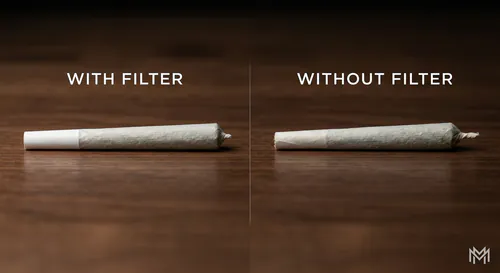
Let's start here because there are persistent myths about joint filters that need clearing up. A paper crutch, also called a tip or filter, does not filter smoke the way a cigarette filter does. A cigarette filter removes nicotine, tar, and particulates through absorption. A paper crutch does none of that. The smoke passes through the hollow crutch structure with minimal resistance. If you're rolling a joint and thinking your paper tip is cleaning your smoke, it's not.
What the crutch actually does is structural. It gives the tip of the joint a rigid base that keeps its shape as you roll. Without a crutch, the mouth end of a joint tends to collapse, twist shut, or get wet from lips, any of which kills your draw. The crutch keeps the opening circular and open.
It also gives you something to hold. A filterless joint gets short as you smoke it, and the last third is hot and awkward to hold without burning your fingers. With a crutch, you can smoke down to the very end without discomfort.
Temperature matters too. The crutch creates a small air gap between the burning material and your mouth. The smoke travels through that gap and cools slightly. The effect is modest but noticeable on a long joint.
How to fold a proper accordion crutch
Take a filter tip from a booklet or tear a small strip of thin cardboard. The strip should be about 5-6mm wide and 40-50mm long. Fold one end back and forth in a tight accordion, making 3-4 folds of equal size. The folded section should be about 10-12mm long. Then wrap the remaining unfolded strip around the outside of that accordion core, rolling it tight. You want the finished crutch to be about 5-6mm in diameter, which is a comfortable draw for most people.
The accordion structure inside is what keeps the crutch from collapsing when you draw. Without those internal folds, a rolled paper tube will pinch shut under suction. The zigzag keeps it open.
Roll the crutch so it's tight enough to hold its shape but not so compressed that it restricts airflow. You should be able to blow through it with light effort.
Types of filters: paper vs glass vs pre-cut
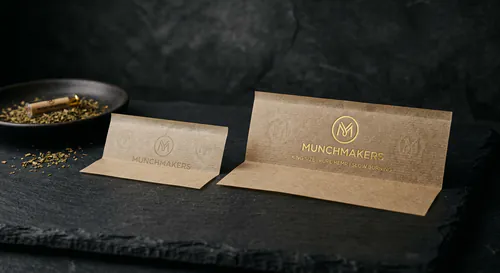
Paper filter tips made from thin cardboard are the standard. They're cheap, disposable, and work well. The booklet format is practical because you can tear them to size and have consistent material.
Glass tips are a different experience. They're reusable, they don't absorb any moisture or flavor, and they give you a satisfying glass-on-lip feel. They do cool the smoke more than paper tips, which most people prefer. The downsides are cost and fragility. A glass tip also doesn't become part of the joint structure the way a paper crutch does, so your rolling technique needs to account for the rigid cylinder at the end.
Pre-cut filter tips come pre-folded and ready to roll. They're marginally more convenient than doing your own accordion fold. The quality varies. Some pre-cut tips have an accordion that's too small and collapses anyway. I'd rather learn to fold my own.
When you need a filter
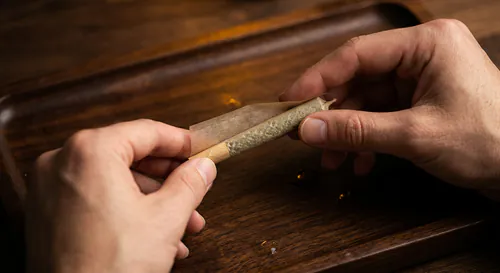
Cone joints need a filter. Without a crutch to build around, you can't form a proper cone shape with a consistent base. The filter is structurally necessary.
Long joints need a filter. Anything over 10cm is going to lose structural integrity at the mouth end without support. You'll end up with a soggy flattened tip by the time you're halfway through.
Passing in a group needs a filter. Nothing kills the flow of a session like a joint that's unsmokable because the wet end collapsed. If you're rolling for more than yourself, a crutch is common courtesy.
High humidity conditions need a filter. Rolling and smoking outdoors when it's humid, the paper absorbs moisture faster. A crutch maintains airflow even when the paper around it softens.
When going filterless is fine
Short joints smoked quickly by one person, sure. A small, tightly rolled pinner joint that you're going to smoke in five minutes before it has a chance to get wet or collapse is perfectly fine without a filter. Some people find the direct draw from filterless joints more satisfying. There's nothing wrong with it if the joint holds up.
Some rolling traditions go filterless by default. Certain European styles twist both ends, which solves the structural problem differently. The closed twist at the mouth end acts as its own kind of stopper. It's less comfortable to hold near the end of the joint, but the technique works.
If you're rolling for yourself alone at home and you want the full direct flavor experience, skipping the crutch is a valid choice. The flavor difference is subtle but perceptible. Without the paper of the crutch in the draw path, some people notice slightly more terpene expression.
The honest verdict
Filters make joints better in almost every practical situation. The people who argue against them are usually arguing against the myth that they filter smoke (they don't) rather than against the actual structural benefits (which are real). A well-made crutch improves airflow, keeps the joint smokeable to the end, protects your fingers, and makes rolling easier. None of those things are trivial.
The one legitimate argument for going filterless is if you prefer the feel and direct draw of a filterless joint and you have the rolling skill to make it work without the structural help of a crutch. That's a real preference. But if you're still learning to roll, use a crutch. It makes the whole process more forgiving.
Whatever you decide, the rolling papers you use matter more than whether you filter or not. Thin, even-burning paper covers a lot of rolling mistakes regardless of crutch choice.